Hyphessobrycon roseus · Yellow Phantom Tetra
概要
| 字段 | 值 |
|---|---|
| 类别 | 鱼 |
| 学名 | Hyphessobrycon roseus |
| 别名 | Megalamphodus roseus |
| 分类 | 脂鲤目 Characiformes › 脂鲤科 Characidae › Hyphessobrycon |
| 水体 | 淡水 |
| 原产地 | 巴西、法属圭亚那、苏里南 |
| 成体体长 | 2 cm |
| 饲养难度 | 入门 |
| 最小水体 | 54 L |
| 最小缸长 | 60 cm |
| 群居方式 | 群游 |
| 性情 | 温和 |
| 外部数据 | seriouslyfish hyphessobrycon-roseus;fishbase 28009 |
| 繁殖方式 | 散卵 |
水质参数
| 参数 | 耐受范围 | 最适范围 | 单位 |
|---|---|---|---|
| 水温 | 20–28 | — | °C |
| pH | 5–7 | — | — |
| 总硬度 | 1–10 | — | dGH |
概述
Hyphessobrycon roseus 是体形很小、性情温和的脂鲤,适合与同样小巧的软水鱼群养。贸易中曾出现两种体色型,身份仍有混淆,不能只凭“黄幻影”这样的英文商品名判断。
分布与栖息地
范围从苏里南科兰太因河向东延伸到法属圭亚那与巴西交界的奥亚波克河,之间的苏里南河、马罗尼河和 Sinnamary 河等水系也有记录。
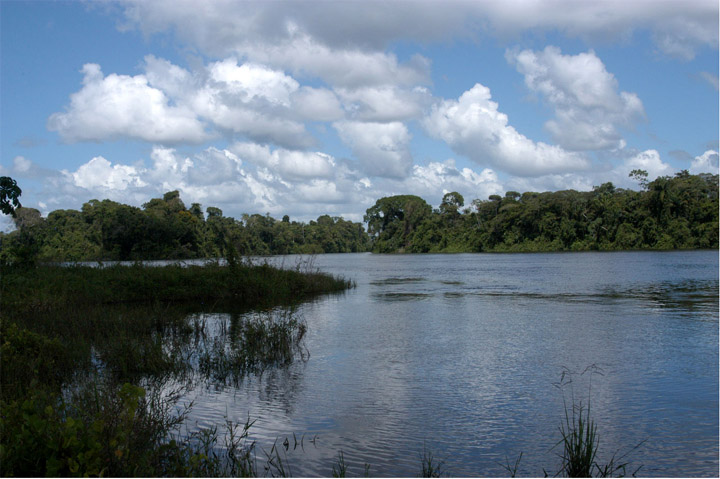
多见于热带森林支流上段和林中溪流,水流缓慢至中等,岸边植被浓密,沙底有树根、枝条与落叶。水受腐殖质染成棕色,偏酸,碳酸盐硬度和电导率很低。
饲养环境
沙底搭配沉木根枝能形成自然布局,密植水草缸同样适合。干落叶提供额外遮蔽,分解过程中形成的微生物群也能给成鱼、鱼苗补充微小食物,但不能代替正常喂食。
食性与喂食
天然可能摄食小型无脊椎动物、甲壳动物、丝状藻及落果。缸中可以接受干粮,仍应规律搭配小型活饵或冷冻红虫、孑孓、水蚤等,保持多样性。
习性与混养
非常温和,适合体型接近、环境需求相同的小型脂鲤及合适的小型鲶鱼等。避免把体形小误当作可以随意与任何“大型温和鱼”混养的理由。
八至十条或更多的雌雄混合群较合适,其他群居鱼也可增加安全感,呈现更自然的活动。
雌雄区分
性成熟雌鱼明显体高更深,通常也略大于雄鱼。
繁殖
散卵且不护卵。成鱼状态好时会经常产卵,成熟缸中偶尔有少量鱼苗自行存活。若希望提高数量,另设成熟水、弱光的繁殖缸,用网隔、塑料草垫、玻璃珠或大量细叶植物、产卵拖把保护卵。
水可微酸至中性,温度在适温上端,配气动海绵或气石供氧并形成温和水流。调养好的亲鱼可用一对,或一至两雄配数条雌鱼,通常次晨见卵。
鱼苗开口使用草履虫或约 5~50 μm 的微型饵料,长大后再喂丰年虾无节幼体、微虫等。
补充说明
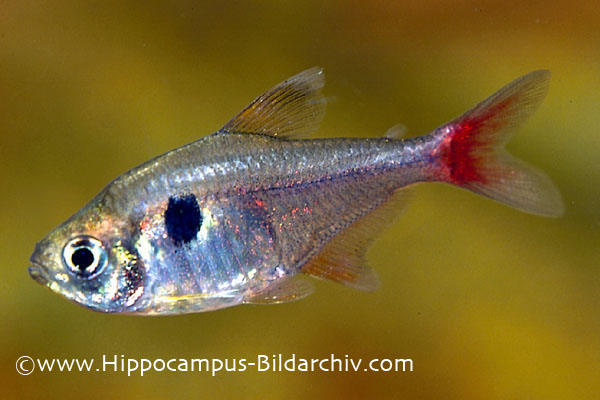
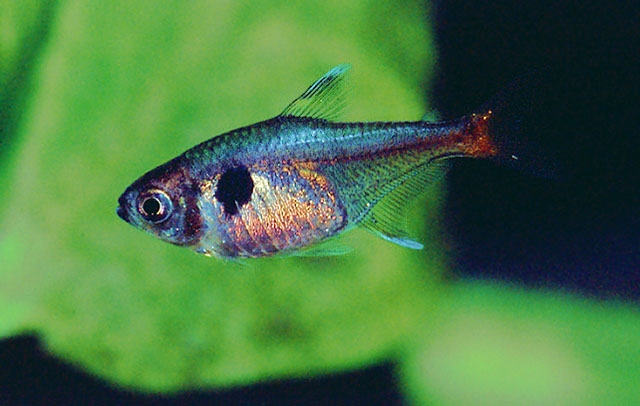
典型个体体色玫瑰粉红,鳍红而没有黑色标记,显著椭圆肩斑约占体高的一半。商品两种体色型中,有一种鳍条带小钩,不能因此擅自认定为已描述的不同种。
旧属名 Megalamphodus 已并入 Hyphessobrycon 的历史处理与“玫瑰脂鲤”类群有关,但依颜色划出的组并不等于已经确定的自然亲缘群。
图片
图片来自 SeriouslyFish,版权归各摄影者所有。
English
Overview
A very small, peaceful tetra, Hyphessobrycon roseus suits a group among similarly sized softwater companions. Two traded color forms have complicated its identity, so a yellow-phantom trade label alone is not a reliable identification.
Distribution & habitat
The range extends from Suriname's Courantyne east to the Oyapock on the French Guiana–Brazil border. Intermediate records include the Suriname, Maroni, and Sinnamary systems.
Most collections come from upper tributaries and forest creeks. Slow to moderate water passes shaded banks over sand, roots, branches, and leaf litter. Humic material stains the acidic water brown, with very low carbonate hardness and conductivity.
Aquarium setup
Sand and branching wood create a natural display, while a well-planted aquarium also works. Dried leaves add cover and support microbial growth during decomposition, providing supplementary tiny foods for adults and fry alongside regular feeding.
Diet & feeding
Small invertebrates, crustaceans, filamentous algae, and fallen fruit are presumed wild foods. Dry preparations can be accepted, but include regular small live or frozen bloodworms, mosquito larvae, and water fleas for variety.
Behaviour & compatibility
Its very peaceful nature suits similarly sized characins and appropriate small catfishes with compatible environmental needs. Evaluate companions by actual size and behavior rather than relying on a general peaceful label.
A mixed-sex shoal of eight to ten or more is preferable. Additional shoaling fishes can provide reassurance and encourage natural activity.
Sexual dimorphism
Mature females are noticeably deeper-bodied and usually a little larger than males.
Breeding
This egg scatterer provides no parental care. Well-conditioned adults may spawn repeatedly, with a few fry surviving in a mature aquarium. For higher yields, use a separate dim aquarium with mature water and mesh, artificial grass, marbles, fine plants, or mops protecting the eggs.
Slightly acidic to neutral water, temperatures near the upper end of the suitable range, and gentle air-powered filtration or an airstone are appropriate. Introduce a conditioned pair or one to two males with several females. Eggs are commonly seen the following morning.
Offer Paramecium or extremely fine starter food around 5–50 μm, followed by Artemia nauplii and microworms once the fry can take them.
Notes
Typical fish have a rosy body, red fins without black marks, and a conspicuous oval humeral spot spanning roughly half the body depth. One of the two traded color forms has small fin-ray hooks, but this does not establish a separate described species.
Historical treatment under Megalamphodus relates to the wider rosy-tetra discussion. Color-based groups within Hyphessobrycon should not be mistaken for conclusively established evolutionary lineages.
来源
- https://www.seriouslyfish.com/species/hyphessobrycon-roseus(抓取于 2026-10-10)
hyphessobrycon-roseus · 文件: data/species/hyphessobrycon-roseus.md · 状态: 草稿