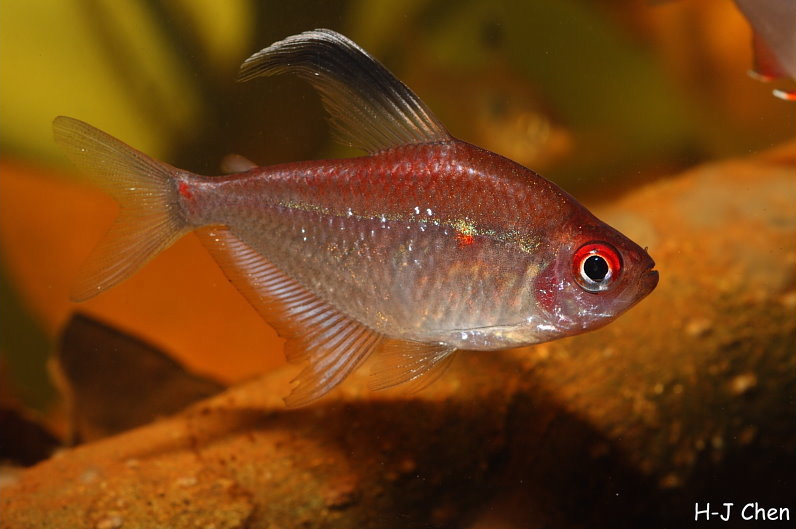
微红魮脂鲤 · Flame-back Bleeding Heart Tetra
概要
| 字段 | 值 |
|---|---|
| 类别 | 鱼 |
| 学名 | Hyphessobrycon pyrrhonotus |
| 别名 | 微紅魮脂鯉 |
| 分类 | 脂鲤目 Characiformes › 脂鲤科 Characidae › Hyphessobrycon |
| 水体 | 淡水 |
| 原产地 | 巴西亚马孙州内格罗河水系,完整分布范围尚未厘清 |
| 成体体长 | 4.5 cm |
| 饲养难度 | 中等 |
| 最小水体 | 68 L |
| 最小缸长 | 75 cm |
| 群居方式 | 群游 |
| 性情 | 温和 |
| 外部数据 | seriouslyfish hyphessobrycon-pyrrhonotus;fishbase 46319 |
| 食性 | 杂食 |
| 领地性 | 是 |
水质参数
| 参数 | 耐受范围 | 最适范围 | 单位 |
|---|---|---|---|
| 水温 | 20–28 | — | °C |
| pH | 4–7 | — | — |
| 总硬度 | 1–8 | — | dGH |
概述
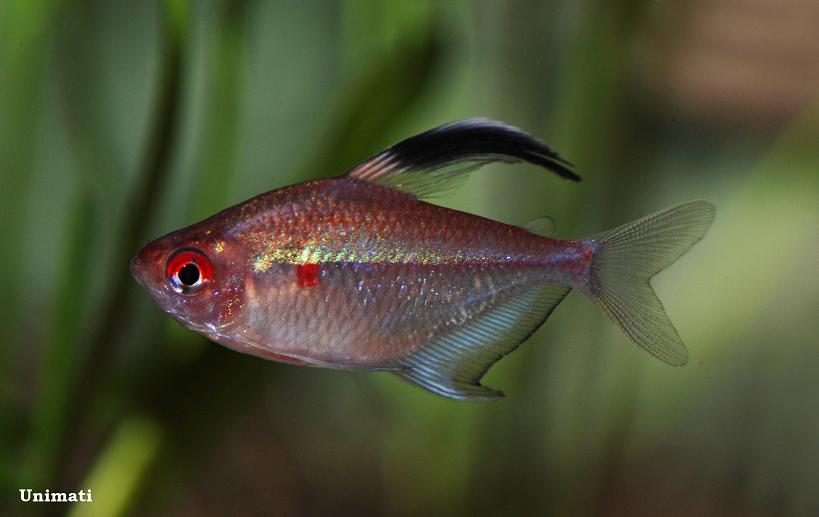
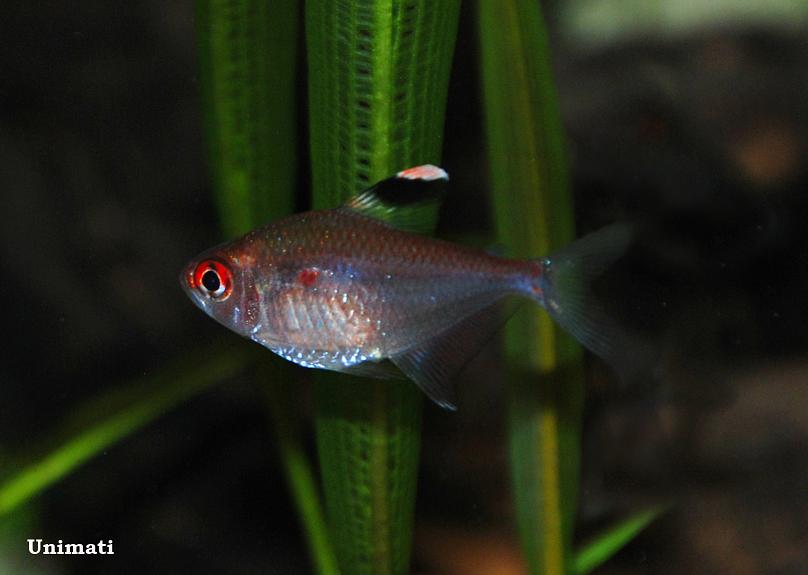
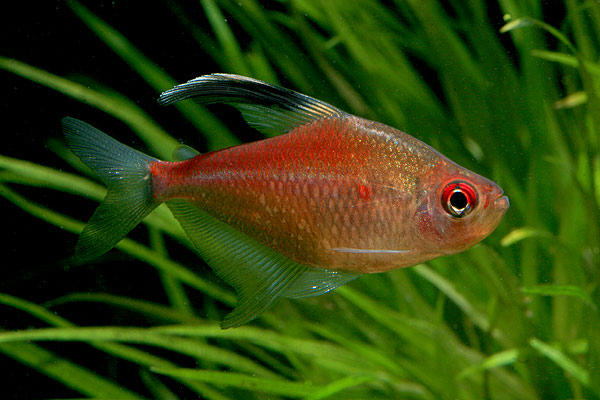
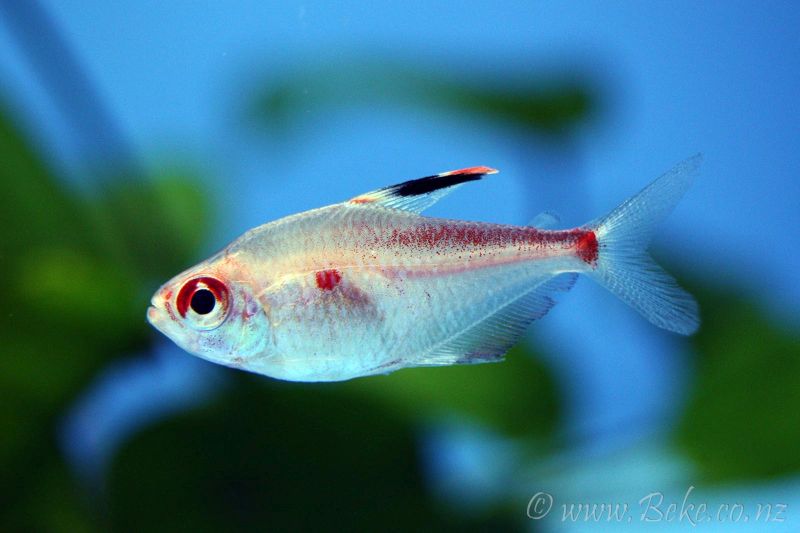
微红魮脂鲤(Hyphessobrycon pyrrhonotus)属于肩部有红斑的一组近似灯鱼,背部另有从背鳍下方向尾基延伸的楔形红色区域。状态良好或占优势的雄鱼红色往往更突出。它需要成熟、洁净且有遮蔽的环境。
分布与栖息地
仅见于巴西亚马孙州内格罗河水系,完整范围仍不清楚。已知记录集中在巴塞卢斯附近的埃雷雷、德梅尼、阿拉卡等小支流。
野外常小群游于浅水中的树根、倒枝和植物之间,底部以白砂和落叶为主,偏好的浅水区约深 30–90 cm。水呈褐色,溶解矿物含量极低,缓冲能力弱。
饲养环境
底面积至少约 75 × 30 cm。软砂配根木枝条,形成多处阴影,有活水草的丰富布置有助发色。干燥落叶提供遮蔽及幼鱼可以利用的微生物。它不耐有机污染积累,必须使用生物过滤成熟的缸,并把每周换水纳入固定维护。
食性与喂食
属于机会性杂食。野生个体胃中发现果实、水生昆虫及幼虫、陆生蚂蚁,其中果实与蚂蚁都是显著组成。缸内以优质薄片或细颗粒配红虫、水蚤、丰年虾等小型活饵或冷冻饵;也会啄食沉入水中的新鲜果块,但果块只宜留数小时后取走。
习性与混养
整体温和,成年雄鱼却有一定领域性,有时也会对体形相似的其他鱼展示或驱赶。至少八至十条雌雄混养,选择体型相近的温和鱼、小型鲶鱼及不捕食小鱼的中型慈鲷。雄鱼争取配偶或群体地位时会展示最鲜明的色彩。
雌雄区分
雄鱼明显更大、颜色更浓,成年后背鳍、腹鳍和臀鳍显著延长。雌鱼较圆,抱卵时尤甚。
繁殖
尚无记录的繁殖过程;预计为不护卵的散卵鱼,不能把近缘种的具体时间和操作直接当作本种已验证流程。
补充说明
背部楔形红区是区分其他红肩斑近似种的重要线索,优势成熟雄鱼的红色甚至可能延伸到头吻。某些个体鳞片会带金属金色,其与寄生感染的关系尚不明确,不能仅凭这种颜色判定病因。
图片
图片来自 SeriouslyFish,版权归各摄影者所有。
English
Overview
Hyphessobrycon pyrrhonotus, the flame-back bleeding heart tetra, has a red shoulder spot and a distinctive wedge of red along the upper body toward the tail. The red area is particularly striking in dominant, well-conditioned males. Clean, mature water and plentiful shelter are central to its care.
Distribution & habitat
It is native to the Negro system in Amazonas, Brazil, although the full range is unresolved. Known localities concentrate around small tributaries near Barcelos, including the Ereré, Demeni, and Aracá.
Small groups occupy shallow water among roots, fallen branches, and vegetation. White sand and scattered leaves cover the bottom, and favored areas can be only 30–90 cm deep. The brown water contains very few dissolved minerals and has little buffering capacity.
Aquarium setup
Use a footprint of at least about 75 × 30 cm. Soft sand, branching wood, and roots should create numerous shaded spaces; a furnished, planted aquarium encourages good color. Dried leaves add cover and microorganisms useful to fry. Established biological filtration is essential, organic waste must not accumulate, and weekly water changes should be routine.
Diet & feeding
This is an opportunistic omnivore. Wild stomach contents include fruit, aquatic insects and their larvae, and terrestrial ants, with fruit and ants making substantial contributions. Offer quality flakes or granules alongside small live or frozen foods such as bloodworms, water fleas, and brine shrimp. Submerged fresh fruit may be grazed, but remove it after a few hours.
Behaviour & compatibility
Generally peaceful, adult males nevertheless show some territorial behavior, occasionally extending it toward similarly shaped companions. Keep at least eight to ten of both sexes with comparable peaceful fishes, small catfishes, or suitable nonpredatory cichlids. Male competition for mates and social position brings out strong displays and colors.
Sexual dimorphism
Males become noticeably larger and more colorful, with elongated dorsal, pelvic, and anal fins. Females are rounder, especially when carrying eggs.
Breeding
Spawning has not been recorded. Egg scattering without parental care is expected, but detailed procedures or timings from related species should not be treated as established for this fish.
Notes
The red dorsal wedge separates it from other bleeding heart tetras and may extend toward the head in dominant mature males. Some individuals develop metallic golden scales; a proposed link with parasites remains uncertain, so this appearance alone does not identify a cause.
来源
- https://www.seriouslyfish.com/species/hyphessobrycon-pyrrhonotus(抓取于 2026-10-10)
hyphessobrycon-pyrrhonotus · 文件: data/species/hyphessobrycon-pyrrhonotus.md · 状态: 草稿