后鳍魮脂鲤 · Purple Tetra
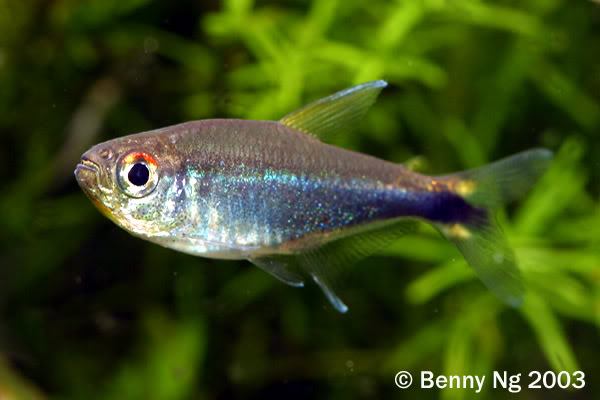
概要
| 字段 | 值 |
|---|---|
| 类别 | 鱼 |
| 学名 | Hyphessobrycon metae |
| 别名 | 後鰭魮脂鯉 |
| 分类 | 脂鲤目 Characiformes › 脂鲤科 Characidae › Hyphessobrycon |
| 水体 | 淡水 |
| 原产地 | 哥伦比亚及委内瑞拉的奥里诺科河中游流域 |
| 成体体长 | 4 cm |
| 饲养难度 | 入门 |
| 最小水体 | 72 L |
| 最小缸长 | 80 cm |
| 群居方式 | 群游 |
| 性情 | 温和 |
| 外部数据 | seriouslyfish hyphessobrycon-metae;fishbase 51017 |
水质参数
| 参数 | 耐受范围 | 最适范围 | 单位 |
|---|---|---|---|
| 水温 | 20–28 | — | °C |
| pH | 4–7 | — | — |
| 总硬度 | 1–8 | — | dGH |
概述
后鳍魮脂鲤(Hyphessobrycon metae)是温和的群居灯鱼,主要暗纹集中在尾柄,而不是沿身体下半部形成宽阔黑带。贸易中同名鱼常涉及误认,购入时值得仔细观察尾部斑纹。
分布与栖息地
原生于哥伦比亚和委内瑞拉的奥里诺科河中游水系,梅塔河及其支流记录较多,范围还涉及文图阿里河至阿普雷河之间的支流。
可见于洛斯亚诺斯地区清澈、砂底、植物茂密的棕榈湿地水道,也栖息于雨林黑水溪流和静水泛滥平原湖泊。当地水位随雨季明显变化;与主河道相比,相连潟湖往往水流更缓、落叶更多、浮游动物更丰富。
饲养环境
底面积约 80 × 30 cm 起步,砂底配根木枝条或密植水草都适合。干燥落叶提供遮蔽,并支持可供成鱼和幼鱼利用的微生物群落。
食性与喂食
野外可能兼食小型无脊椎动物、甲壳类、藻类及落果。干饲料可用作日常饮食的一部分,同时轮换适口红虫、蚊幼虫、水蚤等活饵或冷冻饵。
习性与混养
宜保持至少八至十条雌雄混合群体。体型相近的温和灯鱼、小型鲶鱼及不捕食小鱼的中小型慈鲷可以作为邻居,其他安静群游鱼也能增强安全感。
雌雄区分
性成熟雌鱼通常更大,身体也比雄鱼明显更高、更饱满。
补充说明
尾柄暗纹延伸至尾鳍中央鳍条基部,两叶尾鳍基部另有黄至橙色区域。不同产地个体的浅色纵带色调和强度会有差异,因此金线或其他贸易色名不能单独确定种类。
图片
图片来自 SeriouslyFish,版权归各摄影者所有。
English
Overview
Purple tetras (Hyphessobrycon metae) are peaceful schooling fishes whose strongest dark band is concentrated on the caudal peduncle rather than the entire lower flank. Misidentifications in the trade make the tail pattern particularly useful to examine.
Distribution & habitat
The native range is the middle Orinoco watershed of Colombia and Venezuela. Many records come from the Meta and its tributaries, with additional localities between the Ventuari and Apure systems.
Habitats range from clear, sandy, heavily vegetated palm wetland channels in Los Llanos to rainforest blackwater streams and still floodplain lakes. Seasonal flooding reshapes these environments. Connected lagoons can have slower flow, more leaf litter, and greater zooplankton densities than the main river.
Aquarium setup
Start with a footprint around 80 × 30 cm. Sand with branching wood and roots, or a densely planted layout, provides suitable structure. Dried leaves supply additional shelter and support microorganisms used as supplementary food by adults and fry.
Diet & feeding
Wild fish probably eat a mixture of small invertebrates, crustaceans, algae, and fallen fruit. Use dried foods as part of a varied menu, rotating suitably small live or frozen items such as bloodworms, mosquito larvae, and water fleas.
Behaviour & compatibility
Maintain a mixed-sex group of at least eight to ten. Peaceful tetras of comparable size, small catfishes, and appropriate nonpredatory cichlids are suitable companions. Other calm schooling fishes may help the group feel secure.
Sexual dimorphism
Mature females become slightly larger and visibly deeper and fuller in body than males.
Notes
The dark peduncle marking reaches the bases of the central tail rays, while each tail lobe has a yellow to orange patch near its base. The pale lateral stripe varies in hue and intensity between localities; color-based trade names alone cannot establish identity.
来源
- https://www.seriouslyfish.com/species/hyphessobrycon-metae(抓取于 2026-10-10)
hyphessobrycon-metae · 文件: data/species/hyphessobrycon-metae.md · 状态: 草稿