Hyphessobrycon melanostichos · Black Stripe Tetra
概要
| 字段 | 值 |
|---|---|
| 类别 | 鱼 |
| 学名 | Hyphessobrycon melanostichos |
| 别名 | Hyphessobrycon malanostichos |
| 分类 | 脂鲤目 Characiformes › 脂鲤科 Characidae › Hyphessobrycon |
| 水体 | 淡水 |
| 原产地 | 巴西 |
| 成体体长 | 3.7 cm |
| 饲养难度 | 入门 |
| 最小水体 | 54 L |
| 最小缸长 | 60 cm |
| 群居方式 | 群游 |
| 外部数据 | seriouslyfish hyphessobrycon-melanostichos;fishbase 62884 |
| 领地性 | 是 |
| 繁殖方式 | 散卵 |
水质参数
| 参数 | 耐受范围 | 最适范围 | 单位 |
|---|---|---|---|
| 水温 | 23–28 | — | °C |
| pH | 5.5–7.5 | — | — |
| 总硬度 | 0–10 | — | dGH |
概述
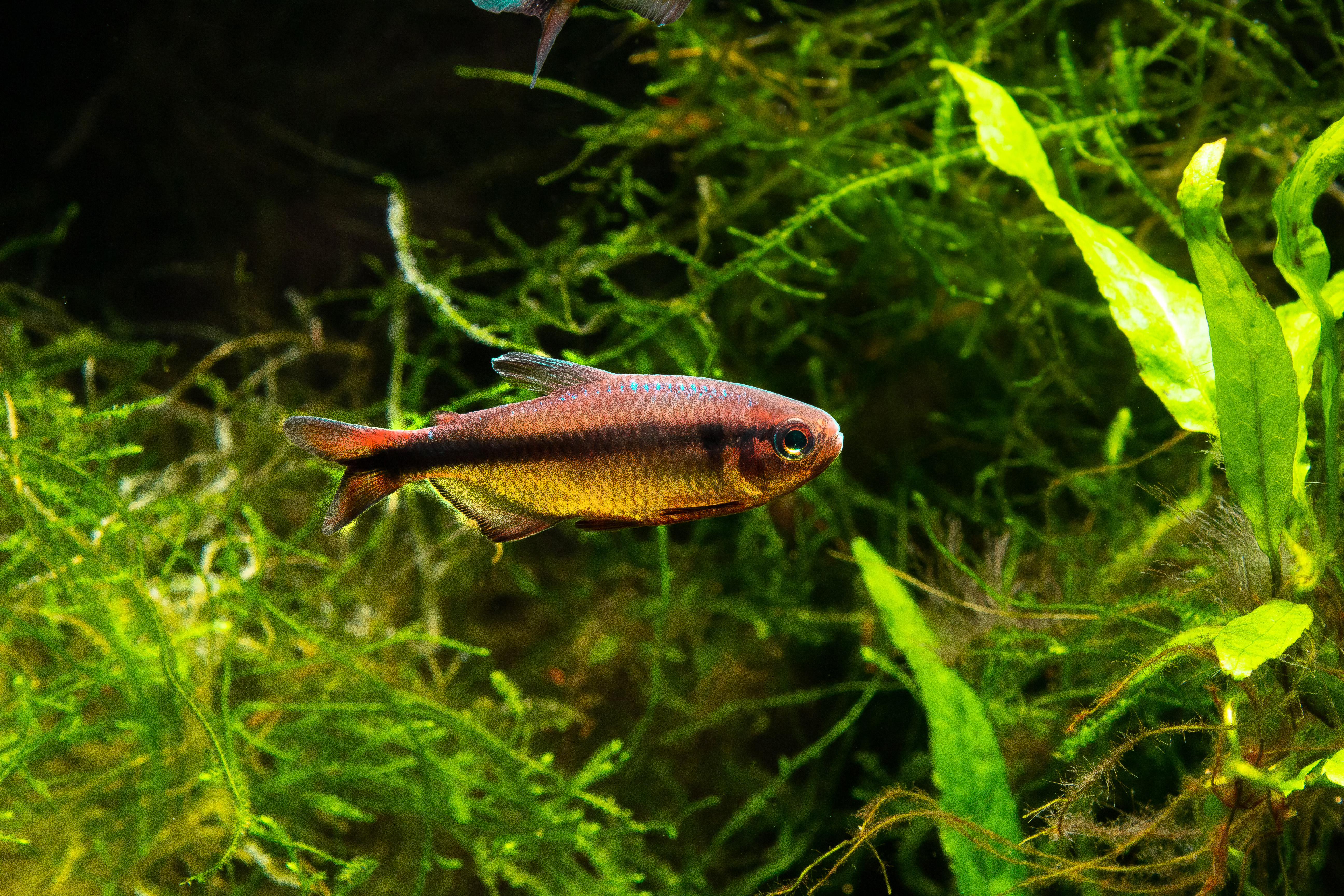
Hyphessobrycon melanostichos 带有黑色纵纹及红蓝色泽,看似小巧,却可能在拥挤或小群环境中争领地、伤鳍掉鳞。足够空间与同种数量比只看体长选缸更重要。
分布与栖息地
特有于巴西塔帕若斯河上游的 Doze de Outubro 河。Teles Pires 河另有相似鱼以 cf. 名称出现,是否属于另一个种尚未确定,不能直接合并分布。
饲养环境
最小规格只是底线,更理想的安排是约 90 cm 长的缸饲养十二条以上。数量太少更容易争夺优势位置,狭小空间内雄鱼甚至会损伤更大伙伴的鳞片和鱼鳍。
密植水草能衬托成鱼颜色,也可用圆石、沙底、沉木和落叶作自然布景。大量莫丝有时能为自然繁殖留下的鱼苗提供藏身处。
它并非典型黑水鱼,不能盲目追求极低酸碱度,pH 不应低于 5.5。
食性与喂食
天然可能杂食小型无脊椎动物、甲壳动物、丝状藻和落果等。干粮可以接受,但搭配活饵和冷冻红虫、孑孓、水蚤等更合适,避免单一食谱。
习性与混养
同种形成松散等级,雄鱼会持续展示或较量以争取位置和雌鱼。十条以上通常能减轻问题,但有明显界限的大缸也可能出现领地行为,不能只靠缸长保证相安无事。
空间充足时对其他种攻击较少,仍需谨慎对待长鳍鱼。体型相近、健壮且活动于开阔水域的脂鲤较适合,其他相容小型鲶鱼或不具捕食性的伙伴须逐一核对。
雌雄区分
平时差异有限,雌雄大小相近,雌鱼在状态好或抱卵时体形可能较深。求偶雄鱼颜色整体变暗,尾部带红褐色,也更常追逐同种。
繁殖
散卵、不护卵,成鱼状态好时可能经常繁殖,成熟莫丝缸里偶尔会自行出现鱼苗。提高产量可单设弱光繁殖缸,铺网隔、塑料草垫、玻璃珠,或大量细叶植物、产卵拖把,使卵免被亲鱼吃到。
雌雄分开调养往往比一直合养更成功。使用微酸至中性水,配气动海绵或气石。繁殖建议中既有稍凉水刺激,也有适温上端条件,应避免把两种思路混成一次大幅升降温。
可放一对,或一至两雄配数条雌鱼,常在次晨见卵。开口用草履虫或约 5~50 μm 的微型饵料,长大后再转丰年虾无节幼体和微虫。
补充说明
与 Hyphessobrycon sp. 'Blue Ribbon' 相比,本种身体较轻巧流线化、肩斑较小,并具有后者缺少的红色。不要只凭共同黑纹认作同一种。
图片
图片来自 SeriouslyFish,版权归各摄影者所有。
English
Overview
Small size does not make Hyphessobrycon melanostichos harmless in cramped quarters. This black-striped, red-and-blue tetra may defend territory, tear fins, and dislodge scales when space or group size is inadequate. Plan the aquarium around its social behavior rather than length alone.
Distribution & habitat
It is endemic to the Doze de Outubro River in Brazil's upper Tapajós basin. A similar fish from the Teles Pires carries a provisional cf. identification; whether it represents another species remains unresolved.
Aquarium setup
Treat the listed minimum as a lower limit. A group of twelve or more in an aquarium around 90 cm long is a better target. Small groups compete more intensely, and confined males can injure even larger companions.
Dense planting displays adult color well. Rounded stones, sand, wood, and leaves offer a more natural arrangement. Extensive moss may shelter fry from spontaneous spawning.
This is not a blackwater specialist. Do not drive pH below 5.5 in an attempt to reproduce an extremely acidic environment.
Diet & feeding
Small invertebrates, crustaceans, filamentous algae, and fallen fruit are presumed natural foods. Prepared foods are accepted, but regular live or frozen bloodworms, mosquito larvae, and small water fleas improve variety.
Behaviour & compatibility
Loose hierarchies form within the group, with males displaying and competing for females and position. Ten or more usually reduce problems, although territorial behavior can occur in larger aquaria with distinct boundaries as well.
Aggression toward other species is limited in spacious conditions, but long fins remain vulnerable. Robust, similarly sized open-water characins are useful candidates; other compatible small catfishes and nonpredatory companions require individual assessment.
Sexual dimorphism
Outside breeding condition the sexes are similar in size and appearance, although well-conditioned females may be deeper-bodied. Courting males darken, develop reddish-brown hints in the tail, and are more likely to chase conspecifics.
Breeding
An egg scatterer without parental care, it may spawn repeatedly when well conditioned. A mature moss-filled aquarium can occasionally yield surviving fry. For greater production, use a separate dim aquarium with mesh, artificial grass, marbles, fine plants, or mops to protect eggs from the adults.
Separate conditioning of the sexes often improves success. Provide slightly acidic to neutral water and gentle air-powered filtration or an airstone. Breeding advice includes both slightly cooler-water stimulation and conditions toward the warm end of the suitable range; these should not be combined into abrupt temperature swings.
Introduce one pair or one to two males with several females. Eggs are often detected the next morning. Start fry on Paramecium or very fine food around 5–50 μm, then introduce Artemia nauplii and microworms as they grow.
Notes
Compared with Hyphessobrycon sp. 'Blue Ribbon', this fish is more lightly built and streamlined, has a smaller humeral mark, and possesses red coloration absent in the other form.
来源
ID:hyphessobrycon-melanostichos · 文件: data/species/hyphessobrycon-melanostichos.md · 状态: 草稿