红蓝灯 · Colombian Tetra
概要
| 字段 | 值 |
|---|---|
| 类别 | 鱼 |
| 学名 | Hyphessobrycon columbianus |
| 分类 | 脂鲤目 Characiformes › 脂鲤科 Characidae › Hyphessobrycon |
| 水体 | 淡水 |
| 原产地 | 哥伦比亚北部乔科省阿坎迪河,靠近巴拿马边界 |
| 成体体长 | 6.5 cm |
| 饲养难度 | 入门 |
| 最小水体 | 81 L |
| 最小缸长 | 90 cm |
| 群居方式 | 群游 |
| 性情 | 温和 |
| 外部数据 | seriouslyfish hyphessobrycon-columbianus;fishbase 60560 |
| 繁殖方式 | 散卵 |
| 别名 | Hyphessobrycon columbianus |
水质参数
| 参数 | 耐受范围 | 最适范围 | 单位 |
|---|---|---|---|
| 水温 | 20–28 | — | °C |
| pH | 5–7.5 | — | — |
| 总硬度 | 1–10 | — | dGH |
概述
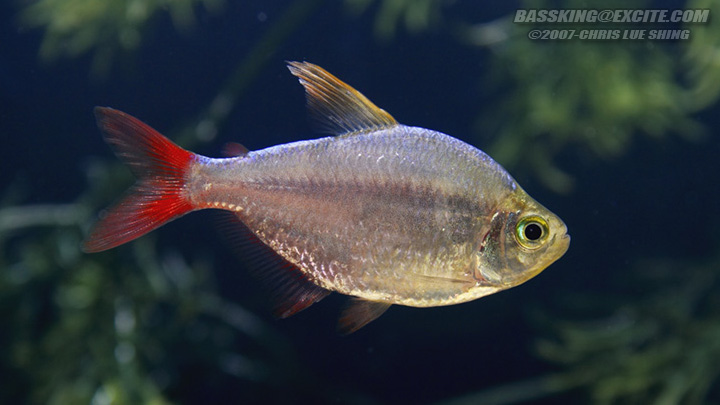
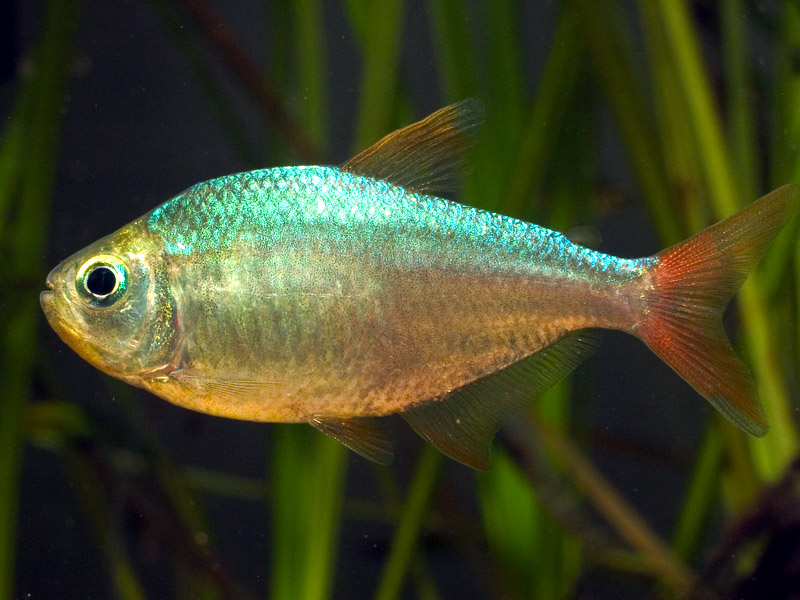
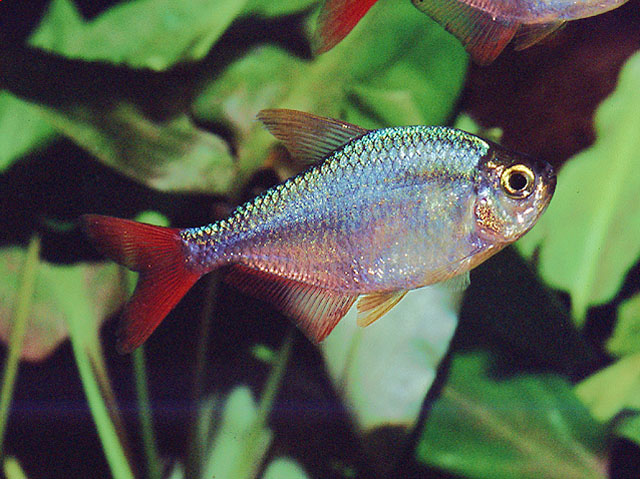
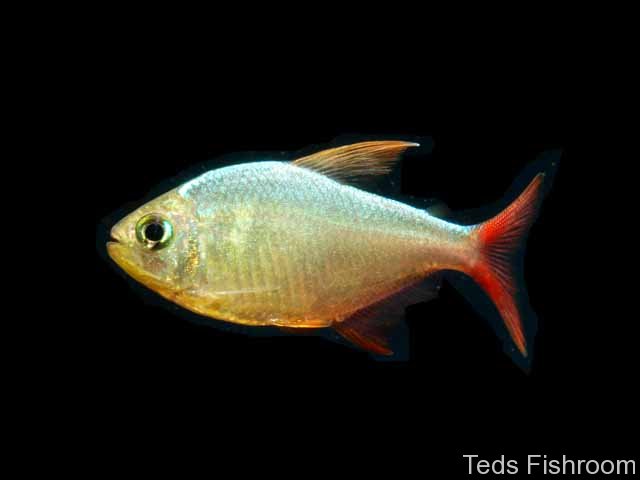
红蓝灯体底银色,上半身有蓝色虹彩,尾鳍与臀鳍鲜红,两性都有这套醒目配色。它通常温和,群体饲养时展色与活动更自然,适合伙伴选择得当的混养缸。
分布与栖息地
目前似乎只确认于哥伦比亚北部乔科省阿坎迪河,靠近巴拿马边界及大西洋岸。
饲养环境
具体装饰没有严格限制,但有结构、最好带水草的环境更利于展色。保留群体活动空间,过滤不必产生很强冲流,适度水流通常会被接受。
食性与喂食
天然可能杂食,以小型蠕虫、昆虫和浮游动物为主,另有少量植物与碎屑。缸中容易喂养,用优质薄片、小颗粒配红虫、水蚤、丰年虾等活饵或冷冻饵,并保留部分含植物或藻类的干粮。
习性与混养
至少八至十尾、雌雄混合更适合。可配体型相近的温和灯鱼、小型底栖鲶鱼及不捕食小鱼的中型慈鲷;其他安静群游鱼有助于提高安全感。
雌雄区分
成熟雄鱼一般更修长、略小,背鳍较延长,颜色可能更浓;不过两性基础配色相同,不应把红蓝色当作雄鱼独有标志。
繁殖
散卵且无亲鱼照料,状态好时可频繁产卵,成熟缸中偶尔会自然留住少量幼鱼。提高保苗率可另设昏暗缸,用成熟水、气动海绵或气石维持环境,底部用隔卵网、玻璃珠或大量细叶植物保护卵。
亲鱼群先一起调理,再选一对或一至两雄配数雌入缸,通常可在次晨检查卵。产卵过程可能持续两至四小时,状态好的成熟雌鱼一窝可达约两千枚,不等于每次都会如此。卵约一天至一天半孵化,初孵幼体仍带明显卵黄。开口先喂草履虫或极细幼鱼料,再转丰年虾无节幼体、微虫。
图片
图片来自 SeriouslyFish,版权归各摄影者所有。
English
Overview
Silver-bodied with blue iridescence above and vivid red tail and anal fins, Hyphessobrycon columbianus shows this striking pattern in both sexes. It is generally peaceful and gives a more natural display in a group within a carefully chosen community.
Distribution & habitat
It appears to be known only from the Acandí River in Chocó, northern Colombia, near Panama and the Atlantic coast.
Aquarium setup
Décor is flexible, but a structured, preferably planted layout encourages good coloration. Retain room for the group to move. Powerful current is unnecessary, though some water movement is appreciated.
Diet & feeding
It is probably an omnivorous forager, taking mostly small worms, insects, and zooplankton with some plant matter and detritus. Captive feeding is easy: combine quality flakes or granules, including plant-rich products, with small live or frozen foods such as chironomid larvae, water fleas, and Artemia.
Behaviour & compatibility
Maintain a mixed-sex group of at least eight to ten. Similar-sized characins, small catfish, and nonpredatory medium cichlids are suitable directions. Other gentle schooling fishes can help provide security.
Sexual dimorphism
Mature males are generally slimmer and slightly smaller, with a longer dorsal fin and potentially stronger coloration. Both sexes share the basic pattern, so blue and red colors do not identify a male by themselves.
Breeding
It scatters eggs without parental care and can spawn frequently in good condition. A few young may survive in a mature community, but a separate dim setup retains more. Use mature water, gentle aeration or sponge filtration, and egg protection through mesh, marbles, or abundant fine plants.
Condition adults together, then introduce a pair or one or two males with several females and check for eggs the following morning. Spawning may last two to four hours; a well-conditioned female can produce around two thousand eggs, though that is not a routine guarantee. Hatching follows in roughly a day to a day and a half, with substantial yolk still attached. Begin feeding with Paramecium or very fine fry food, progressing to Artemia nauplii and microworms.
来源
- https://www.seriouslyfish.com/species/hyphessobrycon-columbianus(抓取于 2026-10-10)
hyphessobrycon-columbianus · 文件: data/species/hyphessobrycon-columbianus.md · 状态: 草稿