Hyphessobrycon amapaensis · Amapá Tetra
概要
| 字段 | 值 |
|---|---|
| 类别 | 鱼 |
| 学名 | Hyphessobrycon amapaensis |
| 分类 | 脂鲤目 Characiformes › 脂鲤科 Characidae › Hyphessobrycon |
| 水体 | 淡水 |
| 原产地 | 巴西东北部阿马帕州普雷托河和马拉卡河的有限区域 |
| 成体体长 | 3 cm |
| 饲养难度 | 入门 |
| 最小水体 | 54 L |
| 最小缸长 | 60 cm |
| 群居方式 | 群游 |
| 性情 | 温和 |
| 外部数据 | seriouslyfish hyphessobrycon-amapaensis;fishbase 56429 |
| 繁殖方式 | 散卵 |
水质参数
| 参数 | 耐受范围 | 最适范围 | 单位 |
|---|---|---|---|
| 水温 | 23–28 | — | °C |
| pH | 5–7 | — | — |
| 总硬度 | 1–8 | — | dGH |
概述
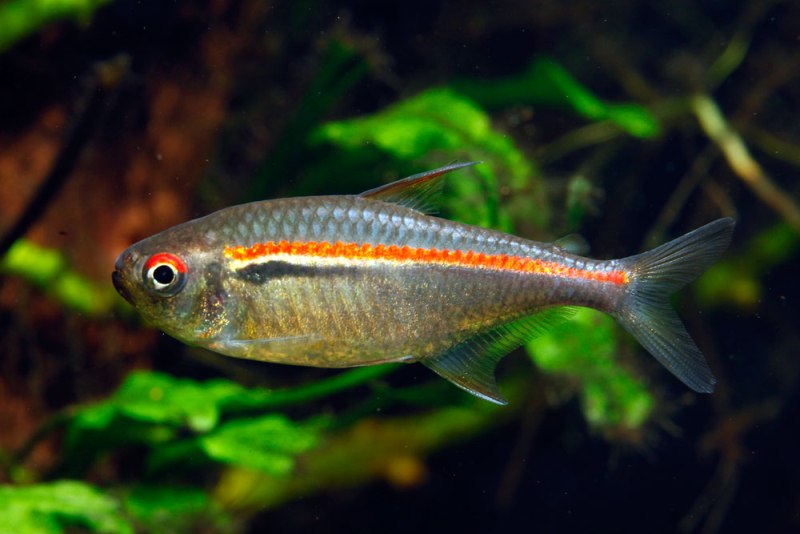
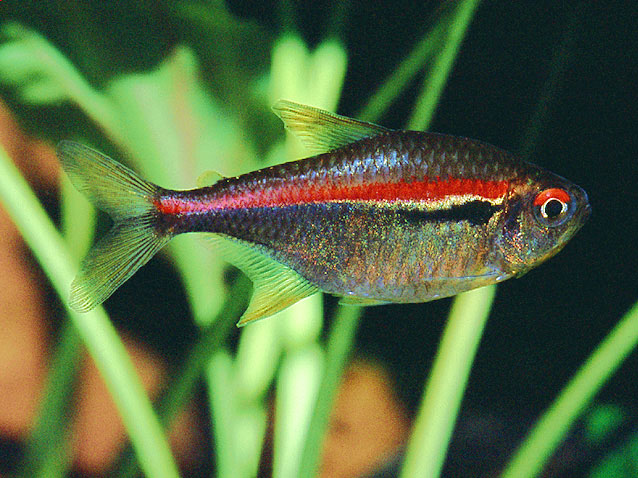
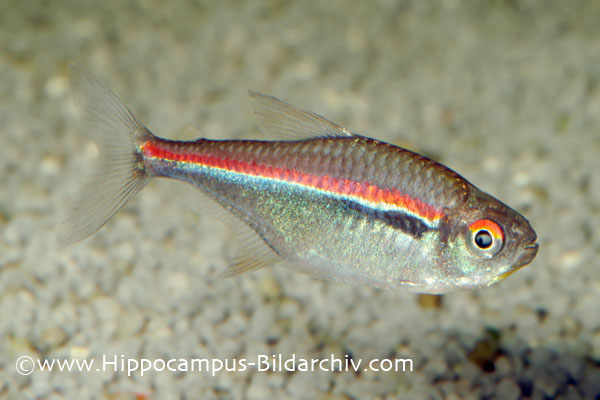
Hyphessobrycon amapaensis 是温和的小型灯鱼,体侧红带较宽,中央带偏白或乳白,下面的黑带可能缩成肩部暗斑。它适合有同种群体的安静混养环境,不应仅凭“三色横纹”就与相似种混同。
分布与栖息地
已知范围局限于巴西阿马帕州普雷托河与马拉卡河的一小片区域。采集溪流穿过稀树草地,水清澈、略带浅褐色,砂砾底,沉水和岸边植被不多。
饲养环境
砂底、沉木与根枝可以构成布局,也适合种草缸。干叶能增加遮蔽,分解时形成的微生物可作为成鱼和幼鱼的补充食物;叶片是可选缸养布置,不意味着所有采集地都有厚落叶层。
食性与喂食
天然可能杂食,利用微小动物、藻类和掉落果实等。缸中虽可吃干粮,仍宜配红虫、蚊幼虫、小水蚤等小型活饵和冷冻饵,避免长期单一菜单。
习性与混养
至少八至十尾、雌雄混合更合适。可搭配体型相近的温和灯鱼、上层小鱼、小型底栖鲶鱼和不捕食小鱼的温和慈鲷。其他安静群游鱼可帮助它更放心活动。
雌雄区分
成熟雌鱼体形明显更高厚,也略大于雄鱼。
繁殖
散卵且不护卵,状态好时会经常产卵,成熟缸中可能自然出现少量鱼苗。若希望多保苗,可另设昏暗繁殖缸,以成熟水、轻柔气动过滤或气石维持环境,底部放隔卵网、玻璃珠或细叶植物保护卵。
亲鱼群先一起调理,再选一对,或一至两雄配数雌入缸,通常可在次晨观察是否有卵。初期开口用草履虫或极细幼鱼饲料,待能吞咽后再转丰年虾无节幼体、微虫。
图片
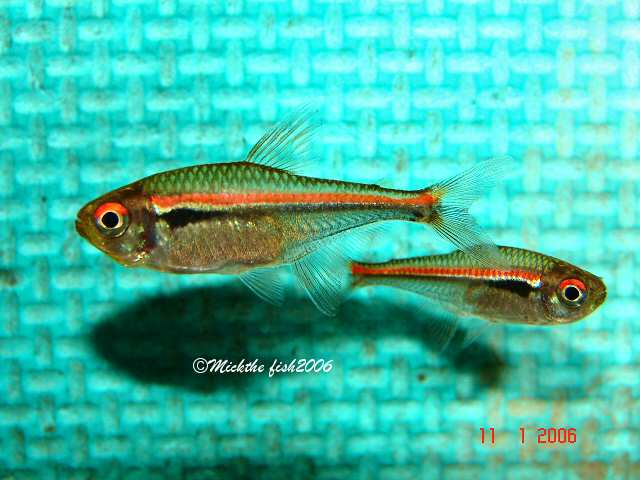
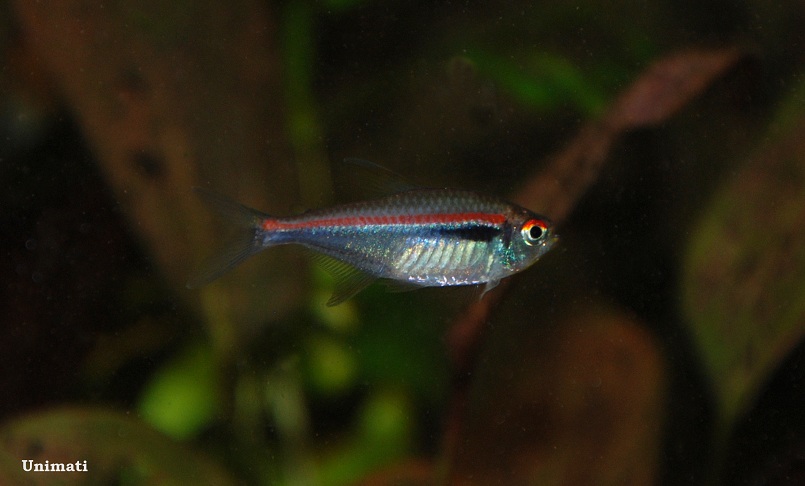
图片来自 SeriouslyFish,版权归各摄影者所有。
English
Overview
A peaceful little tetra, Hyphessobrycon amapaensis has a broad red stripe above a white or cream middle stripe. The dark lower marking may be reduced toward a shoulder blotch. It suits a quiet group community, though a three-stripe pattern alone is insufficient to distinguish all similar species.
Distribution & habitat
Its small known range lies in the Preto and Maraca drainages of Amapá, northeastern Brazil. Collected habitats are savanna streams with clear, lightly brown water, sand and gravel, and little submerged or bankside vegetation.
Aquarium setup
Sand, roots, and branches make a suitable layout, and planted aquaria also work. Dried leaves add cover and support microorganisms that provide supplementary food for adults and fry. Their use is a captive option rather than a claim that every collection site contains deep litter.
Diet & feeding
An omnivorous natural diet is considered likely, including tiny animals, algae, and fallen fruit. Dry food is accepted in aquaria, but add varied small live or frozen foods such as chironomid larvae and water fleas.
Behaviour & compatibility
Keep a mixed-sex group of at least eight to ten. Similar-sized peaceful characins, small surface fishes, small catfish, and nonpredatory mild cichlids are suitable directions. Other gentle schooling fishes can provide reassurance.
Sexual dimorphism
Mature females are noticeably deeper-bodied and slightly larger than males.
Breeding
It scatters eggs without parental care and may spawn regularly when well conditioned. A few fry can appear in a mature aquarium, but a dedicated dim setup improves retention. Use mature water, gentle aeration or sponge filtration, and egg protection through mesh, marbles, or fine plants.
Condition adults together, then introduce a pair or one or two males with several females. Eggs may be detectable the following morning. Start young on Paramecium or extremely fine fry food before introducing Artemia nauplii and microworms once they are large enough.
来源
- https://www.seriouslyfish.com/species/hyphessobrycon-amapaensis(抓取于 2026-10-10)
hyphessobrycon-amapaensis · 文件: data/species/hyphessobrycon-amapaensis.md · 状态: 草稿