L046 斑马异型 · Zebra Plec
概要
| 字段 | 值 |
|---|---|
| 类别 | 鱼 |
| 学名 | Hypancistrus zebra |
| 别名 | L046、L098、Hypancistrus zebra |
| 分类 | 鲶形目 Siluriformes › 骨甲鲶科 Loricariidae › Hypancistrus |
| 水体 | 淡水 |
| 原产地 | 巴西 |
| 成体体长 | 8 cm |
| 饲养难度 | 中等 |
| 最小水体 | 54 L |
| 最小缸长 | 60 cm |
| 领地性 | 是 |
| 水流偏好 | 高 |
| 外部数据 | seriouslyfish hypancistrus-zebra;fishbase 53570 |
| 性情 | 温和 |
| 繁殖方式 | 附着产卵 |
水质参数
| 参数 | 耐受范围 | 最适范围 | 单位 |
|---|---|---|---|
| 水温 | 26–30 | — | °C |
| pH | 6–7.5 | — | — |
| 总硬度 | 2–15 | — | dGH |
概述
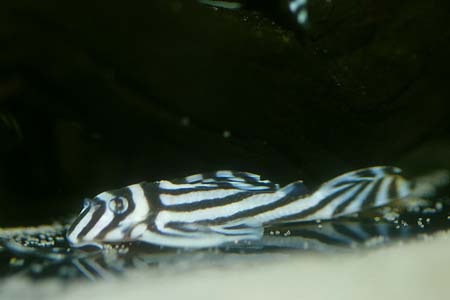
L046 斑马异型(Hypancistrus zebra)以鲜明黑白条纹著称,但饲养重点是温暖、富氧、洁净以及确保它吃到足量食物。它胆小,容易在抢食中落后,不适合普通混养缸随意添加。
分布与栖息地
原产巴西辛古河流域,生活在流水、高溶氧的河段,沙底散布岩石和石块,鱼常躲在较深水域的碎石缝隙间。
饲养环境
沙底配不同大小的光滑石块,沉木和石缝形成多个藏身洞。可在一端设置造流,维持水流和充氧。水草未必能在这类环境中长期长好,水榕、爪哇蕨等耐受种可尝试;水草缸也必须满足其氧气需求。
保持适宜暖水,偏凉环境下难以维持良好状态。群养时必须有充足、可分隔的藏身处。
食性与喂食
除幼鱼阶段外,更偏好动物性食物,可用红虫、切碎贻贝、虾肉等活饵或冷冻饵,搭配沉底干粮。藻和植物性物质通常吃得较少,偶尔可能啃黄瓜或西葫芦,不能当作主要食物来源。
习性与混养
一般性情较温和,但对同种和外形相近的底栖鱼有领地意识。更适合专养;若混养,应选环境需求相近、不会在底部与它争食的伙伴,并避免其他底栖竞争者。
高温、高氧和洁净要求与抢食弱势必须同时考虑,不能只因某种鱼温度相近就认定合适。
雌雄区分
成熟雄鱼第一胸鳍鳍条较粗,长有雌鱼缺少的发达齿突,俯视头部也更宽。
繁殖
人工洞繁已经较常见。若从幼鱼起培养,可用至少六条组成群体,并安排约 91 cm 长的较大缸;能够分辨性别时,以每雄配两至三雌为方向。
提供多处岩洞、陶盆洞或管洞,入口只略大于鱼体,洞口附近要有一定水流。可裸底,维持高溶氧、pH 6.5~7.5、水温 28~30 °C,用丰富活饵和冷冻饵调养。
雄鱼选洞守卫并引诱雌鱼,双方可能在洞内停留数天后才产卵受精。雌鱼随后被赶离,雄鱼单独守护通常七至十五枚卵,持续扇水并防御洞口。也有繁殖者将卵移入悬挂在主缸中的小容器,以气石供氧孵化。
卵约一周孵化,鱼苗再靠大卵黄囊维持两至三天。之后需频繁充足投喂微虫、丰年虾无节幼体,也会吃沉底干粮。鱼苗食量很大,断粮容易饿死。它们可留在繁殖缸,或移入水体相同的育苗缸。
若长期不产,可尝试用适温范围内稍凉的新水进行约 50%~70% 换水,每两至三天一次,模拟雨季变化,避免使水温跌出本种适温。
补充说明
L046 及部分不同花纹编号可能指向同一种鱼,正式学名与可靠来源比单独编号更重要。
挑选个体时留意腹部是否饱满、眼睛是否凹陷,明显消瘦不应忽略。雄鱼胸鳍齿突容易挂网,转移时需格外小心。
图片
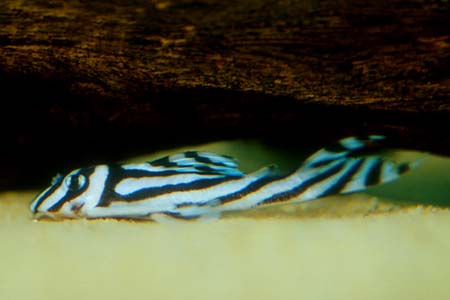
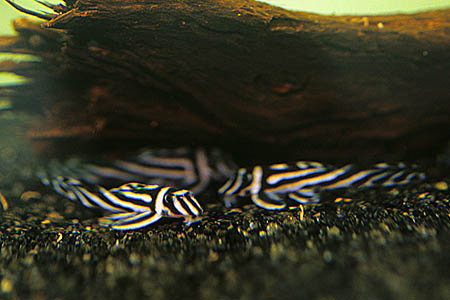
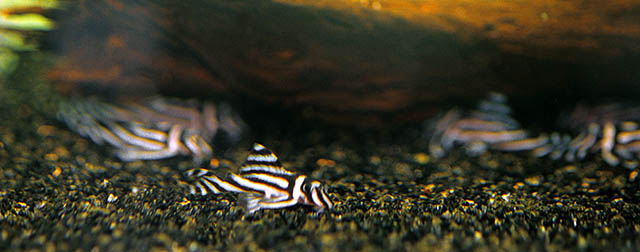
图片来自 SeriouslyFish,版权归各摄影者所有。
English
Overview
The black-and-white zebra pleco, Hypancistrus zebra, needs more than an attractive display. Warm, oxygen-rich, exceptionally clean water and dependable access to food are central to its care. Shy fish can lose out to vigorous feeders, making a general community a poor default.
Distribution & habitat
It comes from Brazil's Xingu drainage, occupying well-oxygenated flowing water over sand scattered with rocks and stones. Fish shelter in rubble crevices in deeper water.
Aquarium setup
Arrange smooth stones of different sizes over sand and provide multiple woody or rocky refuges. Circulation from one end can maintain movement and oxygenation. Plants may struggle, though Anubias and Java fern can be tried. A planted aquarium remains possible only if its oxygen needs are met.
Keep conditions suitably warm; cooler water does not support good condition. Groups need numerous separated hiding places.
Diet & feeding
Beyond the juvenile stage, animal foods are preferred. Offer live or frozen bloodworms, chopped mussel or shrimp, and sinking preparations. Algae and plant material are taken less often, although cucumber or zucchini may occasionally be nibbled. Vegetables should not be mistaken for its main ration.
Behaviour & compatibility
Generally peaceful behavior coexists with territoriality toward conspecifics and similar bottom dwellers. A dedicated aquarium is preferable. If companions are included, select fishes with matching conditions that do not compete for food on the bottom, and avoid rival bottom dwellers.
Temperature compatibility alone is insufficient: high oxygen requirements, cleanliness, and the zebra pleco's weak feeding competitiveness must also be considered.
Sexual dimorphism
Mature males have a thicker first pectoral ray bearing pronounced odontodes absent in females. The male head also appears broader from above.
Breeding
Cave breeding is well established. A group of at least six juveniles can be raised together to obtain compatible fish, using larger quarters around 91 cm long. Where sexing is possible, aim for two to three females per male.
Provide several rock, pot, or pipe caves with entrances only slightly larger than the fish and water passing nearby. A substrate is optional. Maintain strong oxygenation, pH 6.5–7.5, and 28–30 °C, conditioning the fish with ample live and frozen foods.
A male defends a chosen cave and attracts a female, sometimes remaining inside with her for several days before spawning. He then expels her and tends the usual seven to fifteen eggs alone, fanning them and guarding the entrance. Some breeders instead incubate eggs in a small container suspended inside the main aquarium with an airstone.
Hatching takes about a week, followed by two to three days of yolk use. Then supply frequent substantial meals of microworms and Artemia nauplii, with sinking preparations also grazed. Fry feed heavily and can starve without a dependable supply. They may stay in the spawning aquarium or move to identical water in a rearing setup.
If spawning stalls, a 50–70% change with slightly cooler water within the suitable range may be tried every two to three days to imitate seasonal change.
Notes
L046 and some differently patterned codes can refer to the same species. A reliable identification and origin matter more than the code alone.
At purchase, inspect for a filled abdomen and avoid overlooking sunken eyes or other signs of emaciation. Male pectoral odontodes can snag in netting, so transfers require care.
来源
- https://www.seriouslyfish.com/species/hypancistrus-zebra(抓取于 2026-10-10)
hypancistrus-zebra · 文件: data/species/hypancistrus-zebra.md · 状态: 草稿