Hypancistrus inspector · L102
概要
| 字段 | 值 |
|---|---|
| 类别 | 鱼 |
| 学名 | Hypancistrus inspector |
| 别名 | Snowball Pleco |
| 分类 | 鲶形目 Siluriformes › 骨甲鲶科 Loricariidae › Hypancistrus |
| 水体 | 淡水 |
| 原产地 | 巴西、委内瑞拉 |
| 成体体长 | 16 cm |
| 饲养难度 | 中等 |
| 最小水体 | 243 L |
| 最小缸长 | 120 cm |
| 群居方式 | 群游 |
| 性情 | 温和 |
| 外部数据 | seriouslyfish hypancistrus-inspector;fishbase 58937 |
| 繁殖方式 | 附着产卵 |
水质参数
| 参数 | 耐受范围 | 最适范围 | 单位 |
|---|---|---|---|
| 水温 | 22–30 | — | °C |
| pH | 5–7.5 | — | — |
| 总硬度 | 1–15 | — | dGH |
概述
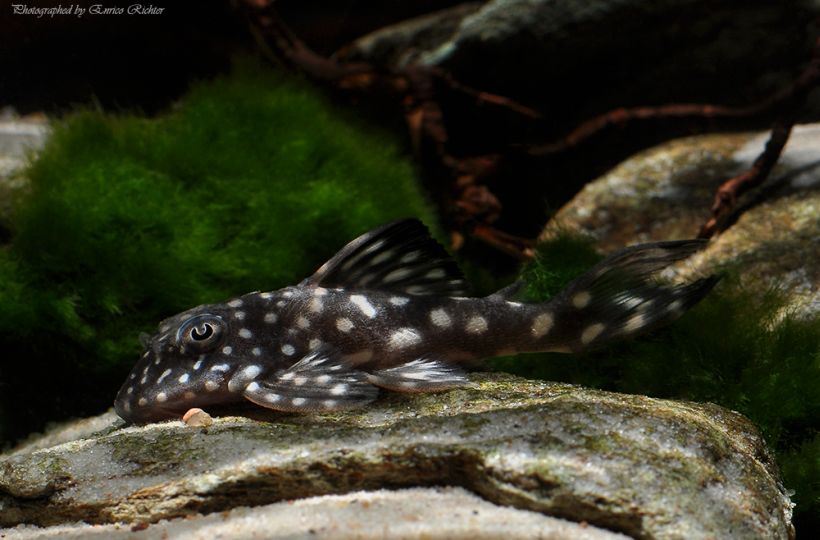
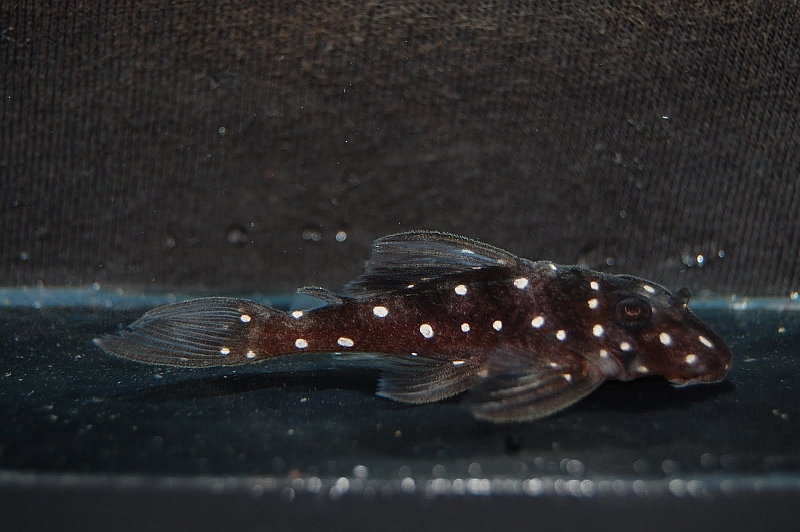
Hypancistrus inspector 即 L102,黑褐底色上有较大浅色斑点,头斑比体斑小。性情温和,但应避免与其他同属异型共同繁殖,以减少杂交。
分布与栖息地
原生于巴西亚马孙州尼格罗河上游,以及委内瑞拉连接尼格罗河与奥里诺科河的卡西基亚雷水系部分区域。通常在岩石急流采到。
饲养环境
缸底至少约 120 × 45 cm。用大小不同的岩石、砂、细砾和圆石模拟溪流,沉木、陶管和花盆形成缝隙、暗处及视线遮挡。
对有机污染积累不耐受,每周换约 30%~50% 水,维持良好溶氧和一定水流,可结合过滤、造流或气石,不能仅靠洞穴布景满足需要。
食性与喂食
野生鱼可能杂食,但偏向水生无脊椎动物和其他小动物。缸养提供沉底粮、水蚤、蚊幼虫、红虫、虾肉等多样食物,并配适量鲜果蔬或焯煮马铃薯。凝胶饵可混合蔬菜、螺旋藻和动物原料。
习性与混养
性情温和,可与经过筛选、条件相符的伙伴混养。不要与其他同属鱼共同饲养繁殖群,外形相似并不意味着杂交没有影响。
雌雄区分
成熟雄鱼胸鳍首鳍条及鳃盖附近的齿突较多,身体常带整体红色调。俯视雄鱼通常更修长,雌鱼较粗壮。
繁殖
已有人工繁殖,在洞中产卵,由雄鱼照顾后代。
补充说明
相似近亲(Hypancistrus contradens)头身斑点大小较接近,压低的背鳍能到达脂鳍棘;本种头斑较小,压低背鳍不到脂鳍棘。部分早期奥里诺科标本后来归入近亲,旧照片和产地标签需要留意。
图片
图片来自 SeriouslyFish,版权归各摄影者所有。
English
Overview
Hypancistrus inspector, known as L102, has large pale spots on a dark background, with smaller spotting on the head. It is peaceful, but breeding stocks should be kept away from other members of the genus to avoid hybridization.
Distribution & habitat
It is native to the upper Negro in Brazil's Amazonas State and parts of Venezuela's Casiquiare system linking the Negro and Orinoco. Typical collection sites are rocky rapids.
Aquarium setup
Provide at least a 120 × 45 cm footprint. Rocks, sand, fine gravel, and rounded boulders can form a stream arrangement. Add wood, ceramic pipes, or pots to create shaded crevices and visual barriers.
Prevent organic accumulation with weekly water changes of approximately 30–50%. Maintain good oxygenation and some movement through suitable filtration, circulation, or aeration; caves alone do not meet its environmental needs.
Diet & feeding
Wild fish are probably omnivorous, favoring aquatic invertebrates and other small animals. Offer sinking foods, water fleas, mosquito larvae, bloodworms, and shrimp meat, with suitable fruit or lightly cooked potato. Gel foods can combine vegetables, spirulina, and animal ingredients.
Behaviour & compatibility
Its peaceful disposition allows carefully selected companions with matching requirements. Avoid combining breeding stock with other Hypancistrus, even when the fishes look similar.
Sexual dimorphism
Mature males develop more extensive pectoral and gill-cover odontodes and often show an overall reddish tone. From above they are generally slimmer than the stockier females.
Breeding
Aquarium spawning is documented. Eggs are laid in a cave and cared for by the male.
Notes
In similar Hypancistrus contradens, head and body spots are closer in size and the folded dorsal fin reaches the adipose spine. This species has smaller head spots and a shorter-reaching dorsal fin. Some historical Orinoco material was reassigned to the relative, so old labels deserve scrutiny.
来源
- https://www.seriouslyfish.com/species/hypancistrus-inspector(抓取于 2026-10-10)
hypancistrus-inspector · 文件: data/species/hypancistrus-inspector.md · 状态: 草稿