大胸水狼脂鲤 · Vampire Tetra
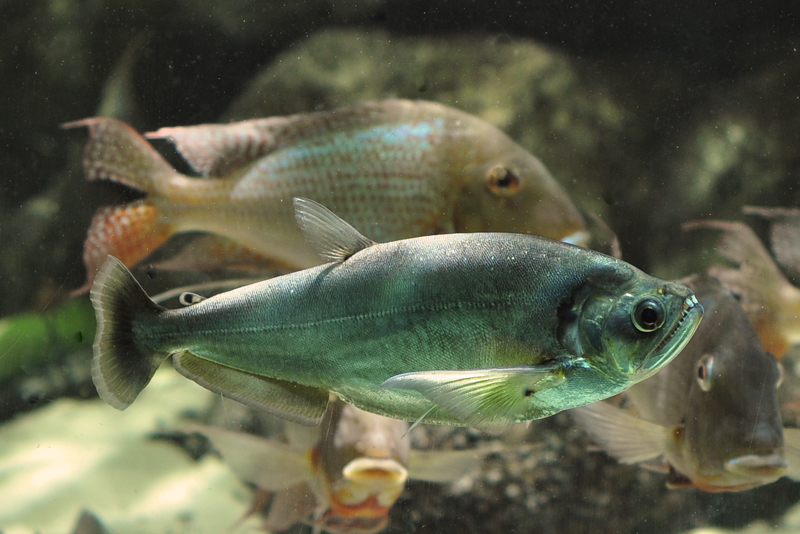
概要
| 字段 | 值 |
|---|---|
| 类别 | 鱼 |
| 学名 | Hydrolycus scomberoides |
| 别名 | 似鲭水狼脂鲤、大胸水狼脂鯉、似鯖水狼脂鯉、Hydrocyon scomberoides、Cynodon pectoralis |
| 分类 | 脂鲤目 Characiformes › 犬齿脂鲤科 Cynodontidae › Hydrolycus |
| 水体 | 淡水 |
| 原产地 | 玻利维亚、巴西、厄瓜多尔、秘鲁 |
| 成体体长 | 30 cm |
| 饲养难度 | 中等 |
| 最小水体 | 1181 L |
| 最小缸长 | 210 cm |
| 群居方式 | 独居 |
| 性情 | 温和 |
| 特征 | 会跳缸: 是;吃小鱼: 是 |
| 外部数据 | seriouslyfish hydrolycus-scomberoides;fishbase 6419 |
| 食性 | 肉食 |
水质参数
| 参数 | 耐受范围 | 最适范围 | 单位 |
|---|---|---|---|
| 水温 | 24–28 | — | °C |
| pH | 6–8 | — | — |
| 总硬度 | 2–15 | — | dGH |
概述
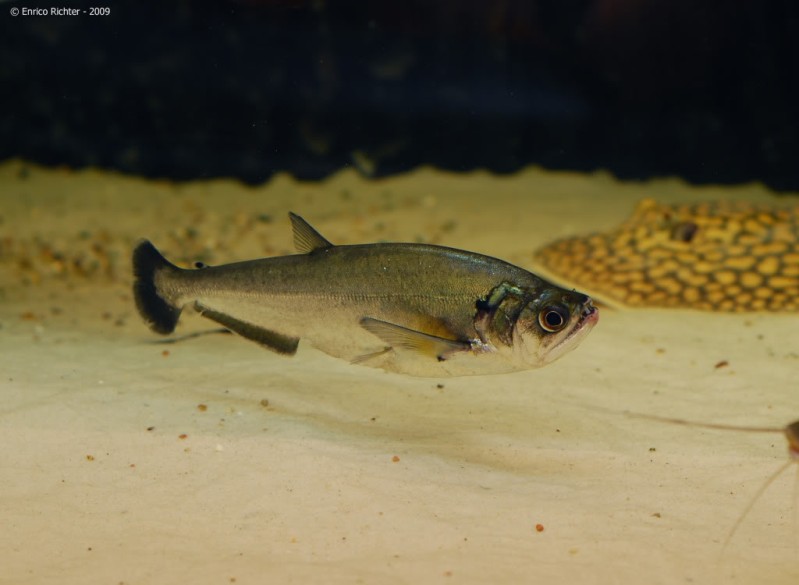
大胸水狼脂鲤(Hydrolycus scomberoides)是具有发达犬齿的食鱼性脂鲤,虽然比常被混淆的某些近缘鱼小,仍需要大型设施。幼鱼常斜着身体、头朝下藏在装饰附近,成鱼则更常使用开阔水域。
分布与栖息地
分布于巴西、玻利维亚、秘鲁和厄瓜多尔的亚马孙河中上游,巴西塔帕若斯河似乎构成下游界限。成鱼多利用白水或黑水干道及较大支流的流水河段,幼鱼可能进入小支流和淹水林。
饲养环境
底面积至少约 210 × 75 cm。沙、细砾、圆石和少量沉木可营造河流环境,保留足够泳道,坚韧附生植物也可使用。
要求成熟过滤、低有机污染、高溶氧及适量水流,每周换水约 30%–50%。善跳,缸盖须严密;遮挡背面及侧面玻璃可能减轻受惊撞缸,尤其不能把它限制在狭小空间。
食性与喂食
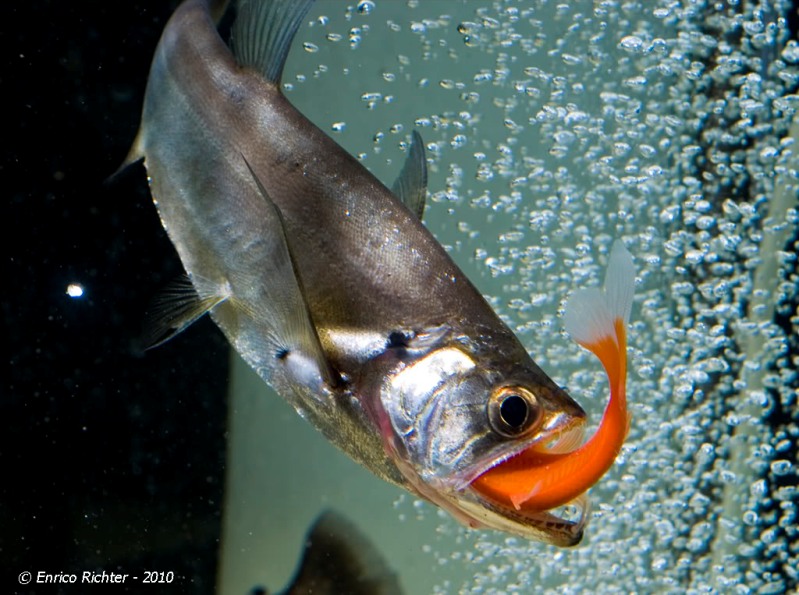
专性食鱼,能摄入相对较大的猎物。新进口个体可能只认活鱼,但多数能逐渐转向非活体食物。
牛心、鸡肉等不适合作为食物来源,长期依靠未经良好调养的饵料鱼也带来病原、寄生虫及营养风险。
习性与混养
对大到无法吞下的鱼通常较温和,可以专门饲养,或选大小相近、非攻击性的伙伴。空间充足时也能养至少三尾同种,但需按整群成鱼规划。
繁殖
自然繁殖集中在十一月至次年四月,成鱼为此进行长距离溯河迁移。这种自然周期并不构成普通鱼缸可复制的繁殖方法。
补充说明
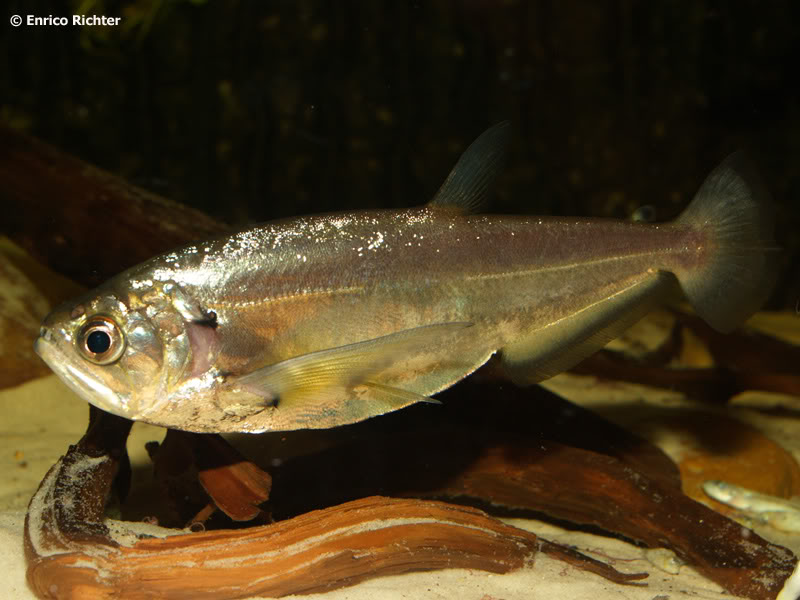
商品名可能与体形大得多的近缘鱼共用。腹鳍基部位置和胸鳍内侧鳍条基部暗斑等特征比“吸血鬼鱼”标签更有辨识意义,购买前应确认身份。
图片
图片来自 SeriouslyFish,版权归各摄影者所有。
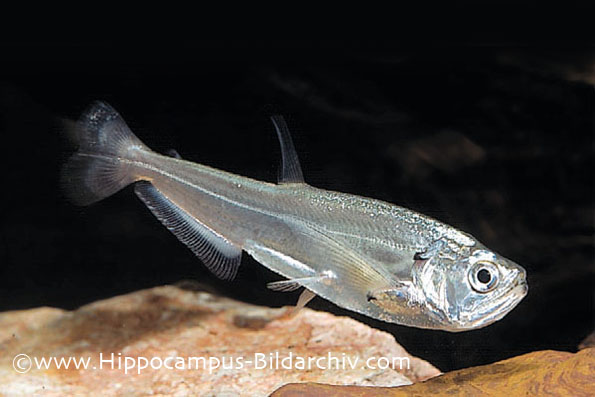
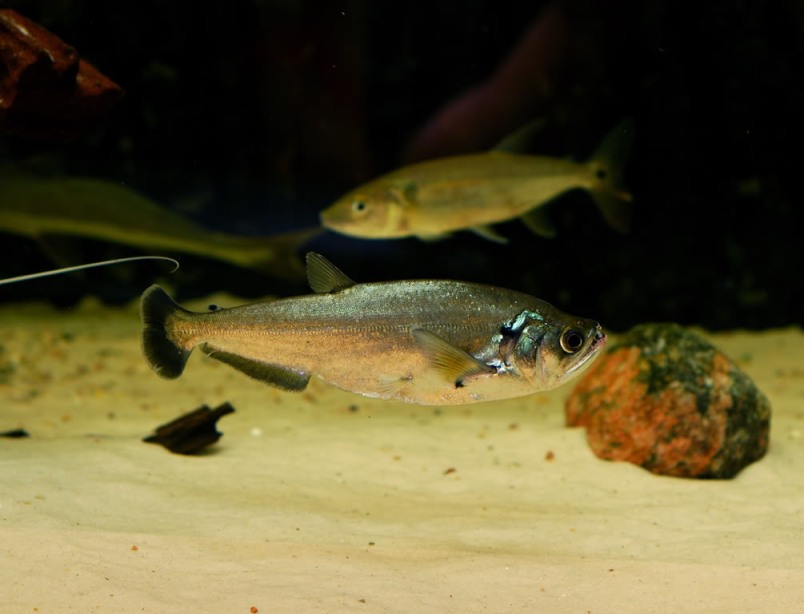
English
Overview
Hydrolycus scomberoides is a dogtooth characin with a specialized fish-based diet. Smaller than some frequently confused relatives, it nevertheless requires large facilities. Juveniles often shelter at an oblique head-down angle, while adults use open water more extensively.
Distribution & habitat
It occurs in the central and upper Amazon of Brazil, Bolivia, Peru, and Ecuador, with the Tapajós apparently marking the downstream limit. Adults favor flowing main channels and larger tributaries of both whitewater and blackwater rivers. Smaller tributaries and flooded woodland are presumed juvenile habitats.
Aquarium setup
Provide at least about 210 × 75 cm of base area. Sand, gravel, rounded stones, and optional wood should leave broad swimming lanes; hardy attached plants can be used.
Mature filtration, low organic waste, high oxygen availability, and moderate current are essential, with weekly changes of roughly 30–50%. Fit a secure lid against jumping. Screening the back and sides may reduce startled collisions, particularly where confined surroundings would otherwise heighten nervousness.
Diet & feeding
This obligate piscivore takes relatively large prey. New imports may initially accept only live fish, but most can learn to take nonliving alternatives.
Avoid beef heart, chicken, and similar terrestrial meats. Routine use of poorly conditioned feeder fish introduces nutritional, parasite, and disease concerns.
Behaviour & compatibility
It is relatively peaceful with companions too large to swallow. Dedicated housing or similar-sized nonaggressive fishes are appropriate possibilities. Groups of at least three can be considered only with space for the entire adult group.
Breeding
Natural reproduction occurs from November to April and involves long upstream movements. This seasonal information is not a demonstrated ordinary-aquarium breeding procedure.
Notes
Trade labels overlap with much larger relatives. Pelvic-fin placement and the dark mark at the inner pectoral-ray base are more informative than a vampire-fish name alone. Confirm identity before selecting permanent accommodation.
来源
- https://www.seriouslyfish.com/species/hydrolycus-scomberoides(抓取于 2026-10-10)
hydrolycus-scomberoides · 文件: data/species/hydrolycus-scomberoides.md · 状态: 草稿