兴冈兵鲶 · Xingu Cory
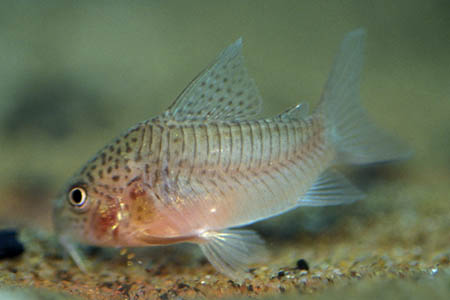
概要
| 字段 | 值 |
|---|---|
| 类别 | 鱼 |
| 学名 | Hoplisoma xinguense |
| 别名 | 興岡兵鯰、Dust Cory、Corydoras xinguensis |
| 分类 | 鲶形目 Siluriformes › 美鲶科 Callichthyidae › Hoplisoma |
| 水体 | 淡水 |
| 原产地 | 巴西 |
| 成体体长 | 3.7 cm |
| 饲养难度 | 入门 |
| 最小水体 | 51 L |
| 最小缸长 | 45 cm |
| 群居方式 | 群游 |
| 性情 | 温和 |
| 外部数据 | seriouslyfish hoplisoma-xinguense;fishbase 12202 |
| 食性 | 杂食 |
| 繁殖方式 | 附着产卵 |
水质参数
| 参数 | 耐受范围 | 最适范围 | 单位 |
|---|---|---|---|
| 水温 | 22–26 | — | °C |
| pH | 6–7.2 | — | — |
| 总硬度 | 2–12 | — | dGH |
概述
兴冈兵鲶(Hoplisoma xinguense)是体型很小的斑点甲鲶,理想为十尾或更多同养。它温和,适合小型伙伴;多个 C 编号曾对应本种,但相似外观仍需结合产地判断。
分布与栖息地
可靠记录来自巴西马托格罗索州兴古河上游,模式地点在苏亚米苏溪。也采自库卢埃内和巴托维的支流及森林小溪。下兴古、托坎廷斯和塔帕若斯的部分馆藏鉴定尚未确认,不宜直接扩大原生范围。
饲养环境
群养可参考约 45 × 38 × 30 厘米,细沙配平滑石、沉木、密植和浮水遮蔽。保持充氧、水面扰动和洁净底砂,不用底滤板,避免触须受损。
食性与喂食
杂食,在底部寻找食物。小型下沉颗粒或片剂配红虫、水蚤、丰年虾等,确保足量食物落到底部,不只依赖其他鱼剩余。
习性与混养
至少十尾的群体更理想,通常更自信活跃。避开大或过于强势的鱼,选择小型温和伙伴。
雌雄区分
雌鱼更大、更圆宽,从上方看最清楚;成熟雄鱼鳍尖往往更尖。
繁殖
已有人工繁殖记录:1999 年一组鱼在酸碱度 6.8~7、水温 23~24.5 °C 下产出一百二十余粒卵,幼鱼生长很慢。可一雌两雄并用活冷冻饵调理,抱卵后尝试稍凉的大换水。卵附于玻璃或叶面后,可分离亲鱼与卵,在同缸水中孵育并移除霉卵。卵黄耗尽后喂微虫和初孵丰年虾,薄沙底可用于育苗。其他鼠鱼研究中的精子吞饮机制不能直接当作本种已证实过程。
补充说明
C055、C105 至 C108 的商品鱼曾被认定为本种。偶尔吞气是辅助呼吸,若突然频繁应检查水质;胸鳍棘易挂网和刺伤,搬动要小心。
图片
图片来自 SeriouslyFish,版权归各摄影者所有。
English
Overview
A small spotted cory catfish, Hoplisoma xinguense benefits from a group of ten or more. Its modest size favors small, peaceful companions. Several trade codes have been associated with the species, but locality remains useful when comparing look-alikes.
Distribution & habitat
Confirmed occurrence is in the upper Xingu of Mato Grosso, Brazil, with the type locality in Suia Missú Creek. Collections include forest streams and tributaries of the Culuene and Batovi. Identifications from the lower Xingu, Tocantins, and Tapajós remain unconfirmed.
Aquarium setup
A suggested group tank measures about 45 by 38 by 30 cm. Use fine sand with smooth rocks, wood, plants, and floating shade. Maintain oxygenation and surface movement, avoid undergravel filtration, and keep the sand clean.
Diet & feeding
Offer small sinking pellets or tablets with varied live or frozen supplements. Ensure enough food reaches this bottom-foraging omnivore directly.
Behaviour & compatibility
Ten or more is an ideal group. Avoid large or boisterous companions, choosing small, peaceful fishes instead.
Sexual dimorphism
Females are larger and rounder, best compared from above. Males tend to develop more pointed fin tips at maturity.
Breeding
A captive spawning in 1999 produced over 120 eggs at pH 6.8–7 and 23–24.5 °C, with notably slow-growing fry. A group with about two males per female can be conditioned on live and frozen foods, with a slightly cooler substantial water change tried once females are gravid. Separate attached eggs from adults and incubate in breeding-tank water, removing fungal eggs. Feed small live foods after yolk absorption and consider thin sand for rearing. A sperm-drinking mechanism demonstrated in another cory species is not established here.
Notes
Trade codes C055 and C105–C108 have been assigned to this species. Occasional air gulps supplement respiration; unusually frequent visits call for a water-quality check. Pectoral spines can snag netting or puncture skin.
来源
- https://www.seriouslyfish.com/species/hoplisoma-xinguense(抓取于 2026-10-10)
hoplisoma-xinguense · 文件: data/species/hoplisoma-xinguense.md · 状态: 草稿