黄兵鲶
概要
| 字段 | 值 |
|---|---|
| 类别 | 鱼 |
| 学名 | Hoplisoma flaveolum |
| 别名 | 黃兵鯰、Corydoras flaveolus |
| 分类 | 鲶形目 Siluriformes › 美鲶科 Callichthyidae › Hoplisoma |
| 水体 | 淡水 |
| 原产地 | 巴西 |
| 成体体长 | 5 cm |
| 饲养难度 | 入门 |
| 群居方式 | 群游 |
| 外部数据 | seriouslyfish hoplisoma-flaveolum;fishbase 46065 |
| 食性 | 杂食 |
水质参数
| 参数 | 耐受范围 | 最适范围 | 单位 |
|---|---|---|---|
| 水温 | 20–25 | — | °C |
| pH | 6–7.5 | — | — |
| 总硬度 | 2–15 | — | dGH |
概述
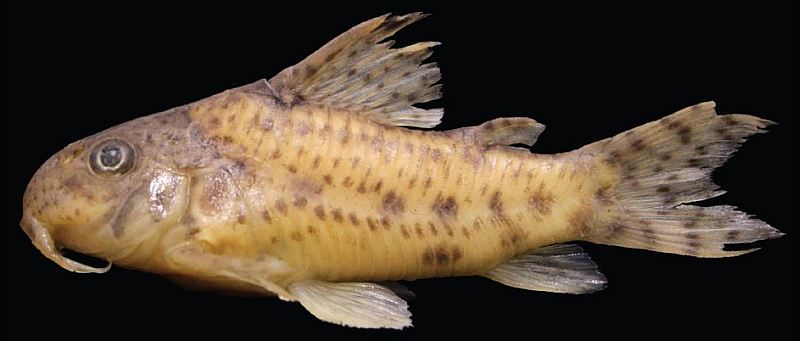
黄兵鲶(Hoplisoma flaveolum)是巴西东南部的鼠鱼,市场非常少见。圆吻、较结实的身体,以及体侧和鳍上密集的斑点与条纹,是观察其外形时的重要线索。
分布与栖息地
已知来自圣保罗州铁特河的若干支流水系,包括皮拉西卡巴河、阿兰巴里河及卡皮瓦里河等,属于上巴拉那河流域。不能据这一流域范围自行推定具体水流或底质。
饲养环境
细砂底较合适,圆滑砾石也可,但要保持清洁。提供遮蔽物增加安全感,并保留便于投喂和维护的空间。
食性与喂食
杂食,接受沉底干粮及红虫、水蚯蚓等小型活饵、冷冻饵料。保持多样食谱并专门投喂,不能依赖其他鱼残饵,也不能把它当作可以替代清洁维护的工具。
补充说明
与最相似的近缘鱼相比,本种吻较圆、身体较结实,体侧、背鳍和尾鳍花纹较密。胸鳍及背鳍硬刺锯齿数量等细微结构也有鉴别价值,但不适合仅凭缸外一眼判断。
身体有骨板,偶尔上浮吞气属于辅助呼吸。胸鳍硬刺可能挂网或刺伤皮肤,搬动时避免徒手挤压;刺基分泌物可能有轻度毒性的说法仍带不确定性。
图片
图片来自 SeriouslyFish,版权归各摄影者所有。
English
Overview
Hoplisoma flaveolum is an exceptionally uncommon aquarium catfish from southeastern Brazil. A rounded snout, sturdy outline, and dense spotting and barring on the body and fins offer useful visual clues.
Distribution & habitat
Known records come from several tributaries of the Tietê in São Paulo, including the Piracicaba, Alambari, and Capivari. These belong to the upper Paraná system. Basin membership alone does not establish a particular current regime or bottom type.
Aquarium setup
Use fine sand where possible, or smooth rounded gravel maintained carefully. Include shelter for security while keeping areas accessible for feeding and routine cleaning.
Diet & feeding
Provide an omnivorous variety of sinking dry foods and small live or frozen items, including bloodworms and Tubifex. Intentional feeding is essential. This catfish should not depend on leftovers from other residents or be expected to replace aquarium maintenance.
Notes
Compared with its closest lookalike, the fish has a rounder snout, more robust body, and denser markings on the flanks, dorsal fin, and tail. Fine details such as serrations on the pectoral and dorsal spines also contribute to identification but are not reliably assessed by a casual glance through aquarium glass.
Bony plates protect the body. Occasional surface gulps support auxiliary breathing. Stiff pectoral spines can snag netting or puncture skin during transfer; possible mild toxicity of nearby gland secretions remains uncertain.
来源
- https://www.seriouslyfish.com/species/hoplisoma-flaveolum(抓取于 2026-10-10)
hoplisoma-flaveolum · 文件: data/species/hoplisoma-flaveolum.md · 状态: 草稿