Hoplisoma davidsandsi · Sand's Cory
概要
| 字段 | 值 |
|---|---|
| 类别 | 鱼 |
| 学名 | Hoplisoma davidsandsi |
| 别名 | Corydoras davidsandsi |
| 分类 | 鲶形目 Siluriformes › 美鲶科 Callichthyidae › Hoplisoma |
| 水体 | 淡水 |
| 原产地 | 巴西 |
| 成体体长 | 6 cm |
| 饲养难度 | 入门 |
| 最小水体 | 81 L |
| 最小缸长 | 90 cm |
| 群居方式 | 群游 |
| 性情 | 温和 |
| 外部数据 | seriouslyfish hoplisoma-davidsandsi;fishbase 56448 |
| 繁殖方式 | 附着产卵 |
水质参数
| 参数 | 耐受范围 | 最适范围 | 单位 |
|---|---|---|---|
| 水温 | 20–28 | — | °C |
| pH | 5–7 | — | — |
| 总硬度 | 1–5 | — | dGH |
概述
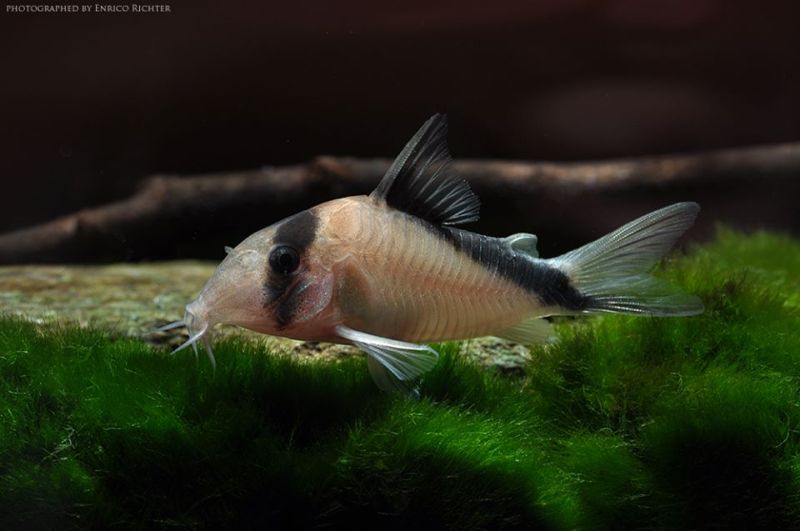
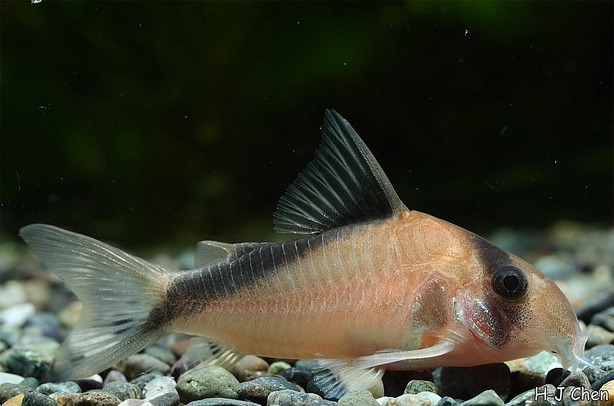
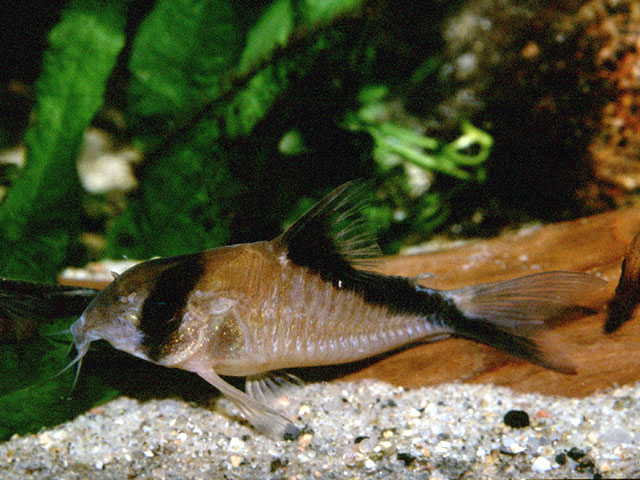
Hoplisoma davidsandsi 是尼格罗河流域带斜背带的甲鲶之一,尾柄上方的背带分叉,面部黑纹与背带之间有淡橙色区域。它温和、喜欢同伴,适合软酸水条件下群养。
分布与栖息地
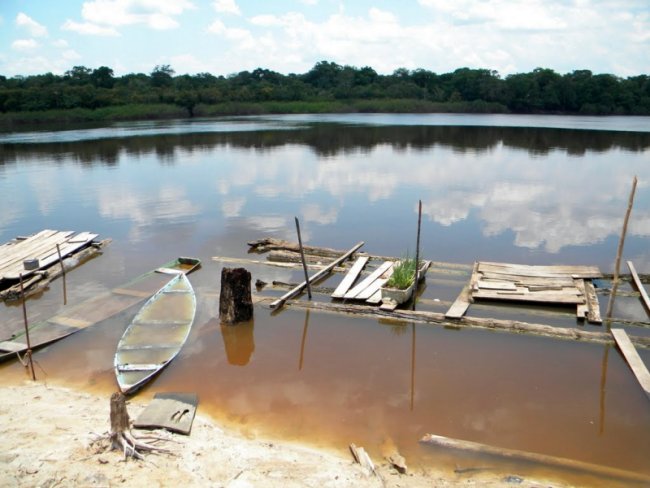
可能特有于巴西尼格罗河下游的 Unini 支流水系。模式产地曾被称为“白水区”,但该河的观察证据支持黑水性质,名称也可能指局部急流,而非泥沙丰富的白水河类型。
其栖境应以受有机物染色的支流和淹水森林为主,硬度、电导率很低,水体偏酸;这一栖境概括仍带有推断成分。
饲养环境
细沙为优先选择,圆滑砾石可以使用,但要仔细保持洁净。布景可灵活安排,并提供适量遮蔽,让鱼群安心休息和活动。
食性与喂食
相关鼠鱼类群多为搜食型杂食鱼,人工投喂常用沉底干粮,搭配红虫、水蚯蚓等小型活饵或冷冻饵料。必须规律、专门喂食,不能靠其他鱼的残饵,也不能让它承担清洁底床的工作。
习性与混养
性情温和、喜欢同种陪伴,至少四至六条一起饲养较合适。
雌雄区分
雌鱼通常更大,成熟后体形更圆、体高更深。
繁殖
可以参考近缘鼠鱼的做法,每条雌鱼搭配约两条雄鱼。雌鱼明显抱卵后,用适温范围内稍凉的新水换水约 50%~70%,加强充氧和水流,必要时每天重复到产卵。
卵通常贴在玻璃上,也应提供细叶植物或细纤维产卵拖把作为选择。产后隔离成鱼或移卵,玻璃上的卵可用手指轻轻滚起,移入装有相同水体、充氧充分的孵化容器。部分繁殖者使用少量亚甲蓝或一两枚桤木果辅助防霉。
通常三至四天孵化,卵黄吸收后喂微虫、丰年虾无节幼体等小活饵。薄沙底似乎比完全裸底更少出现鱼苗健康问题,但水质维护仍是关键。
补充说明
背带在尾柄上方分为两支的特点,与 Hoplisoma melini 相似;本种面部黑纹与背带之间呈淡橙色,体侧没有额外深色斑纹,可共同用于区分。
甲鲶类可借特化肠道辅助摄取空气,偶尔上浮吞气常见。搬运时应避开胸鳍硬棘,刺伤可能疼痛,棘基分泌物也可能有轻微毒性。
图片
图片来自 SeriouslyFish,版权归各摄影者所有。
English
Overview
Among Negro-basin catfishes with an oblique dorsal band, Hoplisoma davidsandsi has a forked band above the caudal peduncle and a pale orange area behind the facial stripe. Peaceful group housing in soft, acidic water suits this social species.
Distribution & habitat
It appears endemic to the Unini tributary of the lower Negro in Brazil. The type locality was called a whitewater area, although observations support a blackwater system. The wording may have referred to local rapids rather than sediment-rich white water.
Habitats are therefore presumed to include organically stained tributaries and flooded forest with low hardness, low conductivity, and acidic water. This remains a habitat interpretation rather than a precisely documented site description.
Aquarium setup
Fine sand is preferable; rounded gravel requires particularly good cleaning. Other decoration is flexible, provided sheltered spaces give the group security.
Diet & feeding
Related cory catfishes are generally foraging omnivores. Captive feeding commonly combines sinking prepared foods with small live or frozen bloodworms and aquatic worms.
Deliver a varied ration deliberately. Leftovers from other fishes are unreliable, and catfish cannot take over the task of cleaning the substrate.
Behaviour & compatibility
A peaceful and gregarious fish, it should have at least four to six conspecifics.
Sexual dimorphism
Females tend to be larger, rounder, and deeper-bodied once mature.
Breeding
Methods used for related catfishes can be followed, with approximately two males per female. When females are visibly gravid, a 50–70% change with slightly cooler water within the suitable range, plus increased oxygenation and movement, can stimulate spawning. Repeat daily if needed.
Eggs are usually attached to glass, although fine vegetation and fine-fiber mops should be available as alternatives. Separate adults and eggs afterward. Glass-bound eggs can be gently rolled free with a finger and moved into the same water with good aeration. Some breeders use a little methylene blue or one or two alder cones against fungus.
Incubation usually lasts three to four days. After yolk absorption, fry accept microworms and Artemia nauplii. A thin sand layer appears to reduce ailments compared with completely bare flooring, while careful water maintenance remains essential.
Notes
The forked dorsal band resembles that of Hoplisoma melini. In this species, the pale orange area between the facial mark and dorsal band, together with the absence of additional dark flank markings, helps establish identity.
Related armored catfishes use a modified intestine to supplement oxygen intake, explaining occasional surface gulps. Handle carefully around the pectoral spines: punctures can be painful, and secretions near their bases may be mildly toxic.
来源
- https://www.seriouslyfish.com/species/hoplisoma-davidsandsi(抓取于 2026-10-10)
hoplisoma-davidsandsi · 文件: data/species/hoplisoma-davidsandsi.md · 状态: 草稿