尾斑兵鲶 · Tailspot Cory
概要
| 字段 | 值 |
|---|---|
| 类别 | 鱼 |
| 学名 | Hoplisoma caudimaculatum |
| 别名 | 尾斑兵鯰、Corydoras caudimaculatus |
| 分类 | 鲶形目 Siluriformes › 美鲶科 Callichthyidae › Hoplisoma |
| 水体 | 淡水 |
| 原产地 | 玻利维亚、巴西 |
| 成体体长 | 5 cm |
| 饲养难度 | 入门 |
| 群居方式 | 群游 |
| 性情 | 温和 |
| 外部数据 | seriouslyfish hoplisoma-caudimaculatum;fishbase 12166 |
| 食性 | 杂食 |
| 繁殖方式 | 附着产卵 |
水质参数
| 参数 | 耐受范围 | 最适范围 | 单位 |
|---|---|---|---|
| 水温 | 20–26 | — | °C |
| pH | 6–7 | — | — |
| 总硬度 | 2–10 | — | dGH |
概述
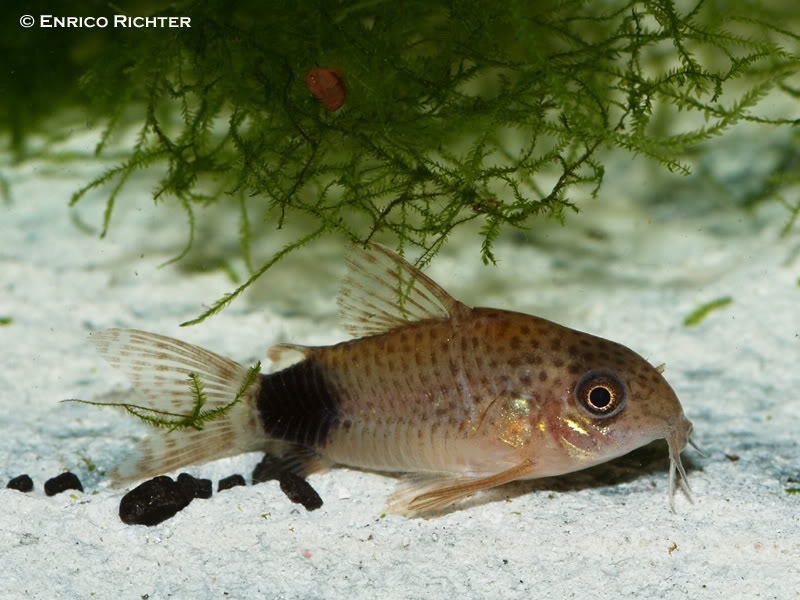
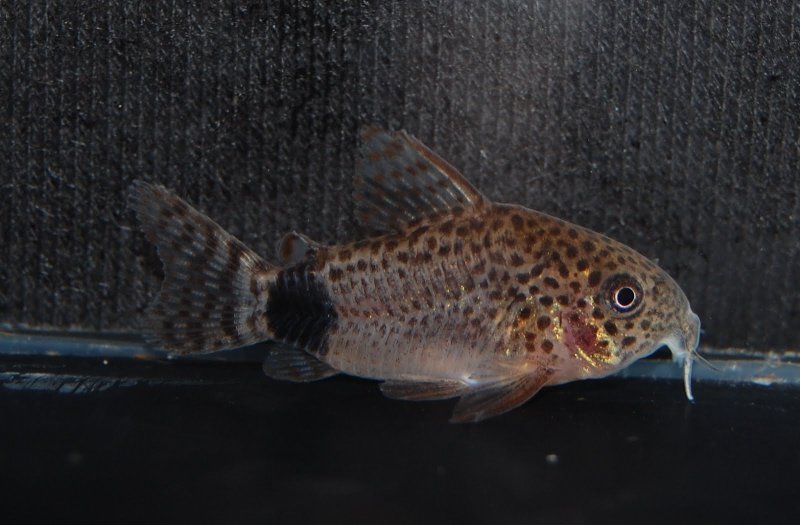
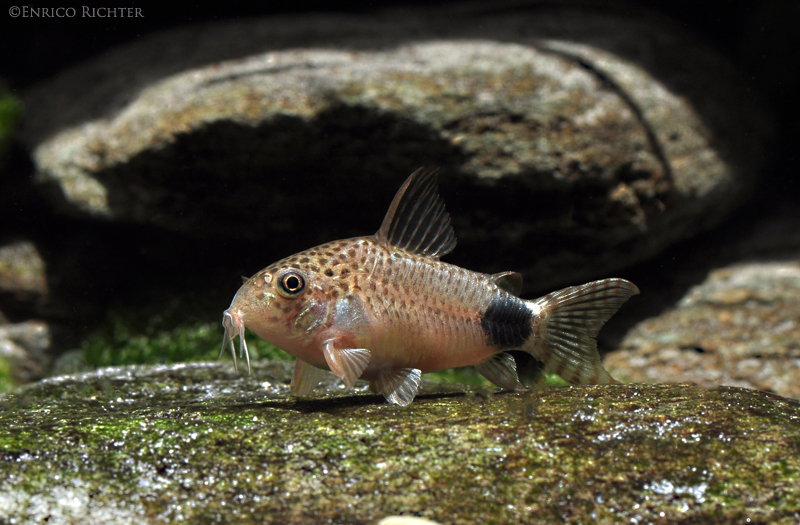
尾斑兵鲶(Hoplisoma caudimaculatum)是温和群居的鼠鱼,尾柄上清楚的黑色斑块是识别线索。相似鱼也可能有尾斑,应连同吻形和斑块边缘一起比较。
分布与栖息地
为巴西西部和玻利维亚东北部的瓜波雷河流域特有;该河在玻利维亚称伊特内斯河。模式地点在巴西朗多尼亚州的上游主河道。
饲养环境
以细砂铺底较好,圆滑砾石也可,关键是保持底床清洁。安排适当遮蔽让鱼群有安全感,布景留出便于觅食的空间。
食性与喂食
杂食,可用沉底干粮搭配红虫、水蚯蚓等小型活饵或冷冻饵料。专门喂给鱼群并保持食谱多样,不要指望它们只凭残饵维生或代替清洁工作。
习性与混养
性情温和,至少四至六条同种一起养。混养时要确认沉底食物能被鱼群吃到。
雌雄区分
成熟雌鱼一般更大、体形更圆,体高也较明显。
繁殖
可按常见鼠鱼方式繁殖,一雌配约两雄。亲鱼调养后,较凉换水并增加供氧和水流可刺激产卵。卵一般附在缸壁,也可提供细叶植物和产卵拖把。
产后分开亲鱼与卵,转卵时保持水质一致和良好供氧。通常约三至四天孵化,卵黄消耗完后可喂微虫或丰年虾无节幼体。薄砂底似乎比裸缸更有助于幼鱼健康。
补充说明
本种尾柄斑偏黑、边界清楚,不能与模糊偏蓝的尾斑混为一谈。相似种离底游动的习性也不能直接套给本种。偶尔上浮吞气属于辅助呼吸,胸鳍硬刺可刺伤或挂网,转移时应小心。
图片
图片来自 SeriouslyFish,版权归各摄影者所有。

English
Overview
Hoplisoma caudimaculatum is a peaceful social catfish with a distinct dark spot on the tail base. Because similar fishes also carry tail markings, compare their edges and snout shape rather than identifying a fish from the spot alone.
Distribution & habitat
It is endemic to the Guaporé drainage of western Brazil and northeastern Bolivia, where the river is known as the Iténez. The type locality lies in the upper main channel in Rondônia, Brazil.
Aquarium setup
Fine sand is preferable, with smooth rounded gravel an option if carefully maintained. Provide cover for security and keep feeding space accessible. Clean substrate remains a basic requirement.
Diet & feeding
Offer an omnivorous assortment of sinking dry foods with small live or frozen supplements such as bloodworms and Tubifex. Feed the group directly. Leftovers and the expectation of aquarium cleaning are not a substitute for a varied diet.
Behaviour & compatibility
Maintain at least four to six together. These calm, gregarious fish need reliable access to food when sharing an aquarium.
Sexual dimorphism
Mature females are generally larger, rounder, and deeper-bodied than males.
Breeding
Common cory breeding techniques can be used, with about two males per female. Condition adults before using cooler water changes and increased oxygenation and flow to encourage spawning. Eggs normally attach to glass; fine plants or mops provide additional sites.
Separate eggs and adults afterward. Transferred eggs need matching, well-oxygenated water. Hatching normally takes three or four days. Following yolk absorption, feed microworms or brine shrimp nauplii. Fry appear less prone to problems over a thin sand layer than over bare glass.
Notes
The tail-base spot is blackish and sharply defined, rather than diffuse and bluish as in one similar species. Open-water habits described for other lookalikes should not automatically be assigned to this fish. Occasional air gulps support auxiliary breathing, while stiff pectoral spines require care during handling.
来源
- https://www.seriouslyfish.com/species/hoplisoma-caudimaculatum(抓取于 2026-10-10)
hoplisoma-caudimaculatum · 文件: data/species/hoplisoma-caudimaculatum.md · 状态: 草稿