静平鳍鳅
概要
| 字段 | 值 |
|---|---|
| 类别 | 鱼 |
| 学名 | Homalopteroides modestus |
| 别名 | 靜平鰭鰍、Helgia modesta、Homaloptera modesta |
| 分类 | 鲤形目 Cypriniformes › 爬鳅科 Balitoridae › Homalopteroides |
| 水体 | 淡水 |
| 原产地 | 缅甸、泰国 |
| 成体体长 | 4.4 cm |
| 饲养难度 | 中等 |
| 最小水体 | 54 L |
| 最小缸长 | 60 cm |
| 群居方式 | 群游 |
| 水流偏好 | 高 |
| 外部数据 | seriouslyfish homalopteroides-modestus;fishbase 24512 |
水质参数
| 参数 | 耐受范围 | 最适范围 | 单位 |
|---|---|---|---|
| 水温 | 18–25.5 | — | °C |
| pH | 6–7.5 | — | — |
| 总硬度 | 1–12 | — | dGH |
概述
静平鳍鳅(Homalopteroides modestus)体形小,生活在缅甸南部和泰国西部的富氧流水中。相似种和旧记录曾有混淆,照顾时应保证稳定水质和规律的小型活冷冻饵,而非只靠石面残余食物。
分布与栖息地
确认范围包括萨尔温江、湄功河和德林达依水系,早期婆罗洲和印度记录属于其他近似种。栖息清澈急流、上游浅滩和流道,砂砾、岩块或基岩表面覆盖生物膜,水草较少。
饲养环境
长期底面积至少参考 60 × 30 厘米。砂砾底上铺不同大小圆石,沉木根枝和耐受附生植物提供停驻位置。强过滤按需搭配增氧及造流,每小时循环可参考水体的 10–15 倍;环境稳定成熟后再引入,不要把对急流的适应误当作能承受新缸波动。
食性与喂食
同属偏向捕食小型甲壳类、昆虫幼虫及其他无脊椎动物。水族箱内定期喂水蚤、丰年虾、红虫等,部分下沉干粮可能接受,但不能假定干粮足以长期替代适口活冷冻饵。消瘦个体需先避免竞争,保证持续吃到食物。
习性与混养
不属于好斗鱼,适宜伙伴仍受流水和溶氧需求限制。建议六尾以上同养,数量较少时可能更退缩;其他爬鳅可能适合,但要留意轻微争执和食物竞争。
雌雄区分
成熟雌鱼预计稍大、体形更丰满,但这一判断不应作为绝对标准。
补充说明
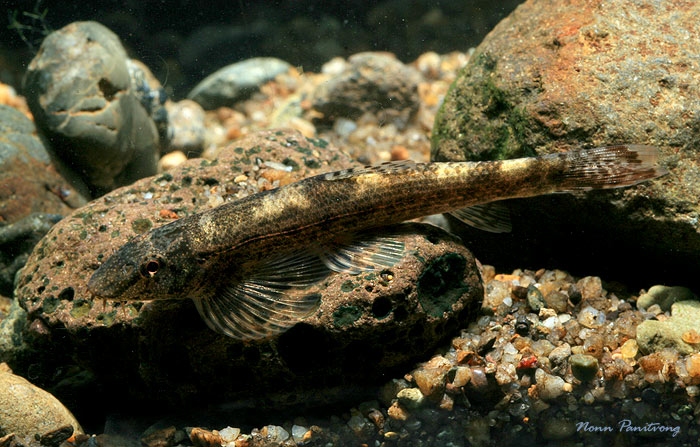
尾鳍可见靠前、靠后的黑带及中央黑斑,配合胸鳍长度和整体形态可辅助辨认。不要沿用已被排除的印度或婆罗洲产地来反推本种身份。
图片
图片来自 SeriouslyFish,版权归各摄影者所有。
English
Overview
A small loach from southern Myanmar and western Thailand, Homalopteroides modestus inhabits oxygen-rich streams. Identification has been confused with relatives, while practical care requires stable water and regular small live or frozen meals.
Distribution & habitat
Confirmed occurrence includes the Salween, Mae Klong, and Tenasserim systems. Older Bornean and Indian records refer to related fishes. Clear riffles and runs have gravel, rock, or bedrock supporting biofilm, with relatively sparse aquatic vegetation.
Aquarium setup
Use at least a 60 by 30 cm footprint with smooth rocks over sand or gravel. Wood and hardy attached plants offer additional resting surfaces. Filtration, aeration, and circulation should support the suggested turnover of 10–15 tank volumes per hour. Introduce fish only after the system is biologically mature and stable.
Diet & feeding
Genus-level accounts describe tiny crustaceans, insect larvae, and other invertebrates as prey. Regular Daphnia, Artemia, bloodworms, or comparable live and frozen foods are important. Some sinking dry foods may be accepted, but should not be assumed to replace all suitable prey. Thin fish need uncontested meals while recovering.
Behaviour & compatibility
It is not aggressive, but water requirements narrow the companion choices. Six or more together are recommended, as small groups may be less confident. Other loaches require individual assessment for disputes and competition.
Sexual dimorphism
Mature females are expected to be somewhat larger and fuller-bodied; this remains a qualified rather than absolute distinction.
Notes
A tail pattern with dark proximal and distal bands plus a central blotch assists identification alongside fin proportions. Obsolete Indian or Bornean records should not be used to establish the identity of an unfamiliar specimen.
来源
- https://www.seriouslyfish.com/species/homalopteroides-modestus(抓取于 2026-10-10)
homalopteroides-modestus · 文件: data/species/homalopteroides-modestus.md · 状态: 草稿