Homaloptera confuzona
概要
| 字段 | 值 |
|---|---|
| 类别 | 鱼 |
| 学名 | Homaloptera confuzona |
| 分类 | 鲤形目 Cypriniformes › 爬鳅科 Balitoridae › Homaloptera |
| 水体 | 淡水 |
| 原产地 | 柬埔寨、老挝、泰国 |
| 成体体长 | 8.5 cm |
| 饲养难度 | 中等 |
| 最小水体 | 108 L |
| 最小缸长 | 120 cm |
| 群居方式 | 群游 |
| 水流偏好 | 高 |
| 特征 | 会跳缸: 是 |
| 外部数据 | seriouslyfish homaloptera-confuzona;fishbase 57706 |
水质参数
| 参数 | 耐受范围 | 最适范围 | 单位 |
|---|---|---|---|
| 水温 | 20–25.5 | — | °C |
| pH | 6–7.5 | — | — |
| 总硬度 | 1–15 | — | dGH |
概述
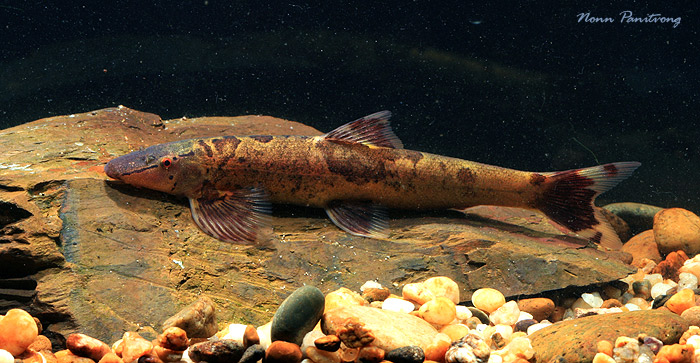
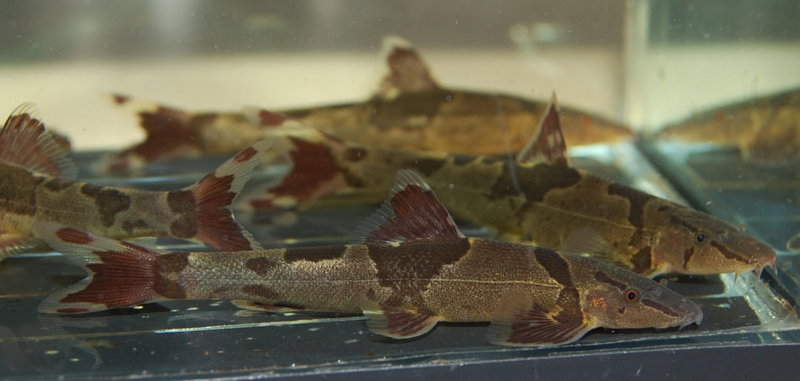
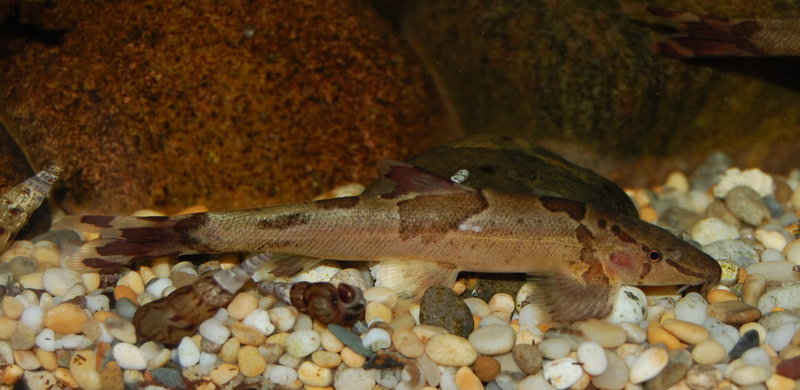
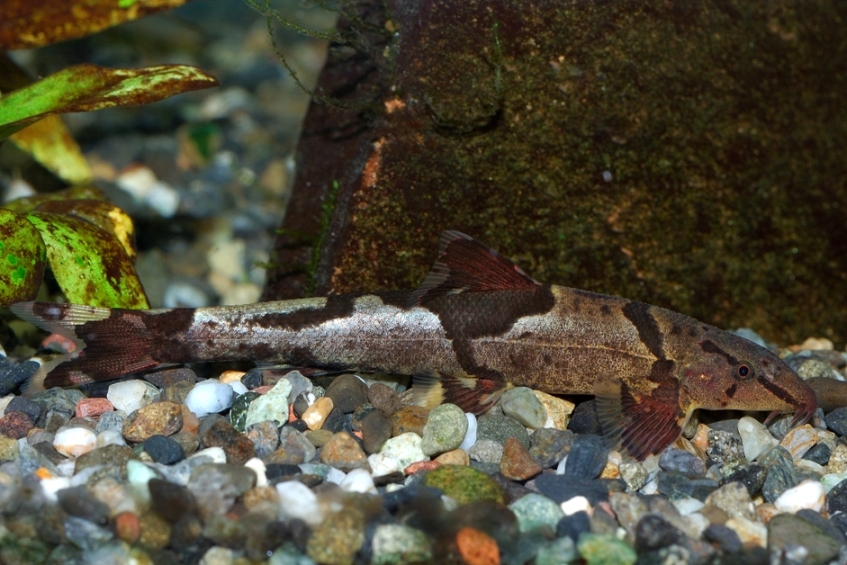
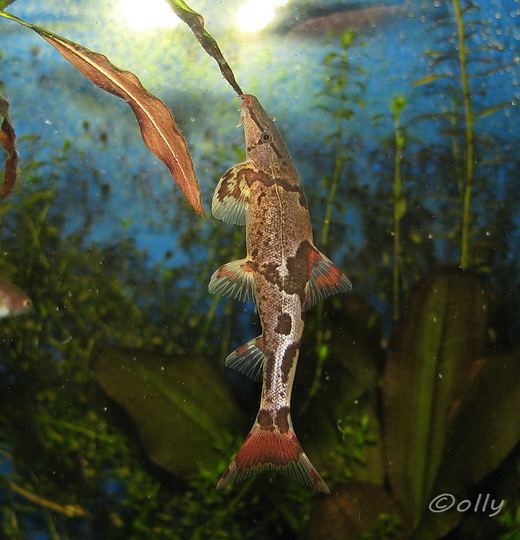
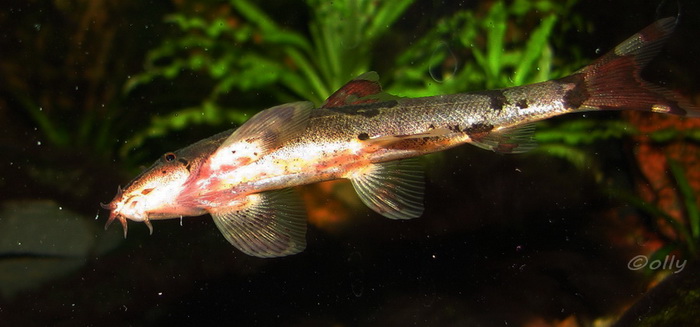
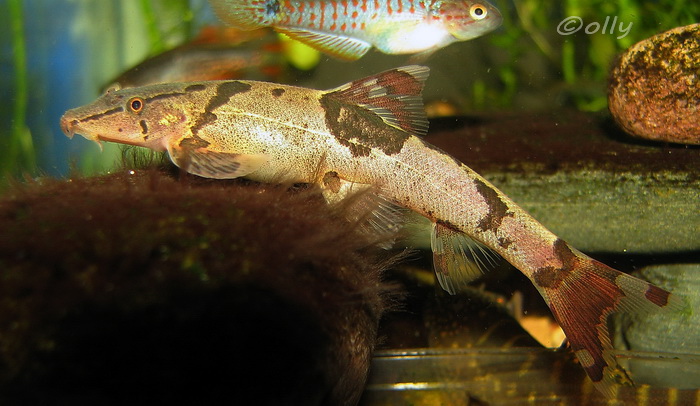
Homaloptera confuzona 是外形扁平、贴附石面活动的溪流鳅,贸易中有时被误认作近似种。背部鞍形深斑不规则、可能缺失,常局限在身体上半部,比“蜥蜴鳅”这一宽泛商品称呼更有识别价值。
它性情不凶,但需要洁净、富氧的流水环境和同伴,不适合仅凭体形小就放进普通缓流混养缸。
分布与栖息地
主要记录来自老挝和柬埔寨孔瀑布下游的湄公河流域,也见于泰国南部小河系及美功河水系部分地区。模式产地在泰国达叻府。
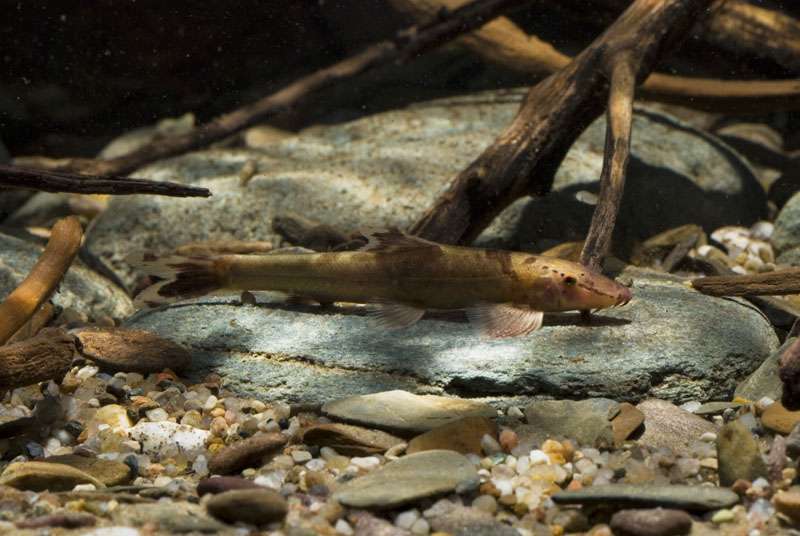
生活在水清、含氧充足的急流溪段与上游支流,常见于浅滩和流道,可能偏好较浅的位置。砾石、岩石、巨砾与岩床覆盖藻类和微生物形成的生物膜,岸边植被发达,水生植物只偶见成片。
饲养环境
长期饲养以至少 120 cm 长缸为基础。使用足够强的过滤,必要时增加水泵与气石,使循环和充氧兼顾;每小时循环十至十五倍缸水是可参考安排。
沙或砾石底床上放置大小不同的圆滑石,提供大量稳定石面。根木、细枝可用,爪哇蕨、文殊兰属植物和水榕等耐受植物也可加入;此属会在叶片上停歇。
必须等缸内生态和过滤成熟后再放鱼。定期部分换水,但不要把全部附着生物刷净,观察面之外可保留藻膜。缸盖要密合,它能攀爬玻璃。
食性与喂食
此属在生物膜中刮食小型甲壳类、昆虫幼体及其他无脊椎动物,并不是只靠啃可见绿藻就能养好的鱼。
部分个体接受沉底干粮,仍应规律供应水蚤、丰年虾、红虫等活饵或冷冻饵,同时保留长有藻及附着生物的石面。选购时检查腹部和整体体况;严重消瘦的鱼可能难以恢复,需要容易获得、持续供应的适合食物,并暂避竞争。
习性与混养
性情较温和,但混养对象必须同样适应清洁高氧流水。可考虑合适的小型溪流鲤科鱼、虾虎、溪流鲶或鳅,不能因为同属底栖鱼就忽略各自水流和抢食差异。与其他溪流鳅可能有通常无伤害的争执。
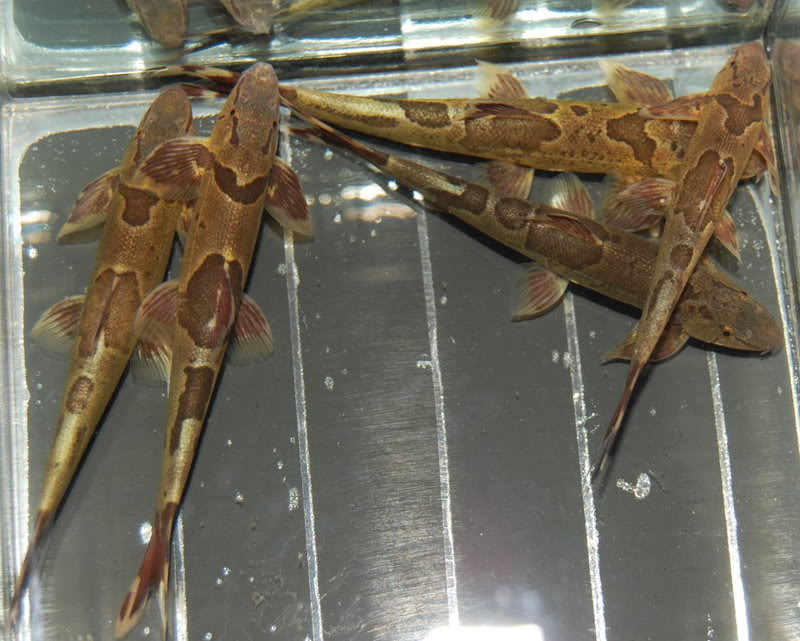
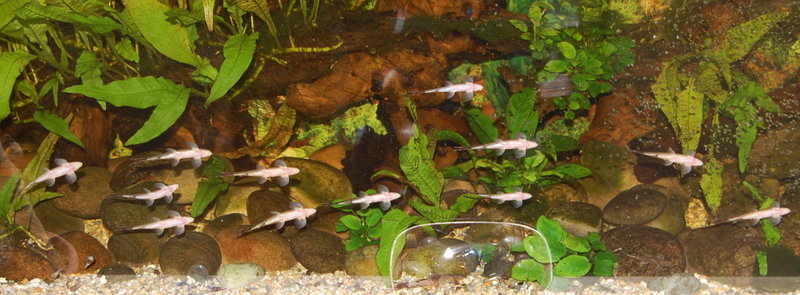
野外成群活动,建议至少六条;单条或太小群体往往胆怯。一天中某些时段会彼此靠近、一起迎着水流停驻,群体互动也是观察重点。
雌雄区分
性成熟雌鱼通常略大于雄鱼,身体也更饱满。
繁殖
野外可能有季节性产卵,但人工条件下的繁殖方式和育苗流程尚未明确,不能按已知散卵鱼套用固定流程。
补充说明
与近似溪流鳅(Homaloptera orthogoniata、Homaloptera parclitella)相比,本种背部深斑更不规则,最多可见约四块,部分缺失或仅覆盖上半身;另外两种鞍斑更宽、边界较整齐,并常延伸到身体下部。典型 H. parclitella 有两块大鞍斑,H. orthogoniata 有三块,比较时需留意共同具有的尾部暗纹,不要简单把所有暗色区都当成独立鞍斑。
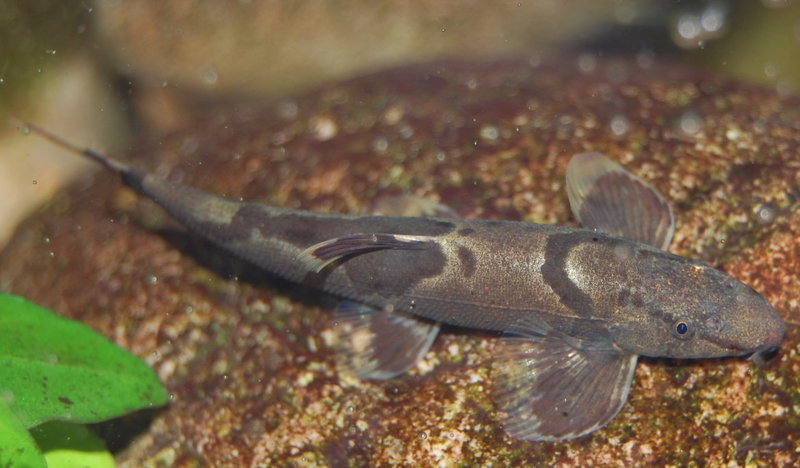
扁平的头腹和横向展开的偶鳍有助于紧贴硬表面,活动更像沿石面爬行和跳移,而不是擅长长时间悬游。旧属名下很多鱼经过重新分类,销售名称不能替代具体种的鉴定。
图片
图片来自 SeriouslyFish,版权归各摄影者所有。
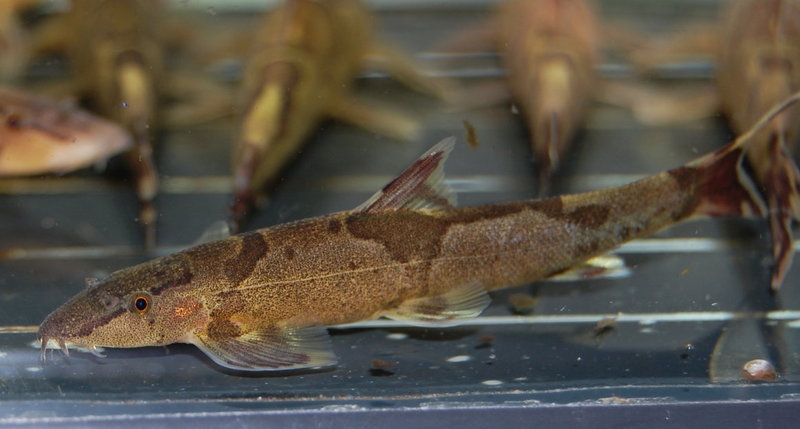
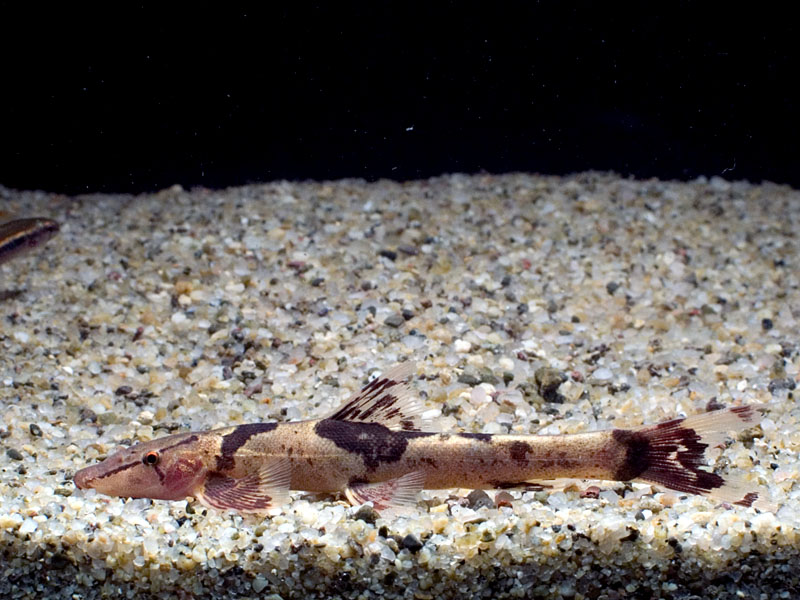
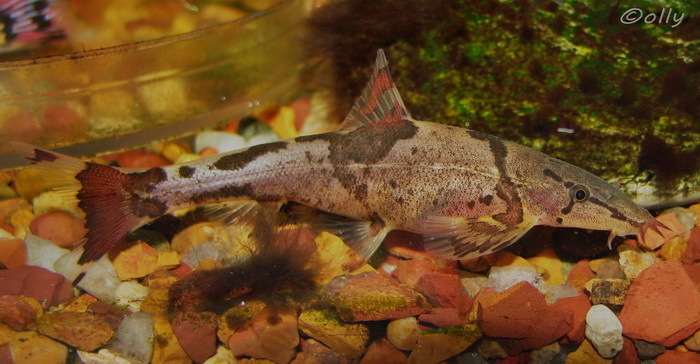
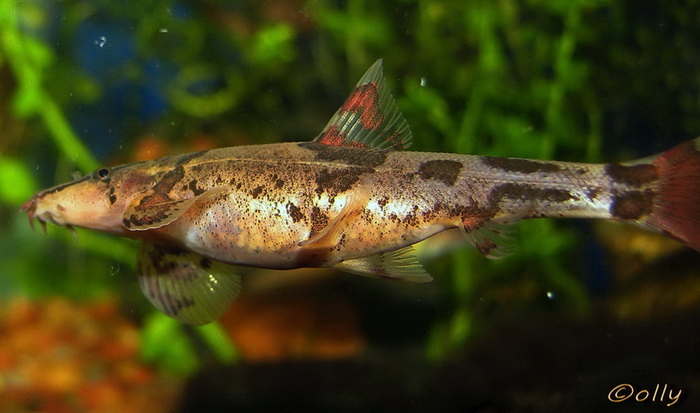
English
Overview
The flattened stream loach Homaloptera confuzona moves closely over solid surfaces and is sometimes confused with related species in trade. Its irregular, occasionally incomplete dorsal saddles, often confined to the upper body, are more informative than the broad commercial label “lizard loach.”
It is not aggressive, but its need for clean, oxygen-rich flow and companions makes environmental compatibility more important than its modest size.
Distribution & habitat
Most records are from the Mekong basin below the Khone Falls in Laos and Cambodia. Other records include smaller southern Thai drainages and parts of the Mae Klong system. The type locality is in Trat Province, Thailand.
It occupies swift, clear streams and headwaters with high oxygen levels, particularly runs and riffles, possibly favoring shallower areas. Gravel, rocks, boulders, and bedrock support biofilm. Bankside vegetation is often dense, while patches of submerged plants occur less frequently.
Aquarium setup
Provide an aquarium at least 120 cm long for long-term care. Oversized filtration, supported where necessary by pumps and aeration, should maintain both current and oxygen. Turnover of 10–15 tank volumes per hour is a useful target.
Place water-smoothed stones of varied sizes over sand, gravel, or a mixture. Roots and branches can be included. Hardy Microsorum, Crinum, and Anubias are usable plants, and members of this genus often rest on leaves.
Wait for a stable biological system before introducing the fish. Perform regular partial water changes without scrubbing every surface free of attached growth. Keep biofilm away from the viewing glass if preferred, and fit a close cover because this species can climb glass.
Diet & feeding
Members of the genus graze biofilm and consume small crustaceans, insect larvae, and other invertebrates. Visible green algae alone are therefore not an adequate feeding plan.
Some sinking dry foods may be accepted, but offer live or frozen Daphnia, Artemia, bloodworms, and similar foods regularly. Retain stones with algae and associated organisms. Examine body condition before purchase: severely thin fish may be difficult to restore and need suitable food readily available without strong competition.
Behaviour & compatibility
Its relatively peaceful nature allows carefully selected companions that share its requirements for clean, oxygenated current. Suitable stream cyprinids, gobies, catfishes, or loaches can be considered individually. Shared bottom-dwelling habits do not guarantee compatible feeding behavior or water needs. Minor disputes with other hillstream loaches are usually harmless.
Keep at least six. Wild fish occur in aggregations, and isolated individuals or very small groups tend to be timid. At certain times a group may settle close together, all pointing into the current, making social behavior an important part of keeping them.
Sexual dimorphism
Mature females are generally slightly larger and more rounded than males.
Breeding
Seasonal spawning in nature is suspected, but an aquarium breeding and rearing routine is not established. A standard egg-scattering procedure should not be assumed.
Notes
Compared with Homaloptera orthogoniata and Homaloptera parclitella, the dorsal markings are less regular and can number up to roughly four, with some incomplete or absent. They often remain above the body midline. The related species have broader, more clearly defined saddles that commonly extend farther down the flanks. Typical H. parclitella has two principal saddles and H. orthogoniata three; distinguish those from the additional dark tail markings when counting.
The flattened head and underside, together with horizontally spread paired fins, help the fish cling to hard surfaces. Movement resembles crawling and short hops rather than sustained open-water swimming. Several fishes formerly placed in the same genus have been reassigned, another reason to check species identity rather than relying on an old trade name.
来源
- https://www.seriouslyfish.com/species/homaloptera-confuzona(抓取于 2026-10-10)
homaloptera-confuzona · 文件: data/species/homaloptera-confuzona.md · 状态: 草稿