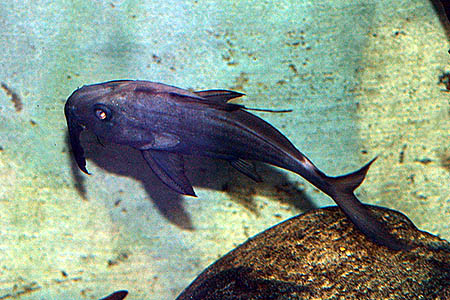
埃及歧须鮠 · Moustache Catfish
概要
| 字段 | 值 |
|---|---|
| 类别 | 鱼 |
| 学名 | Hemisynodontis membranaceus |
| 别名 | 半歧须鮠、埃及歧鬚鮠、半歧鬚鮠 |
| 分类 | 鲶形目 Siluriformes › 倒立鲶科 Mochokidae › Hemisynodontis |
| 水体 | 淡水 |
| 成体体长 | 50 cm |
| 饲养难度 | 中等 |
| 最小水体 | 432 L |
| 最小缸长 | 120 cm |
| 领地性 | 是 |
| 外部数据 | seriouslyfish hemisynodontis-membranaceus;fishbase 9517 |
| 原产地 | 埃及、尼日利亚、冈比亚、喀麦隆、塞内加尔、乍得、马拉维、加纳、尼日尔、苏丹 |
| 食性 | 浮游生物食性 |
水质参数
| 参数 | 耐受范围 | 最适范围 | 单位 |
|---|---|---|---|
| 水温 | 22–26 | — | °C |
| pH | 6.5–7.5 | — | — |
| 总硬度 | 5–15 | — | dGH |
概述
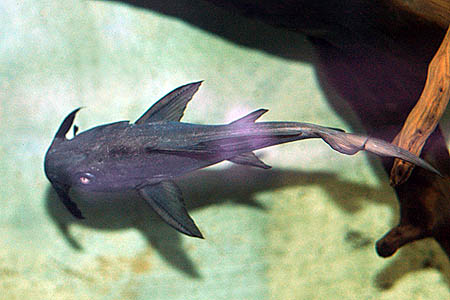
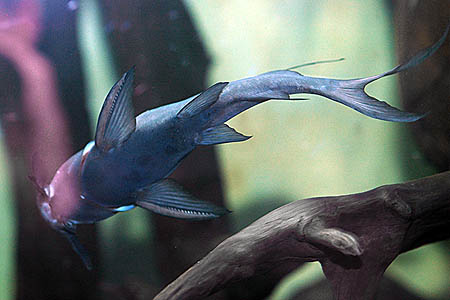
埃及歧须鮠(Hemisynodontis membranaceus)是能长成大型鱼的非洲鲶鱼,幼鱼斑点漂亮,长大后却会逐渐褪去。它常倒转身体在水面取食,嘴边显眼的“胡子”实际是附着在须上的薄膜。选购幼鱼前,需要先按成鱼的体量安排空间。
分布与栖息地
分布广,记录包括埃及、苏丹、尼日利亚、冈比亚、喀麦隆、塞内加尔、乍得、马拉维、加纳和尼日尔。多见于河流、溪流较深的岸边区域。
饲养环境
软底床上用石块、沉木和根状造景形成藏身处,宽叶水草与浮水植物下方也是它喜欢停歇的位置。光线较暗时更容易看到它活动。缸的空间应为大型成鱼预留,不能依据出售时的小体形规划。
食性与喂食
天然食物以浮游生物为主,密集鳃耙用于过滤食物,也会摄取小型无脊椎动物和甲壳类。缸内可接受活饵、冷冻饵料和干饲料,去皮豌豆、黄瓜等植物性食物也受欢迎。
它偏爱较小颗粒,通常不接受大块虾肉或贝肉。倒游至水面、用须将食物扫向嘴边,是正常的取食方式,不能仅凭倒游就判断失衡。
习性与混养
幼鱼可以群养,成熟后同种间领地性增强。对其他体形合适的鱼总体较平和,但庞大的身体本身就可能吓到胆小同伴,也可能吞食非常小的鱼。较大型的美洲或非洲慈鲷可作为候选,仍要匹配空间和水体条件。
雌雄区分
成年雌鱼通常更丰满。生殖乳突也有差别:雄鱼较长、尖并有棱,雌鱼较圆。检查需要经验,不宜为辨性别徒手翻转带有尖鳍棘的大鱼。达到性成熟可能需要两年或更久,这不是寿命上限。
补充说明
上颌须两侧的膜、较多鳃耙和较少下颌牙齿,是其滤食适应的重要特征。它曾被放入不同属,旧名称可能变化,但不能因此忽视它会长成大型鱼这一点。
图片
图片来自 SeriouslyFish,版权归各摄影者所有。
English
Overview
Often sold as an attractive spotted juvenile, Hemisynodontis membranaceus grows into a substantial African catfish and loses much of that early pattern. Its conspicuous “moustache” consists of membranes along the barbels. Inverted surface feeding is normal, and housing should be planned around adult bulk before purchase.
Distribution & habitat
The broad recorded range includes Egypt, Sudan, Nigeria, Gambia, Cameroon, Senegal, Chad, Malawi, Ghana, and Niger. It uses deeper shoreline areas of rivers and streams.
Aquarium setup
Provide soft substrate and sheltered spaces among rocks, wood, and branching roots. Broad leaves and floating vegetation offer favored resting cover. Subdued illumination encourages the fish to appear more often. Allow room for a large adult rather than sizing the aquarium around a juvenile on sale.
Diet & feeding
Plankton forms the main natural food, filtered by numerous gill rakers, although small invertebrates and crustaceans are also eaten. Captive fish accept live, frozen, and dry foods, together with vegetables such as shelled peas and cucumber.
Smaller particles are preferred to large pieces of shrimp or shellfish. The fish often feeds upside down at the surface, using its barbels to direct food toward the mouth; this posture alone does not indicate a balance problem.
Behaviour & compatibility
Young fish can be grouped, but conspecific territoriality develops with maturity. It is otherwise relatively peaceful for its size, although its bulk can intimidate shy companions and very small fishes may be eaten. Appropriately selected larger American or African cichlids are possible partners in a suitably spacious aquarium.
Sexual dimorphism
Adult females are generally fuller-bodied. The male genital papilla is longer, pointed, and ridged, while the female structure is rounder. Examination requires experience; handling a large spiny fish simply to determine sex is inappropriate. Maturity may take two years or longer, which is not a measure of total lifespan.
Notes
The barbel membranes, numerous gill rakers, and reduced lower-jaw dentition reflect its feeding specialization. Placement among related genera has varied historically, but changing labels do not alter its eventual size or housing needs.
来源
ID:hemisynodontis-membranaceus · 文件: data/species/hemisynodontis-membranaceus.md · 状态: 草稿