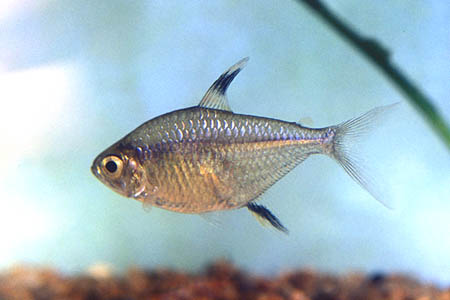
单纹杂花脂鲤 · Featherfin Tetra
概要
| 字段 | 值 |
|---|---|
| 类别 | 鱼 |
| 学名 | Hemigrammus unilineatus |
| 别名 | 单线半线脂鲤、單紋雜花脂鯉、單線半線脂鯉 |
| 分类 | 脂鲤目 Characiformes › 脂鲤科 Characidae › Hemigrammus |
| 水体 | 淡水 |
| 成体体长 | 5 cm |
| 饲养难度 | 入门 |
| 最小水体 | 68 L |
| 最小缸长 | 60 cm |
| 群居方式 | 群游 |
| 性情 | 温和 |
| 外部数据 | seriouslyfish hemigrammus-unilineatus;fishbase 12371 |
| 原产地 | 委内瑞拉、圭亚那、苏里南、法属圭亚那、特立尼达和多巴哥、秘鲁及巴西 |
| 食性 | 肉食 |
| 繁殖方式 | 产卵 |
水质参数
| 参数 | 耐受范围 | 最适范围 | 单位 |
|---|---|---|---|
| 水温 | 23–28 | — | °C |
| pH | 5.5–7.5 | — | — |
| 总硬度 | 1–20 | — | dGH |
概述
单纹杂花脂鲤(Hemigrammus unilineatus)是温和的小型群居灯鱼,野外分布广,水族贸易中却较少专门引进,有时混在其他种类中出现。至少六条、最好十条以上共同饲养,能让它更安心。
分布与栖息地
广布于南美洲北部,记录涉及委内瑞拉、圭亚那、苏里南、法属圭亚那、特立尼达和多巴哥、秘鲁和巴西。环境包括缓流河段、支流、牛轭湖和沟渠,水既可能清澈,也可能因悬浮泥沙而浑浊。
饲养环境
可用细砂、沉木、树根及干燥落叶营造较暗环境,让水略呈茶色。定期更换老化叶片,避免腐烂积污。虽然水草不是自然环境的主要特色,维护良好的密植草缸或安静混养缸也合适。
食性与喂食
野外主要吃小型无脊椎动物,人工饲养一般不挑食。薄片、细颗粒与适口活饵或冷冻饵交替提供,比单喂一种食物更好。
习性与混养
不能很好地与体形大或过度活跃的同伴竞争。温和小灯鱼、铅笔鱼、小型慈鲷、鼠鱼与小型异型鱼可作为候选,其他相近体型的安静鱼也能考虑。保留至少六条,最好十条以上的同种群体。
雌雄区分
成熟雌鱼通常略大、更厚实。透过半透明身体观察鱼鳔形状也是一种据说可用的方法:雄鱼末端较尖,雌鱼较圆,但不宜只靠这一点判断。
繁殖
若想留下较多鱼苗,准备独立暗缸,放细叶植物、莫丝或产卵拖把,也可用隔网让卵落下而成鱼接触不到。采用软酸水和轻柔气动过滤,先以小型活饵培育状态。可群体繁殖,或雌雄分开培育后选成熟一对,傍晚移入繁殖缸,常在次晨产卵。
见卵后及时移走成鱼,避免吃卵。卵通常约一天至一天半孵化,再过三四天鱼苗开始自由游动。最初需要纤毛虫级别微小食物,长大后再过渡到微虫和丰年虾无节幼体。卵和早期鱼苗怕强光,繁殖缸应尽量昏暗。
补充说明
混批进口时容易被忽略,购入后宜先确认身份,避免把相似灯鱼一概当作同种。
图片
图片来自 SeriouslyFish,版权归各摄影者所有。
English
Overview
Hemigrammus unilineatus is a gentle shoaling tetra with a broad wild range but relatively limited dedicated aquarium trade. It sometimes arrives mixed with other species. A group of at least six, preferably ten or more, helps it settle and display natural social behavior.
Distribution & habitat
Records span Venezuela, Guyana, Suriname, French Guiana, Trinidad and Tobago, Peru, and Brazil. Slow rivers, tributaries, oxbows, and ditches provide habitat. Some waters are clear, while others carry substantial suspended sediment.
Aquarium setup
Sand, branching wood, roots, and dried leaves suit a subdued naturalistic setup. Replace deteriorating leaves before decay fouls the aquarium. Well-maintained planted tanks and quiet community layouts also work, even though aquatic plants are not characteristic of its natural waters.
Diet & feeding
Small invertebrates dominate the natural diet. Aquarium fish are generally undemanding about food; combine flakes or small granules with suitable live and frozen offerings.
Behaviour & compatibility
Avoid large or boisterous companions that can outcompete it. Gentle tetras, pencilfishes, dwarf cichlids, corys, and small loricariids are possible partners, as are other quiet fishes of comparable size. Maintain its own shoal rather than a few isolated specimens.
Sexual dimorphism
Females are usually slightly larger and fuller-bodied. Swim-bladder shape is reportedly another clue through the translucent body, tapering more sharply in males and appearing rounder in females; treat this as an aid rather than an absolute test.
Breeding
For better fry survival, use a separate dim aquarium with fine plants, moss, mops, or a mesh barrier that protects eggs from adults. Soft acidic water and gentle sponge filtration are suitable. Condition fish on small live foods. Either a group or a selected ripe pair can be used; evening introduction of a pair often precedes spawning the next morning.
Remove adults once eggs appear. Hatching usually follows within about a day to a day and a half, with free swimming another three or four days later. Start fry on infusoria-sized food, then progress to microworms and newly hatched brine shrimp. Keep eggs and young larvae dark because they are light-sensitive.
Notes
Mixed import shipments can obscure identity, so superficially similar tetras should not automatically be treated as one species.
来源
- https://www.seriouslyfish.com/species/hemigrammus-unilineatus(抓取于 2026-10-10)
hemigrammus-unilineatus · 文件: data/species/hemigrammus-unilineatus.md · 状态: 草稿