金半线脂鲤 · Golden Tetra
概要
| 字段 | 值 |
|---|---|
| 类别 | 鱼 |
| 学名 | Hemigrammus rodwayi |
| 别名 | 罗氏半线脂鲤、金半線脂鯉、羅氏半線脂鯉 |
| 分类 | 脂鲤目 Characiformes › 脂鲤科 Characidae › Hemigrammus |
| 水体 | 淡水 |
| 成体体长 | 5.5 cm |
| 饲养难度 | 入门 |
| 最小水体 | 68 L |
| 最小缸长 | 60 cm |
| 群居方式 | 群游 |
| 性情 | 温和 |
| 外部数据 | seriouslyfish hemigrammus-rodwayi;fishbase 26447 |
| 原产地 | 圭亚那、苏里南、法属圭亚那、秘鲁、巴西 |
水质参数
| 参数 | 耐受范围 | 最适范围 | 单位 |
|---|---|---|---|
| 水温 | 24–28 | — | °C |
| pH | 5.5–7 | — | — |
| 总硬度 | 1–12 | — | dGH |
概述
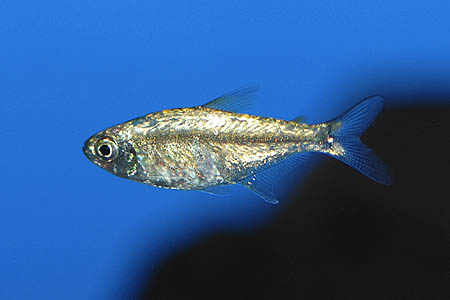
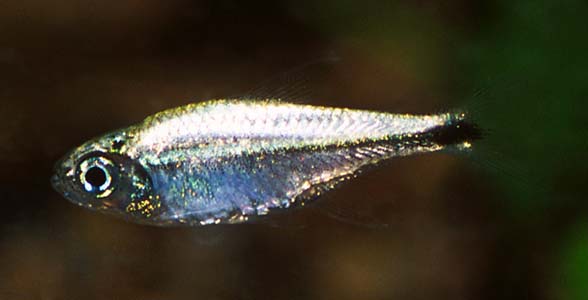
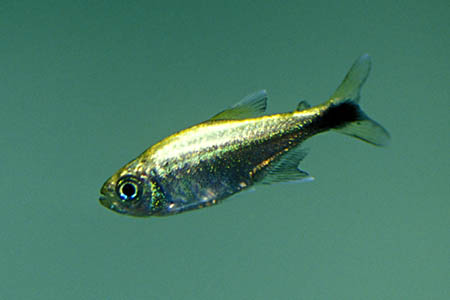
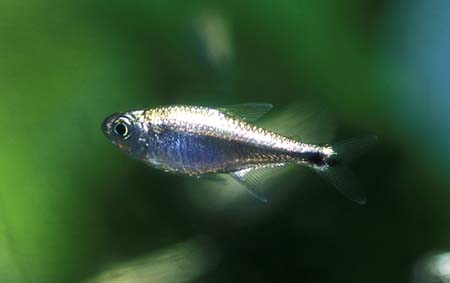
金半线脂鲤(Hemigrammus rodwayi)并不一定全身金黄,普通个体多呈银灰色。野生鱼的强烈金属金色与对一种寄生虫的皮肤反应有关,人工繁殖鱼没有接触这种寄生虫,往往不会呈现同样色泽。
分布与栖息地
原生于圭亚那、苏里南、法属圭亚那、秘鲁和巴西,利用缓流河段、支流与泛滥平原湖泊。沿海泛滥平原较常见,有时进入轻度半咸水环境;这类记录并不意味着日常淡水饲养必须加盐。
饲养环境
用河砂、沉木、根枝和少量落叶构成有遮蔽的环境,光线偏暗,让水带浅茶色。定期处理腐败叶片,维护过滤和水质。它也能适应稳定的密植水草缸或温和混养缸,不必只采用一种布景方式。
食性与喂食
通常容易接受薄片和颗粒,配合红虫、水蚤、丰年虾等小型活饵或冷冻饵料,保持食物多样。
习性与混养
至少六条,最好十条以上。性情温和,不善于与大鱼或特别活跃的同伴竞争。小型脂鲤、铅笔鱼、短鲷、鼠鱼和小型异型都是可考虑的方向,其他混养对象也应以温和、体型接近及水质要求相合为原则。
雌雄区分
成年雌鱼腹部较圆。雄鱼臀鳍前缘有白色,红色色素也比雌鱼更明显。
繁殖
另设很暗的繁殖缸,用偏软偏酸的水及轻柔海绵过滤,细叶植物或产卵拖把可承接卵,隔卵网也能防止亲鱼接触落卵。可群体繁殖,或分开雌雄调养后选一对,于傍晚合缸,常在次晨产卵。
见卵后移出会吃卵的亲鱼。卵约二十四至三十六小时孵化,再过三四天鱼苗自由游动。开口时先喂纤毛虫级食物,长大后转微虫和丰年虾无节幼体。卵及早期鱼苗怕光,尽量保持暗环境。
补充说明
金色来自皮肤中鸟嘌呤的沉积,曾使金色个体被误当成独立种。选购时不要把商品名中的“金”当作人工鱼必有的颜色,也不应把缺少金色视作饲养失败。
图片
图片来自 SeriouslyFish,版权归各摄影者所有。
English
Overview
Hemigrammus rodwayi is often called the golden tetra, but ordinary fish are silvery gray. The striking metallic gold seen in some wild populations results from a skin response to a trematode parasite. Captive-bred fish without that exposure usually lack the same appearance.
Distribution & habitat
Its native range includes Guyana, Suriname, French Guiana, Peru, and Brazil. It inhabits slow rivers, tributaries, and floodplain lakes. Coastal floodplains support many populations, with occasional records from mildly brackish conditions; these do not make salt a routine requirement for aquarium care.
Aquarium setup
Sand, wood, roots, and a modest layer of leaves provide cover and light tannin staining. Keep illumination subdued and remove deteriorating leaves before water quality declines. A stable, densely planted aquarium or peaceful community is another suitable arrangement.
Diet & feeding
Flakes and granules are usually accepted readily. Add small live and frozen foods such as bloodworms, water fleas, and brine shrimp to maintain variety.
Behaviour & compatibility
Keep at least six, preferably ten or more. This gentle tetra does poorly against much larger or extremely boisterous competitors. Small characids, pencilfishes, dwarf cichlids, cory-type catfishes, and small loricariids can be suitable when their environmental needs match.
Sexual dimorphism
Females have a rounder abdomen. The male's anal fin has a white front margin and stronger red pigmentation.
Breeding
Prepare a very dim aquarium with soft acidic water and gentle sponge filtration. Fine plants, spawning mops, or protective mesh help separate the eggs from adults. A conditioned group can spawn, or a selected pair can be introduced in the evening after separate conditioning. Spawning often follows the next morning.
Remove parents after laying. Eggs hatch in about twenty-four to thirty-six hours, and free swimming begins another three or four days later. Feed infusoria-sized food first, followed by microworms and newly hatched brine shrimp. Keep early stages in very low light.
Notes
Gold coloration comes from guanine deposits in the skin and once led to golden individuals being described as a separate species. An ordinary silvery captive-bred fish is therefore not necessarily poorly colored through inadequate care.
来源
- https://www.seriouslyfish.com/species/hemigrammus-rodwayi(抓取于 2026-10-10)
hemigrammus-rodwayi · 文件: data/species/hemigrammus-rodwayi.md · 状态: 草稿