红灯管 · Glowlight Tetra
概要
| 字段 | 值 |
|---|---|
| 类别 | 鱼 |
| 学名 | Hemigrammus erythrozonus |
| 别名 | 紅帶半線脂鯉、红带半线脂鲤 |
| 分类 | 脂鲤目 Characiformes › 脂鲤科 Characidae › Hemigrammus |
| 水体 | 淡水 |
| 成体体长 | 4 cm |
| 饲养难度 | 中等 |
| 最小水体 | 68 L |
| 最小缸长 | 60 cm |
| 群居方式 | 群游 |
| 外部数据 | seriouslyfish hemigrammus-erythrozonus;fishbase 10642 |
| 原产地 | 圭亚那埃塞奎博河水系 |
| 性情 | 温和 |
水质参数
| 参数 | 耐受范围 | 最适范围 | 单位 |
|---|---|---|---|
| 水温 | 24–28 | — | °C |
| pH | 5.5–7.5 | — | — |
| 总硬度 | 2–15 | — | dGH |
概述
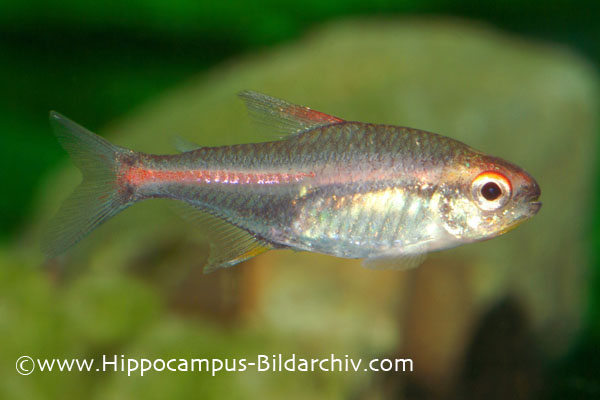
红灯管(Hemigrammus erythrozonus)体侧明亮的红色纵带很醒目,性情温和,适合成群饲养。贸易中的人工繁殖鱼适应力较好,在有遮蔽、光线柔和的环境中通常比空旷亮缸显色更佳。
分布与栖息地
已知原生范围为圭亚那埃塞奎博河水系,主要生活在穿过森林的支流。落叶和其他有机物释放的单宁使水呈深褐色,天然水体常偏酸。市售个体主要为商业人工繁殖。
饲养环境
密植水草缸适合展示鱼群,也可用细砂、沉木、根枝和落叶营造浅茶色水环境。灯光宜偏暗,定期清理老化腐败叶片,避免污染。偏酸条件下通常发色更好,不能因人工鱼较耐养就省略水质管理。
食性与喂食
薄片、颗粒等干饲料容易接受,应规律搭配红虫、水蚤、丰年虾等小型活饵或冷冻饵料,兼顾体况和颜色。
习性与混养
至少六条,十条以上更好。可与温和的小型脂鲤、波鱼、斑马鱼、卵胎生鱼、鼠鱼、小型异型及适合的短鲷混养。体型更大、可能把它当食物的鱼应避免,即使对方通常被视为温和鱼也不例外。
雌雄区分
成熟雌鱼稍大、腹部更圆,雄鱼则较纤细。
繁殖
可群体繁殖,也可分开雌雄调养后选一对。另设很暗的繁殖缸,用软水和偏酸水质,搭配轻柔海绵过滤、细叶植物或产卵拖把,也可加隔卵网。选好的配对于傍晚入缸,常在次晨产卵,产卵过程中有时会共同翻成腹部朝上的姿态。
一窝平均约一百二十至一百五十粒。亲鱼会吃卵,产后及时移走。卵约二十四至三十六小时孵化,幼鱼再过三四天自由游动;先喂纤毛虫级微饵,随后再喂微虫和丰年虾无节幼体。卵和早期幼鱼对光敏感,尽量保持暗环境。
补充说明
人工选育的白化型也有出售,基本饲养要求与普通型相同,不需要因为外观不同另造一套环境条件。
图片
图片来自 SeriouslyFish,版权归各摄影者所有。
English
Overview
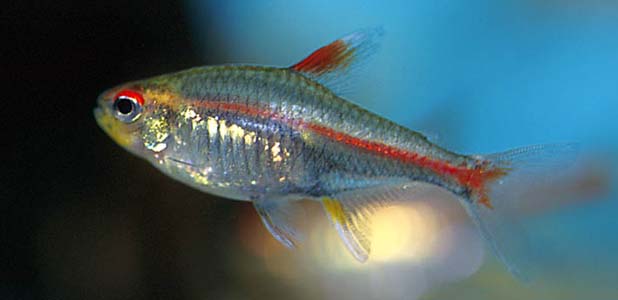
The glowlight tetra, Hemigrammus erythrozonus, is a peaceful shoaling fish with a conspicuous luminous red stripe. Commercially bred stock is adaptable. Soft lighting and sheltered surroundings generally show its color better than a bare, brightly lit aquarium.
Distribution & habitat
Its known native range is Guyana's Essequibo system. Forest tributaries provide tannin-darkened water that is often strongly acidic. Aquarium supplies predominantly come from commercial breeding.
Aquarium setup
A densely planted aquarium makes an effective display. Alternatively, combine sand, roots, wood, and leaves to create gently tea-colored water. Use subdued illumination and replace decaying leaf material before water quality suffers. Acidic conditions tend to improve coloration, although farmed fish tolerate a wider range.
Diet & feeding
Flakes and granules are readily accepted. Regular small live and frozen foods, such as bloodworms, water fleas, and brine shrimp, add variety and support condition.
Behaviour & compatibility
Maintain at least six, preferably ten or more. Gentle small tetras, rasboras, danionins, livebearers, armored catfishes, and suitable dwarf cichlids can make good companions. Exclude larger fishes capable of swallowing them, regardless of an otherwise peaceful reputation.
Sexual dimorphism
Mature females tend to be slightly larger with a fuller abdomen; males are slimmer.
Breeding
Both group and pair spawning are possible. Use a separate, very dim aquarium with soft acidic water, gentle sponge filtration, and fine plants, spawning mops, or protective mesh. For a pair, condition the sexes separately and transfer the selected adults during the evening. Spawning commonly follows next morning, sometimes with the pair rolling upside down together.
Average broods contain around one hundred twenty to one hundred fifty eggs. Remove adults promptly because they eat the eggs. Hatching takes roughly twenty-four to thirty-six hours, with free swimming another three or four days later. Begin with infusoria-sized foods, then introduce microworms and newly hatched brine shrimp. Eggs and early fry are sensitive to light and should remain in very dim surroundings.
Notes
A selectively bred albino form is also available. Its basic care requirements are the same as those of the standard form.
来源
- https://www.seriouslyfish.com/species/hemigrammus-erythrozonus(抓取于 2026-10-10)
hemigrammus-erythrozonus · 文件: data/species/hemigrammus-erythrozonus.md · 状态: 草稿