玫瑰伴丽鱼 · Blood-Red Jewel Cichlid
概要
| 字段 | 值 |
|---|---|
| 类别 | 鱼 |
| 学名 | Hemichromis lifalili |
| 别名 | 玫瑰伴麗魚 |
| 分类 | 慈鲷目 Cichliformes › 慈鲷科 Cichlidae › Hemichromis |
| 水体 | 淡水 |
| 成体体长 | 10 cm |
| 饲养难度 | 入门 |
| 最小水体 | 68 L |
| 最小缸长 | 75 cm |
| 群居方式 | 成对 |
| 领地性 | 是 |
| 外部数据 | seriouslyfish hemichromis-lifalili;fishbase 8604 |
| 原产地 | 刚果民主共和国 |
| 食性 | 肉食 |
| 繁殖方式 | 附着产卵 |
| 特征 | 翻底砂: 是 |
水质参数
| 参数 | 耐受范围 | 最适范围 | 单位 |
|---|---|---|---|
| 水温 | 23–26 | — | °C |
| pH | 6–7.8 | — | — |
| 总硬度 | 4–15 | — | dGH |
概述
玫瑰伴丽鱼(Hemichromis lifalili)繁殖时颜色十分鲜明,性情也会从较平和转为强烈防御。它不适合未经安排的普通混养缸,取得相容配对以及保护未准备好产卵的雌鱼,是饲养时必须持续关注的事。
分布与栖息地
刚果民主共和国特有种,生活在静水或缓流小溪及支流。虽然水流不快,这些水域通常仍有丰富溶氧,不能把缓流误解为耐缺氧。
饲养环境
保证充足供氧,利用花盆、岩洞、沉木和密植区提供多处避让空间。它喜欢挖掘,水草要有牢固根系或采用盆栽方式。造景应能分散追逐,而不只是供一条优势鱼占据所有掩体。
食性与喂食
主要肉食,野外以水生无脊椎动物为主要食物,缸中通常不挑食。活饵有助于发色,同时补充植物性或螺旋藻薄片、焯软菠菜等,不宜因为主要肉食就排除植物材料。
习性与混养
非繁殖期相对平和,但产卵后领地攻击可能非常强烈。与较大、强健的鱼混养也必须有足够空间,并准备在繁殖时分开。不要直接把任意两条成年鱼当作配对,宜从五至六条幼鱼养起,让其自然选伴,配对后移走其他鱼。
雌雄区分
外观分辨较难,非繁殖状态的雄鱼通常略鲜艳,仅凭颜色也不宜武断判别。
繁殖
亲鱼清理平石、花盆侧面或缸壁等硬表面后产卵。雄鱼追求雌鱼时可能过于激烈,即使已经配对也要关注受伤风险。双亲分别照顾卵和守卫周边,职责可以互换。
卵约四十八小时孵化,幼鱼被移入附近挖好的浅坑,期间可能再次转移;再过一至三天开始自由游动,可喂微虫及丰年虾幼体。亲鱼通常继续照护约一个月,之后可能再次繁殖,应考虑独立育成上一窝幼鱼。
补充说明
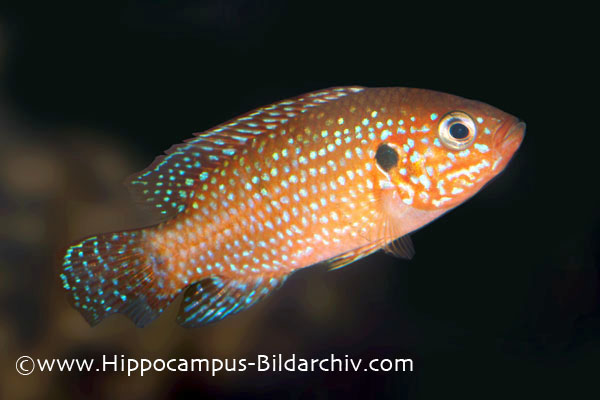
体侧圆形深色斑位于侧线上方,尾柄没有某些近似种的额外深斑。斑点位置和形状应结合判断,单凭红色体色或商品名容易误认。
图片
图片来自 SeriouslyFish,版权归各摄影者所有。
English
Overview
Hemichromis lifalili develops striking breeding colors alongside a major increase in territorial aggression. A routine community arrangement is unsuitable without planning for separation. Compatible pairing and protection of an unreceptive female remain central concerns even after partners appear established.
Distribution & habitat
Endemic to the Democratic Republic of the Congo, it uses still or slow creeks and tributaries. These waters are generally oxygen-rich despite limited current, so slow flow should not be interpreted as tolerance of low oxygen.
Aquarium setup
Provide abundant oxygen and multiple retreats using pots, rocky caves, wood, and dense plants. Digging requires securely rooted or potted vegetation. Arrange cover so weaker fish can escape pursuit instead of leaving every refuge under one dominant fish's control.
Diet & feeding
Its diet is mainly animal-based, particularly aquatic invertebrates, although captive fish accept many foods. Live items can support coloration. Include vegetable-rich or spirulina flakes and softened spinach rather than eliminating plant material entirely.
Behaviour & compatibility
Usually comparatively calm outside breeding, it can become intensely aggressive after spawning. Even substantial companions require enough space and a plan for removal. Do not assume two randomly purchased adults will pair. Raise five or six juveniles, allow natural selection, and promptly separate the remaining fish once a bond forms.
Sexual dimorphism
Sexing by appearance is difficult. Males tend to be somewhat brighter outside breeding condition, but color alone is an uncertain guide.
Breeding
The pair cleans a firm surface such as rock, pot, or glass before laying. Male pursuit can endanger a female that is not ready, so continued observation is necessary. Parents share tending and defense, with some interchange of roles.
Eggs hatch after approximately forty-eight hours. Larvae are moved into excavated shallow pits and may be relocated repeatedly. Swimming begins another one to three days later, when microworms and Artemia nauplii are appropriate. Care generally continues for around a month before another spawning cycle may make separate rearing advisable.
Notes
The round flank mark lies above the lateral line, and the tail peduncle lacks an extra dark spot found in some lookalikes. Compare several markings rather than identifying a fish solely from red coloration or a trade name.
来源
- https://www.seriouslyfish.com/species/hemichromis-lifalili(抓取于 2026-10-10)
hemichromis-lifalili · 文件: data/species/hemichromis-lifalili.md · 状态: 草稿