长体伴丽鱼 · Five Star General
概要
| 字段 | 值 |
|---|---|
| 类别 | 鱼 |
| 学名 | Hemichromis elongatus |
| 别名 | 長體伴麗魚 |
| 分类 | 慈鲷目 Cichliformes › 慈鲷科 Cichlidae › Hemichromis |
| 水体 | 淡水 |
| 成体体长 | 15 cm |
| 饲养难度 | 中等 |
| 群居方式 | 群游 |
| 特征 | 吃小鱼: 是;翻底砂: 是 |
| 外部数据 | seriouslyfish hemichromis-elongatus;fishbase 59782 |
| 原产地 | 几内亚、喀麦隆、安哥拉、纳米比亚、博茨瓦纳、津巴布韦 |
| 食性 | 肉食 |
| 繁殖方式 | 附着产卵 |
| 性情 | 攻击性 |
水质参数
| 参数 | 耐受范围 | 最适范围 | 单位 |
|---|---|---|---|
| 水温 | 22–25 | — | °C |
| pH | 6.5–7.5 | — | — |
| 总硬度 | 5–15 | — | dGH |
概述
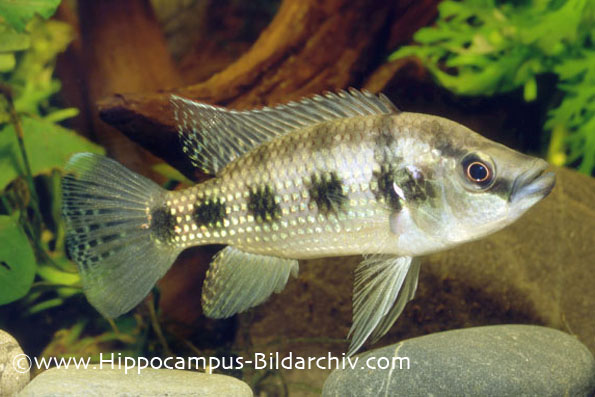
长体伴丽鱼(Hemichromis elongatus)是攻击性很强的食鱼慈鲷,侧面一列深色斑点很醒目。它既可能吞小鱼,也可能打伤吞不下的大鱼,通常更适合单养缸和有处理攻击问题经验的饲养者。
分布与栖息地
有记录的国家包括几内亚、喀麦隆、安哥拉、纳米比亚、博茨瓦纳和津巴布韦。范围较零散,可能涉及误认,也可能存在尚未记录的中间分布,不能据此自行补全其他国家。栖地包括河流、支流、湖泊和池塘,沿海部分地区有进入汽水的记录。
饲养环境
以根枝、岩石和花盆提供丰富遮蔽。它挖掘频繁,扎根底砂的水草容易受损,可选择固定在造景上的附生植物。浮水植物可稍微减光,但不是必需。即使有藏身处,也需要持续关注个体之间的追逐。
食性与喂食
天然食鱼,但容易训练接受非活体食物。蚯蚓、虾肉、贝肉和合适鱼肉可轮换提供,通常也能吃干粮,但不宜只靠干粮作为食谱基础。
习性与混养
除非空间特别大,否则宜单养。一般不能容忍同种竞争者,稳定配对是例外。可从约六条幼鱼养起,让其自然选伴;一旦出现配对,应迅速移走其他鱼,避免被陆续攻击致死。不能因为幼鱼阶段暂时相处,就长期按群居鱼饲养。
雌雄区分
雄鱼往往略大、颜色更鲜艳,成熟后背鳍和臀鳍延长。
繁殖
配对后在平石、花盆侧壁或缸壁等硬表面产卵,双亲共同清理产卵面。繁殖时必须移走其他鱼,雄鱼追逐也可能伤及尚未准备好的雌鱼,应备隔离条件。
卵约四十八小时孵化,雌鱼照顾卵,雄鱼主要防御周围,角色可以互换。亲鱼挖浅坑并将幼鱼转移其中,再过约六天开始自由游动,可投喂微虫和丰年虾幼体。照护通常持续约一个月,亲鱼再次繁殖前应考虑分离这一窝幼鱼。
图片
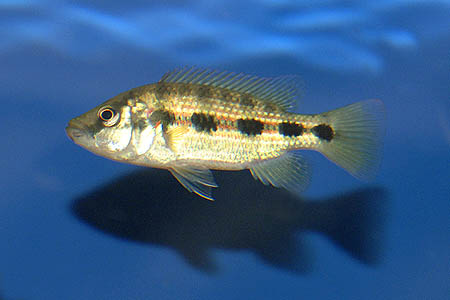
图片来自 SeriouslyFish,版权归各摄影者所有。
English
Overview
The strongly marked Hemichromis elongatus is both highly aggressive and fish-eating. Small companions can be swallowed, while larger ones may be attacked. A dedicated aquarium and experience managing serious aggression are more appropriate than ordinary community keeping.
Distribution & habitat
Records include Guinea, Cameroon, Angola, Namibia, Botswana, and Zimbabwe. The discontinuous pattern could reflect mistaken identifications or unrecorded intervening populations; it does not justify assuming additional countries. Rivers, tributaries, lakes, and ponds are occupied, with some coastal records from brackish water.
Aquarium setup
Roots, branches, rocks, and pots provide cover. Frequent digging makes plants rooted in the substrate unreliable, so attached plants are a better option. Floating growth can soften the light but is optional. Monitor pursuit even when numerous retreats are available.
Diet & feeding
Although naturally piscivorous, it readily learns to accept nonliving alternatives. Rotate earthworms, shrimp, mollusk flesh, and suitable fish pieces. Dry foods are usually accepted but should not supply the entire dietary foundation.
Behaviour & compatibility
A species-only arrangement is preferable except in exceptionally large accommodation. Conspecific rivals are generally rejected once a pair forms. Begin with around six juveniles, allow natural partner selection, and remove the others promptly when pairing becomes apparent. Temporary juvenile tolerance does not establish suitability for permanent group keeping.
Sexual dimorphism
Males tend to become slightly larger and more colorful, with extended dorsal and anal fins at maturity.
Breeding
Partners clean a solid surface such as a rock, pot side, or aquarium glass. Remove other residents before spawning, and remain ready to separate the female if intense pursuit occurs before she is receptive.
Hatching takes around forty-eight hours. The female usually tends the clutch while the male guards the surrounding area, with some exchange of roles. Excavated shallow pits receive the larvae, which start swimming approximately six days later. Microworms and Artemia nauplii are appropriate first foods. Parental care commonly lasts about a month, after which another clutch may prompt separation of the older brood.
来源
- https://www.seriouslyfish.com/species/hemichromis-elongatus(抓取于 2026-10-10)
hemichromis-elongatus · 文件: data/species/hemichromis-elongatus.md · 状态: 草稿