双斑伴丽鱼 · Jewel Cichlid
概要
| 字段 | 值 |
|---|---|
| 类别 | 鱼 |
| 学名 | Hemichromis bimaculatus |
| 别名 | 雙斑伴麗魚 |
| 分类 | 慈鲷目 Cichliformes › 慈鲷科 Cichlidae › Hemichromis |
| 水体 | 淡水 |
| 成体体长 | 15 cm |
| 饲养难度 | 入门 |
| 最小水体 | 108 L |
| 最小缸长 | 120 cm |
| 群居方式 | 成对 |
| 领地性 | 是 |
| 外部数据 | seriouslyfish hemichromis-bimaculatus;fishbase 2389 |
| 原产地 | 几内亚南部至利比里亚中部 |
| 繁殖方式 | 附着产卵 |
| 特征 | 翻底砂: 是 |
水质参数
| 参数 | 耐受范围 | 最适范围 | 单位 |
|---|---|---|---|
| 水温 | 22–28 | — | °C |
| pH | 6–7.8 | — | — |
| 总硬度 | 4–18 | — | dGH |
概述
双斑伴丽鱼(Hemichromis bimaculatus)虽然常见于贸易,却不适合未经安排的普通混养缸。繁殖期攻击性会明显增强,安全配对及及时隔离其他鱼,比单纯提供合适水质更容易成为饲养中的难点。
分布与栖息地
分布于非洲西海岸,从几内亚南部至利比里亚中部。多生活在小溪、沟渠等环境,岸边有悬垂植被,水面也有植物遮蔽。
饲养环境
用花盆、岩洞、沉木和密植区提供尽可能多的躲藏处,帮助弱势鱼避开追逐。它会挖掘,水草应选根系牢固的种类或盆栽种植。不能仅靠增加几块装饰物,就把狭小空间视为合适混养场所。
食性与喂食
不太挑食,活饵有助于表现颜色,也应提供植物性或螺旋藻薄片、焯软菠菜等补充。保持多样食谱,繁殖前也不宜只用单一食物催养。
习性与混养
领地性明显,产卵时可能致命攻击其他鱼。较大型、强健伙伴只能在空间足够时谨慎考虑。适合饲养相容配对,但直接买两条成年鱼合缸并不能保证成功,弱势个体可能被打死。宜由五至六条幼鱼自然配对,配对后及时移走其余鱼。
雌雄区分
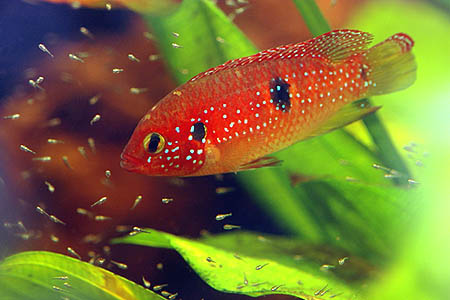
外观分辨较难。雄鱼尾鳍中央的蓝色花纹呈网状,成年雄鱼背鳍也会变尖,这些可与整体体形和状态一起观察。
繁殖
亲鱼清理平石、花盆侧面或缸壁后产卵,雌鱼照顾卵,雄鱼防守附近,角色有时互换。即使已经配对,雌鱼未准备好时仍可能遭过度追逐,要持续观察并准备隔离。
亲鱼会在产卵面附近挖浅坑,孵化后的幼鱼被移入坑内,期间可能多次转移。自由游动后可喂微虫和丰年虾幼体。双亲通常照护约一个月,随后可能再次产卵,应考虑把这一窝幼鱼移入育成缸。
补充说明
尾柄上的额外深色斑是辨别近似类型时可用的线索,不能只凭“宝石慈鲷”一类宽泛商品称呼判断物种。
图片
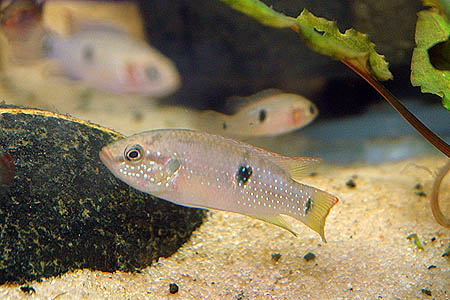
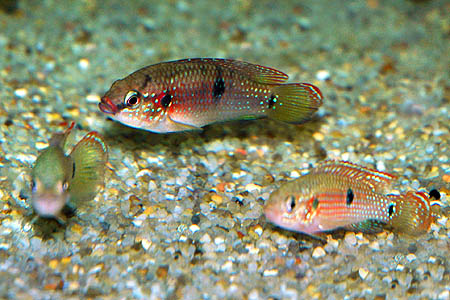
图片来自 SeriouslyFish,版权归各摄影者所有。
English
Overview
Despite its frequent appearance in trade, Hemichromis bimaculatus is poorly suited to an unplanned general community. Aggression intensifies around reproduction, making compatible pairing and timely separation of other fish major practical concerns.
Distribution & habitat
Its west African range extends from southern Guinea toward central Liberia. Small streams and canals with overhanging plants and surface cover are typical habitats.
Aquarium setup
Provide many retreats using pots, rocky caves, wood, and dense planting. Fish dig, so plants need firmly established roots or pots. Shelter helps individuals escape pursuit, but cannot compensate for cramped accommodation.
Diet & feeding
Most foods are accepted. Live items can support coloration, while vegetable or spirulina flakes and softened spinach supply useful plant material. Maintain variety when conditioning adults rather than relying on a single rich food.
Behaviour & compatibility
It is territorial and can kill other residents during spawning. Substantial, robust companions require generous space and careful supervision. A compatible pair is preferable to simply combining two adults: the weaker fish may otherwise be killed. Start with five or six juveniles, let partners choose one another, and promptly remove the others once a pair forms.
Sexual dimorphism
Sexing is difficult. Males show a netlike blue pattern in the central tail region, and mature males develop a more pointed dorsal fin. Assess these clues together rather than relying on one feature alone.
Breeding
A cleaned flat rock, pot side, or tank wall receives the clutch. The female generally tends eggs while the male defends the area, although roles can overlap. Even established partners need observation because an unreceptive female can be harassed severely.
The pair excavates nearby shallow pits and moves hatchlings between them. Once swimming freely, fry take microworms and Artemia nauplii. Parental attention commonly continues for approximately a month; separate rearing may then be needed as the adults prepare another clutch.
Notes
An additional dark tail-peduncle spot is a useful identification clue among similar forms. A broad jewel-cichlid trade label alone does not establish species identity.
来源
- https://www.seriouslyfish.com/species/hemichromis-bimaculatus(抓取于 2026-10-10)
hemichromis-bimaculatus · 文件: data/species/hemichromis-bimaculatus.md · 状态: 草稿