丝尾鳠 · Asian Red Tailed Catfish
概要
| 字段 | 值 |
|---|---|
| 类别 | 鱼 |
| 学名 | Hemibagrus wyckioides |
| 别名 | 絲尾鱯、Macrones wyckioides、Mystus aubentoni、Mystus wyckioides |
| 分类 | 鲶形目 Siluriformes › 鲿科 Bagridae › Hemibagrus |
| 水体 | 淡水 |
| 原产地 | 中国、老挝、越南、柬埔寨、泰国的澜沧江—湄公河水系,以及泰国湄南河水系 |
| 成体体长 | 130 cm |
| 饲养难度 | 中等 |
| 群居方式 | 独居 |
| 外部数据 | seriouslyfish hemibagrus-wyckioides;fishbase 26973 |
| 食性 | 肉食 |
| 特征 | 吃小鱼: 是 |
| 繁殖方式 | 产卵 |
水质参数
| 参数 | 耐受范围 | 最适范围 | 单位 |
|---|---|---|---|
| 水温 | 19–29 | — | °C |
| pH | 6–8 | — | — |
| 总硬度 | 2–20 | — | dGH |
概述
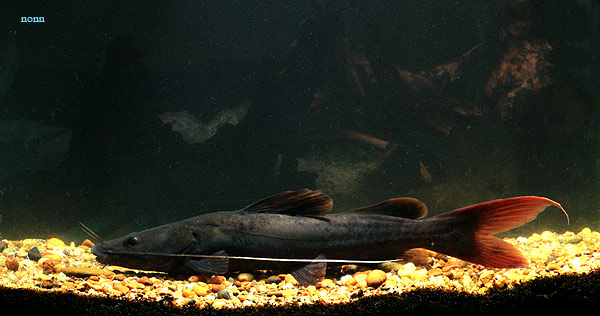
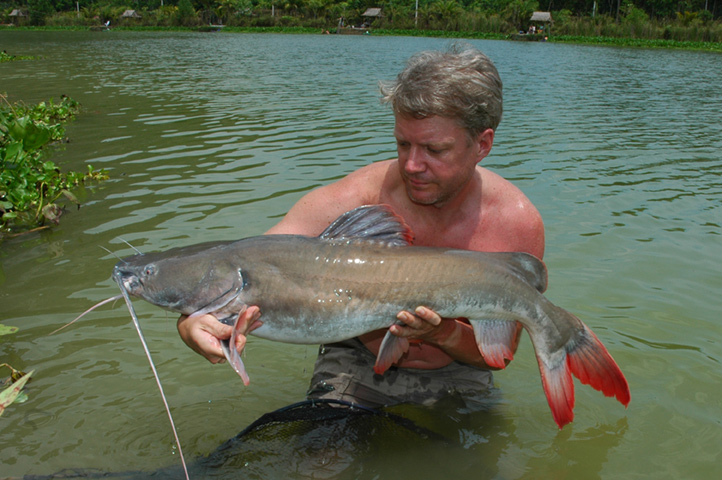
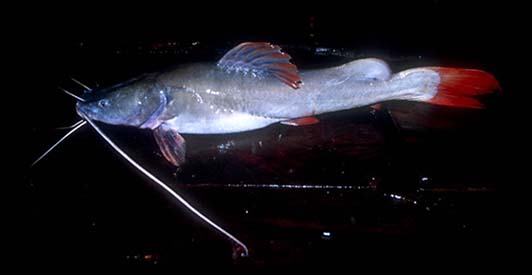
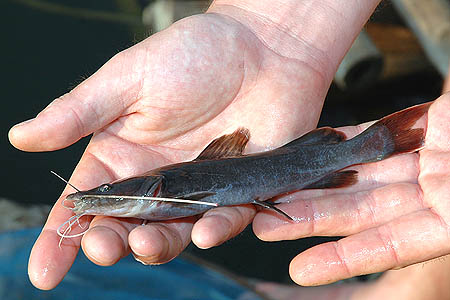
丝尾鳠(Hemibagrus wyckioides)是能长得极大的亚洲红尾鲶类,灰色身体配红色鳍。它的体形、潜在攻击性和数十年的寿命,使普通家庭缸几乎不具备长期饲养条件,不应只因幼鱼容易购买便入手。
分布与栖息地
分布于中国、老挝、越南、柬埔寨和泰国的澜沧江—湄公河水系,以及泰国湄南河。生活在主河道,包括白浪急滩,七月至十月雨季会局部迁入被淹森林。
饲养环境
需要公共展示设施或极少数特别巨大的私人水族箱。可能偏好弱光,并利用沉木、大石块或管道藏身。强大的过滤能力和认真的换水维护是长期管理的基础。
食性与喂食
天然食物主要为甲壳动物和较小鱼类,人工环境并不需要用活鱼喂养。幼鱼可接受活饵或冷冻红虫、水蚯蚓及多数干饲料;成鱼可喂蚯蚓、虾肉、贻贝、白肉鱼条和大型沉底颗粒。
幼鱼需要相对高蛋白的菜单,成鱼通常不必天天喂,每周一至两餐可作参考。不要将牛心、鸡肉等陆生动物肉类作为常规食物。
习性与混养
预计具有较强的领域攻击性,只有极大的展示设施才可能考虑混养,即使如此也仍有攻击缸友的风险。它似乎不怕人,维护时需要保持谨慎。
雌雄区分
雄鱼臀鳍前方有延长的生殖突。
繁殖
商业养殖采用激素诱导繁殖,不能等同于家庭缸自然繁殖已成熟。在这类人工条件下,28 °C 时孵化约需三十至三十八小时,刚孵出的鱼苗全长约 5 mm,之后约三天吸收卵黄囊。
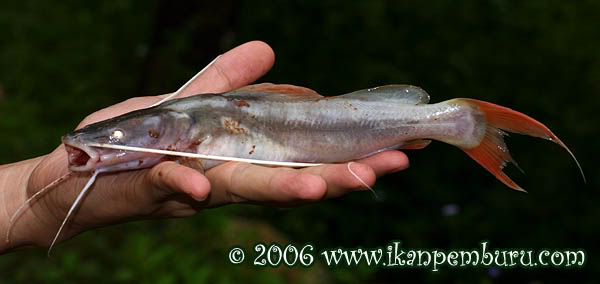
观察中,约三十天的幼鱼已完成早期发育,平均全长约 42 mm。这些数字描述的是特定人工繁殖条件下的进程,并非普通水族箱的保证结果。
补充说明
灰色身体和红色鳍有助于与部分近似种区分,但不能只凭“红尾鲶”的通称认定身份。澜沧江流域的一些旧记录曾误用其他鳠类的名字,因此准确学名与来源范围都很重要。
图片
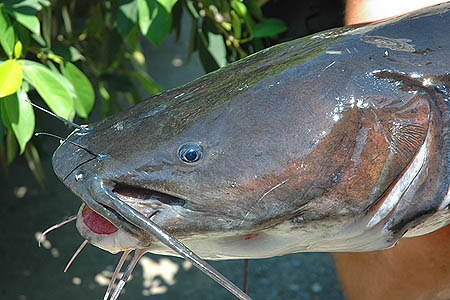
图片来自 SeriouslyFish,版权归各摄影者所有。
English
Overview
Hemibagrus wyckioides is an enormous Asian catfish with a gray body and red fins. Eventual size, potential aggression, and a lifespan of several decades make normal home aquariums inappropriate. The availability of small juveniles does not make long-term care realistic.
Distribution & habitat
It occurs in the Lancang–Mekong system through China, Laos, Vietnam, Cambodia, and Thailand, and in Thailand's Chao Phraya drainage. Main channels, including whitewater rapids, are occupied. Local migrations into flooded forest take place during the July–October wet season.
Aquarium setup
Housing requires a public installation or an exceptionally large private aquarium. Subdued lighting and substantial retreats made from wood, rocks, or pipes are likely preferences. Large filtration capacity and a serious water-change routine underpin maintenance.
Diet & feeding
Crustaceans and smaller fishes form the principal natural prey, but live feeder fish are unnecessary. Young specimens accept live or frozen worms and many dry foods. Adults can receive earthworms, shrimp flesh, mussels, white-fish strips, and large sinking pellets.
Juveniles require a relatively protein-rich menu. Adults generally need not eat daily, with one or two meals weekly offered as a reference. Do not use terrestrial meats such as beef heart or chicken as regular food.
Behaviour & compatibility
Strong territorial aggression is expected. Mixed housing is questionable outside very large displays, and even those do not eliminate attacks on companions. The fish appears unafraid of people, requiring care during maintenance.
Sexual dimorphism
Males have an elongated genital papilla in front of the anal fin.
Breeding
Commercial production uses induced spawning with hormones, which should not be confused with established natural reproduction in home aquariums. Under those artificial conditions, hatching took about thirty to thirty-eight hours at 28 °C. Newly hatched fish measured around 5 mm in total length, with yolk absorption completed approximately three days later.
At roughly thirty days, juveniles had completed early development and averaged 42 mm in total length. These observations describe a particular production setting, not a guaranteed timetable in an ordinary tank.
Notes
Gray body color and red fins help separate it from some relatives, but the broad label red-tailed catfish is insufficient for identification. Some older Lancang records used the names of other catfishes, making both scientific identity and locality important.
来源
- https://www.seriouslyfish.com/species/hemibagrus-wyckioides(抓取于 2026-10-10)
hemibagrus-wyckioides · 文件: data/species/hemibagrus-wyckioides.md · 状态: 草稿