接吻鱼 · Kissing Gourami
概要
| 字段 | 值 |
|---|---|
| 类别 | 鱼 |
| 学名 | Helostoma temminkii |
| 别名 | 吻鱸、吻鲈 |
| 分类 | 攀鲈目 Anabantiformes › 沼口鱼科 Helostomatidae › Helostoma |
| 水体 | 淡水 |
| 原产地 | 柬埔寨、印度尼西亚、马来西亚、泰国、越南 |
| 成体体长 | 25 cm |
| 饲养难度 | 中等 |
| 最小水体 | 304 L |
| 最小缸长 | 150 cm |
| 群居方式 | 群游 |
| 外部数据 | seriouslyfish helostoma-temminkii;fishbase 500 |
| 繁殖方式 | 散卵 |
水质参数
| 参数 | 耐受范围 | 最适范围 | 单位 |
|---|---|---|---|
| 水温 | 22–30 | — | °C |
| pH | 6–8 | — | — |
| 总硬度 | 1–20 | — | dGH |
概述
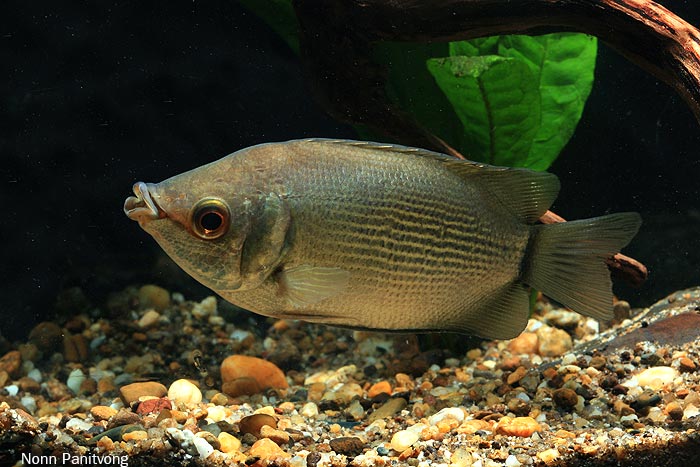
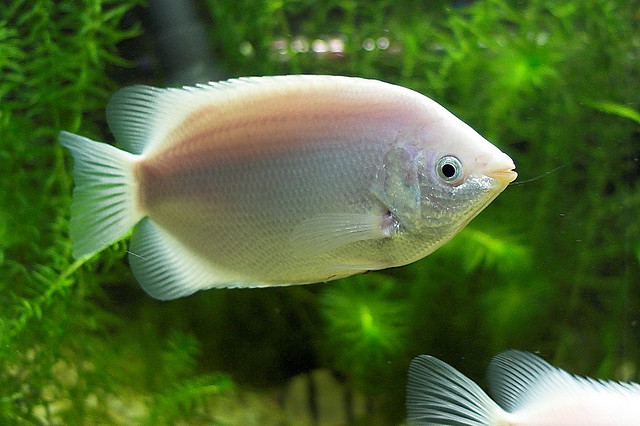
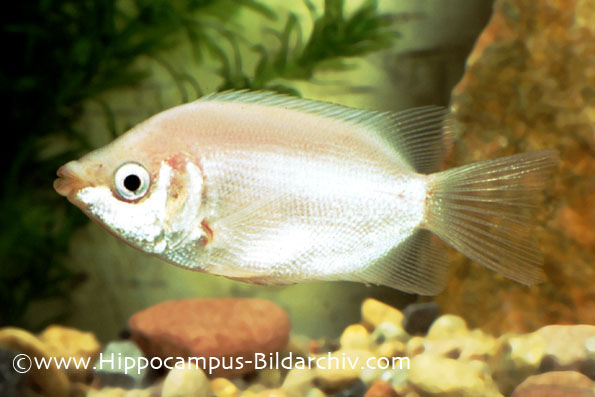
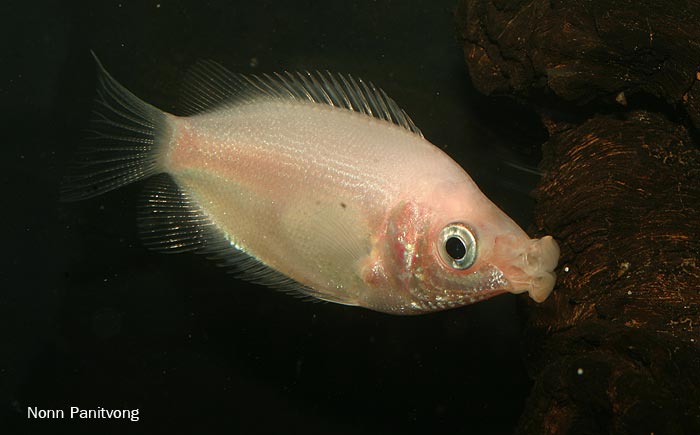
接吻鱼(Helostoma temminkii)并不是温柔的小型社区鱼:成年体型、同种间强势行为和可超过二十年的寿命,都要求长期准备。两鱼对嘴至少部分与争夺社会地位有关,不能当作爱意表现。常见粉白色是人工选育的白化样色型,野生鱼则偏灰绿。
分布与栖息地
分布涉及越南、柬埔寨、泰国、马来半岛及苏门答腊、爪哇、婆罗洲等地,但人类养殖和引入已改变范围,砂拉越种群也被认为是引入。偏爱静水或缓流的洪泛湖泊、牛轭湖、回水区和沼泽,常在清水、黑水中的水草床附近活动,雨季可能进入临时淹水区。
饲养环境
长期底面至少参考 150 × 45 厘米,优先保证水质和开放游动空间。沉木枝根等表面可供刮食生物膜,柔软水草叶片容易被啄,不适合精细草景;若种草,可选较硬叶的附生种,浮水植物也可用。
过滤要高效,回水位置避免过强水流与紊动,成鱼排泄多,每周换水 30%–50%。可保留自然藻供取食,照明按植物安排。水面不要顶满到缸盖,必须能定期上浮呼吸空气。
食性与喂食
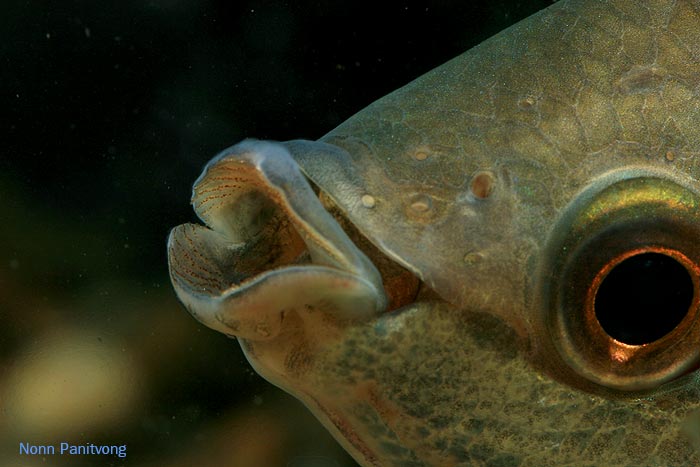
它以微小食物为目标,既过滤水中颗粒,也用唇上的角质小齿刮藻和微生物。嘴巴不停开合常是正常取食,不是“大嘴就能吃大块肉”。
没有能有效咬碎大块食物的颌齿,不要投大颗硬饵。优质柔软薄片、小颗粒可用,规律搭配适口红虫、颤蚓、丰年虾或蚊幼虫,部分干饲料应富含螺旋藻等植物成分。
习性与混养
可在宽敞缸中与体型合适、较强健的鱼混养,通常不会捕食超过几毫米的猎物,但小型幼鱼仍不能据此视为安全。空间不足时容易攻击,尤其体形相似的伙伴,应避免让大鱼挤在一起。
成年后并非群居,若养多尾,宜从幼鱼同时入缸并提供充足空间。不要只养两尾,强者可能持续欺负弱者;后来往固定个体或群体里加入新鱼,也可能被严重追压。
雌雄区分
怀卵的成年雌鱼腹部更圆,除此以外没有确认可靠的外部差别。
繁殖
野外雨季初繁殖,似乎常进入临时洪泛区。单雌一次可产数千粒卵,随机散在植物间,卵有浮力,约 24–36 小时孵化,再约 48 小时鱼苗自由游动。没有亲鱼照顾,也不筑泡巢。
商业上大量生产,爱好者繁殖却较少见,繁殖与养大大量幼鱼需要另行规划,不能因为常见廉价幼鱼就忽略长期饲养投入。
补充说明
短身“球形”品系体形被刻意缩短,寿命往往比正常体形短。对嘴还可能涉及领地或求偶,但具体功能尚未完全确认。它有迷鳃可辅助呼吸空气,这也解释了为何必须保留水面通道。
图片
图片来自 SeriouslyFish,版权归各摄影者所有。
English
Overview
Adult size, forceful social behavior, and a lifespan potentially exceeding twenty years make Helostoma temminkii a substantial commitment. Lip-locking appears partly related to dominance rather than affection. The familiar pink-white ornamental form is leucistic, unlike the gray-green wild form.
Distribution & habitat
Records cover southern Indochina, the Malay Peninsula, and parts of Sumatra, Java, and Borneo. Introductions have altered the range, including an apparently nonnative Sarawak population. It favors standing or slow water in floodplain lakes, oxbows, backwaters, and swamps, often near submerged vegetation in clear or black water.
Aquarium setup
Use at least a 150 by 45 cm footprint, prioritizing open swimming space and water quality. Wood provides grazing surfaces for biofilm. Plant leaves may be picked at, making delicate aquascapes unsuitable; tougher attached plants or floating vegetation are better choices.
Efficient filtration should avoid excessive turbulence. Adults produce substantial waste, so make weekly 30–50% changes. Some algal growth is useful. Leave air access above the water because the fish needs periodic atmospheric breathing.
Diet & feeding
It specializes in tiny particles, filtering water and scraping algae and microorganisms with teeth on the lips. Almost continuous mouthing can be normal feeding behavior.
The jaws cannot crush large food items effectively. Offer soft flakes or small pellets, regular small live or frozen invertebrates, and prepared foods with a substantial vegetable component such as spirulina. A large mouth is not a reason to provide large, hard chunks.
Behaviour & compatibility
In spacious housing it can coexist with suitably robust fish. Its feeding apparatus limits prey capture to very small items, though that does not protect tiny fry. Restricted space increases aggression, particularly toward similarly shaped companions.
Adults are not naturally gregarious. If keeping several, start with juveniles introduced together and provide ample room. Avoid pairs: a dominant individual may relentlessly bully the other. Adding newcomers to an established fish or group can cause similar problems.
Sexual dimorphism
Egg-filled adult females have a rounder abdomen, but other dependable external sex differences are unconfirmed.
Breeding
Natural spawning occurs near the start of the rains, apparently often in newly flooded habitat. A female may release several thousand buoyant eggs among plants without parental care. Hatching takes about 24–36 hours, with free swimming roughly another 48 hours later. No bubble nest is involved.
Large-scale commercial production contrasts with infrequent hobby breeding. Raising a large brood needs its own planning rather than being assumed easy from the availability of inexpensive juveniles.
Notes
Short-bodied balloon forms are deliberately altered and tend to live less long than normally shaped fish. Lip-locking may also involve territorial or courtship functions, but the details remain uncertain. The labyrinth organ supports air breathing, reinforcing the need for surface access.
来源
- https://www.seriouslyfish.com/species/helostoma-temminkii(抓取于 2026-10-10)
helostoma-temminkii · 文件: data/species/helostoma-temminkii.md · 状态: 草稿