青苔鼠 · Sucking 'Loach'
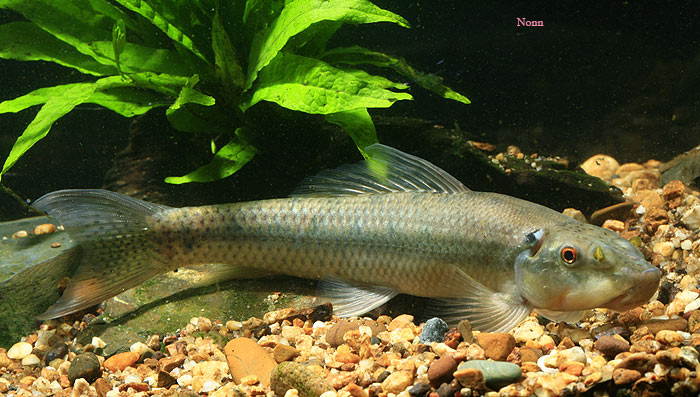
概要
| 字段 | 值 |
|---|---|
| 类别 | 鱼 |
| 学名 | Gyrinocheilus aymonieri |
| 别名 | 湄公雙孔魚、Psilorhynchus aymonieri、Gyrinocheilus kaznakovi、Gyrinocheilus monchadskii、湄公双孔鱼 |
| 分类 | 鲤形目 Cypriniformes › 双孔鱼科 Gyrinocheilidae › Gyrinocheilus |
| 水体 | 淡水 |
| 原产地 | 柬埔寨、老挝、泰国、越南 |
| 成体体长 | 28 cm |
| 饲养难度 | 中等 |
| 最小水体 | 304 L |
| 最小缸长 | 150 cm |
| 群居方式 | 独居 |
| 领地性 | 是 |
| 外部数据 | seriouslyfish gyrinocheilus-aymonieri;fishbase 12298 |
| 食性 | 杂食 |
水质参数
| 参数 | 耐受范围 | 最适范围 | 单位 |
|---|---|---|---|
| 水温 | 22–26 | — | °C |
| pH | 6–8 | — | — |
| 总硬度 | 2–20 | — | dGH |
概述
青苔鼠(Gyrinocheilus aymonieri)常被当作小型除藻鱼出售,但成年后体型、寿命和领地性都需要认真考虑。幼鱼爱躲藏,长大后却可能追赶同缸鱼,甚至吸附在其他鱼体侧,因此并不适合随意加入普通综合缸。
分布与栖息地
分布于泰国、老挝、柬埔寨及越南的湄功河、湄南河、湄公河中下游和同奈河水系,最初描述的标本来自柬埔寨三隆东山区。贸易中的“印度食藻鱼”“中国食藻鱼”等称呼不代表它原产印度或中国。
天然环境是有水流的溪流、支流,底部混有大石、卵石、砾石和沙,常伴沉木根系。清浅水体让阳光照到水下表面,形成可供摄食的丰富生物膜。它可能有季节性迁移,进入较深、较浑浊或临时淹水区域。
饲养环境
有充足遮蔽时对造景不算苛刻,溪流式布置较合适。使用不同大小的圆滑石块、砾石、沉木根枝,配以能附生的水蕨、水榕等。较亮的光照有助于石面长藻,供其刮食。
需要较高溶氧、适中水流和稳定清洁的水质,对有机废物累积不耐受。通常不会损坏软叶水草,但这不意味着可以不观察实际啃食情况。
食性与喂食
天然以表面附着生物为主,既吃藻类,也摄入小型甲壳动物、昆虫幼体等。不要把缸壁上看得见的藻当作全部食物;应规律补充红虫、水蚤、丰年虾等活饵或冷冻饵,并搭配优质薄片、颗粒及植物性食物。
去壳豌豆、黄瓜、焯软西葫芦、菠菜和切碎水果均可作为补充,也可用多种天然食材制作凝胶饵。适应环境后可能上到中层抢食,溪流布景中则常在石面梳理生物膜。
习性与混养
成长过程中领地性会增强,对外形相似的鱼尤其容易出现攻击。其他底层鱼、包括不少慈鲷和鲶鱼,可能被持续欺负;大型同缸鱼也可能被吸住体侧,遭啃食体表黏液。
若混养,优先考虑健壮、活跃、主要在上层活动的鱼,并尽量最后放入青苔鼠,减少它先占据全缸的机会。它不是必须在所有情况下完全独养,但同伴需要认真筛选。
大型群养有时能分散同种攻击,但需至少六条或更多,让等级冲突分散;少数个体容易集中欺压弱鱼。这种安排需要非常大的缸,不能在普通最低规格缸里照搬。
雌雄区分
成熟雌鱼身体明显更厚实。繁殖状态下成年雄鱼吻部会出现明显疣状突起;幼鱼无法可靠凭外观分辨。
繁殖
普通水族箱中尚无可采用的成功繁殖方法。市场供应已有大量商业繁育,使用激素辅助,不能与日常缸内自然配对繁殖混为一谈。
补充说明
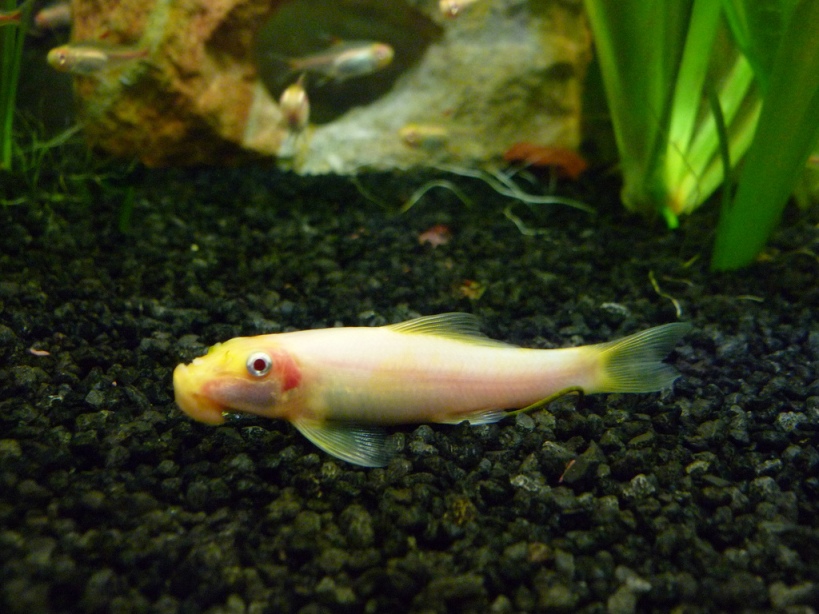
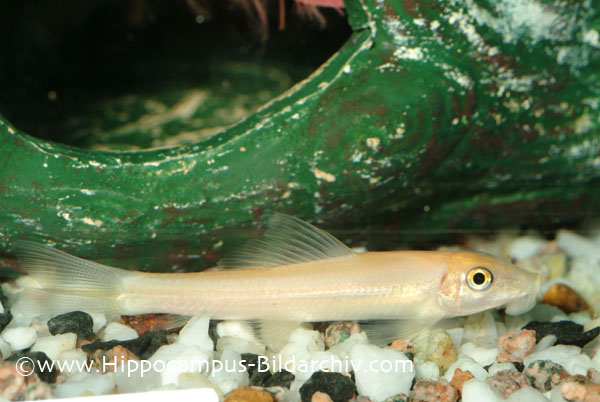
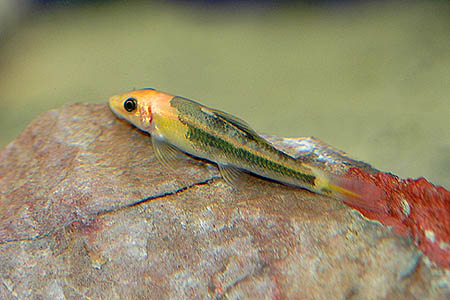
它并非真正的鳅类,且可活过 15 年,应按长期养护对象规划。观赏品系包括白化、金色、花斑和短身型。部分金色个体曾被反复注射染料染色,这会造成伤害并明显缩短寿命,应避免把人工染色当成健康体色。
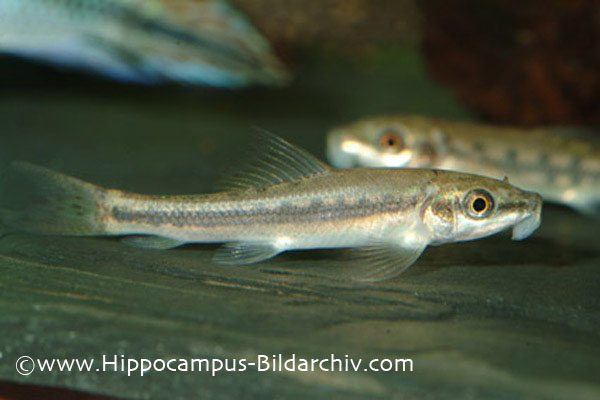
双孔鱼属没有口须,鳃盖上方有辅助进水孔,使口部贴住表面刮食或固定身体时,仍能让水流通过鳃部。没有口须也是与一些外观相似食藻鱼区分的线索。
图片
图片来自 SeriouslyFish,版权归各摄影者所有。
English
Overview
Frequently sold as a small algae cleaner, Gyrinocheilus aymonieri demands planning for adult size, longevity, and territorial behavior. Shy juveniles can become troublesome adults, chasing companions or attaching to their flanks. It is therefore a poor casual addition to a standard community.
Distribution & habitat
Its range spans the Mae Klong, Chao Phraya, middle and lower Mekong, and Dong Nai systems in Thailand, Laos, Cambodia, and Vietnam. The original description concerned material from the Samrong Tong mountains of Cambodia. Trade labels referring to India or China do not identify its native range.
Flowing tributaries and streams contain boulders, pebbles, gravel, sand, and submerged roots. Clear shallow water supports abundant growth on illuminated surfaces. Seasonal movements into deeper, cloudier water or temporary flooded areas are suspected.
Aquarium setup
Shelter is important, but decoration otherwise permits flexibility. A river layout with varied rounded stones, gravel, wood, and attached ferns or Anubias suits it well. Bright light encourages grazing surfaces to develop algae.
Maintain high oxygen levels, moderate current, and consistently clean water. Organic waste accumulation is poorly tolerated. Soft-leaved plants generally remain unharmed, although actual behavior should still be watched.
Diet & feeding
Surface grazing supplies algae together with small crustaceans, insect larvae, and other organisms. Visible aquarium algae should not be treated as a complete diet. Provide regular small live or frozen foods such as bloodworms, Daphnia, and Artemia alongside quality flakes, pellets, and vegetable items.
Shelled peas, cucumber, softened zucchini, spinach, and chopped fruit are useful additions. Mixed-ingredient gel foods offer another option. Settled fish may rise into midwater at feeding time while continuing to browse growth on stones in a stream-style aquarium.
Behaviour & compatibility
Territorial behavior intensifies with growth, especially toward similarly shaped fishes. Many bottom dwellers, including cichlids and catfishes, may be harassed. Even larger companions can suffer attachment to their flanks and feeding on body mucus.
For a mixed aquarium, favor robust active fishes occupying higher water. Adding this species last can reduce the chance that it claims the whole aquarium beforehand. Solitary housing is not the only possible arrangement, but careful selection is essential.
Groups can distribute aggression, provided there are at least six individuals and exceptionally spacious accommodation. A hierarchy develops, and small numbers leave weaker fish exposed to concentrated attention. This is not a project for a minimum-sized aquarium.
Sexual dimorphism
Mature females are fuller-bodied. Adult males develop conspicuous snout tubercles in breeding condition; juveniles cannot be sexed reliably by appearance.
Breeding
There is no established method for ordinary aquarium spawning. Large-scale commercial production uses hormonal assistance, which differs from routine home breeding.
Notes
Despite its common trade descriptions, it is not a true loach. Individuals can exceed 15 years, making long-term planning necessary. Ornamental forms include albino, golden, mottled, and short-bodied strains. Repeated dye injections have been used on some golden fish, causing harm and reduced longevity; artificial dyeing should not be mistaken for healthy coloration.
Members of Gyrinocheilus lack barbels and have accessory water-entry openings above the gill covers. These permit ventilation while the mouth remains attached to a surface for feeding or anchorage. The absence of barbels helps distinguish them from some superficially similar algae-grazing fishes.
来源
- https://www.seriouslyfish.com/species/gyrinocheilus-aymonieri(抓取于 2026-10-10)
gyrinocheilus-aymonieri · 文件: data/species/gyrinocheilus-aymonieri.md · 状态: 草稿