蒂尔裸胸鳝 · 'Freshwater' Moray Eel
概要
| 字段 | 值 |
|---|---|
| 类别 | 鱼 |
| 学名 | Gymnothorax tile |
| 别名 | 蒂爾裸胸鱔、Muraenophis tile、Lycodontis literata、Lycodontis punctata、Strophidon maculata、Muraena vermiculata、Muraena gracilis、Thyrsoidea microdon、Gymnothorax borneënsis |
| 分类 | 鳗鲡目 Anguilliformes › 海鳝科 Muraenidae › Gymnothorax |
| 水体 | 淡水 |
| 原产地 | 印度、印度尼西亚、马来西亚、缅甸、菲律宾、泰国 |
| 成体体长 | 60 cm |
| 饲养难度 | 中等 |
| 最小水体 | 432 L |
| 最小缸长 | 120 cm |
| 群居方式 | 独居 |
| 特征 | 吃小鱼: 是;会跳缸: 是 |
| 外部数据 | seriouslyfish gymnothorax-tile;fishbase 17266 |
| 食性 | 肉食 |
水质参数
| 参数 | 耐受范围 | 最适范围 | 单位 |
|---|---|---|---|
| 水温 | 20–28 | — | °C |
| pH | 7.5–9 | — | — |
| 总硬度 | 10–30 | — | dGH |
概述
蒂尔裸胸鳝(Gymnothorax tile)常以“淡水海鳝”之类名称出售,但不能把商品名理解为适合长期纯淡水饲养。它是强烈食鱼性的捕食者,普通饲养条件下宜单独维持;即使比它大的同缸鱼,也可能被攻击。
分布与栖息地
广布于印度洋至西太平洋沿海,从印度东部延伸到菲律宾,向南到印度尼西亚。模式产地为印度加尔各答附近的恒河河口。
饲养环境
应使用海水盐配制适合的咸淡水环境,可按约 15 g/L 的用量作为参考,不必追求这一数字的绝对精确。单鱼的最低底面积约为 120 × 60 cm,群养或混养则需要明显更大的空间。
布景本身不苛刻,但必须有大量藏身处,可用稳固石堆及适当口径的管道。每条都应能独占一个退避空间。维持高溶氧和适中水流,不要求必须安装蛋白质分离器。
它对劣化水质敏感,只适合成熟稳定的缸,每周换水约 30%~50%。缸盖要贴合严密,所有管线缺口也应处理好,不能留下逃脱通道。
食性与喂食
天然以较小的鱼、甲壳动物等为食,是专性捕食者。新进口个体可能只肯吃活鱼,但多数可以在认出死饵也是食物后逐渐转食。
不应喂牛心、鸡肉等哺乳或禽类肉。长期使用常见饵料鱼也没有优势,可能带入寄生虫或疾病,未事先调理的饵料鱼营养价值也往往有限;不能将长期投活鱼当成唯一可行的饲养方式。
习性与混养
食鱼性很强,偶尔也会袭击大得多的鱼,因此除了极大的缸,通常应单独饲养。要维持同种群体,须有足够大的水体和分开的隐蔽空间,不能只按数量增加几根管子就忽略整体空间需求。
补充说明
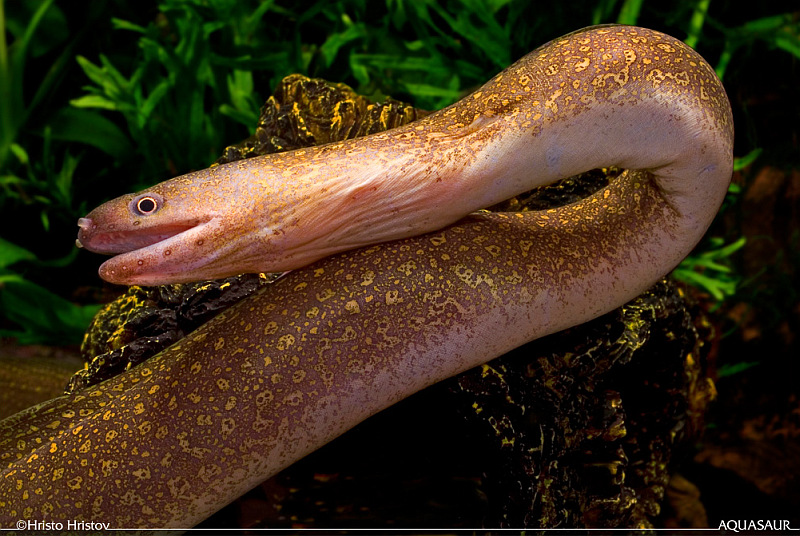
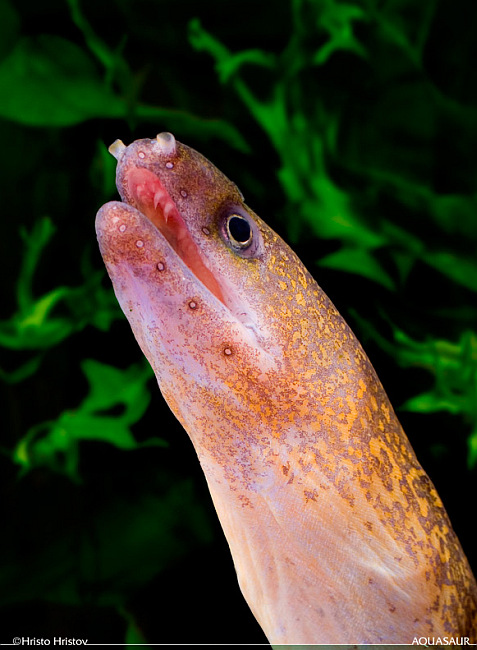
体色会随产地和个体而变化,典型个体是在较深的头部、身体底色上布满细小浅色斑点。容易被混淆的同属 Gymnothorax polyuranodon 则主要为浅底色配大块深色斑,二者不应只凭“淡水海鳝”商品名区分。
图片
图片来自 SeriouslyFish,版权归各摄影者所有。
English
Overview
The trade label “freshwater moray” is misleading for Gymnothorax tile: long-term care should include marine salt. It is a strongly fish-eating predator, usually best housed alone. Even companions much larger than itself may be attacked.
Distribution & habitat
Coastal records extend across the Indo-West Pacific from eastern India to the Philippines and south to Indonesia. The type locality lies in the Ganges estuaries near Kolkata, India.
Aquarium setup
Prepare brackish conditions with marine salt mix, using about 15 g/L as a guide rather than an exact target. An individual needs at least roughly 120 × 60 cm of floor space; a group or mixed arrangement requires considerably more.
Decoration is flexible, but plentiful shelter is essential. Stable rockwork and suitably sized pipes provide retreats, with a separate refuge for every fish. Maintain high oxygen availability and moderate circulation. A protein skimmer is not compulsory.
Use only a mature, stable aquarium and change approximately 30–50% of its water weekly. Poor water quality is poorly tolerated. Fit the cover closely and secure openings around equipment to prevent escape.
Diet & feeding
A dedicated predator, it naturally takes smaller fishes, crustaceans, and similar prey. Newly imported individuals may insist on live fish, but most can learn to recognize nonliving alternatives as food.
Avoid beef heart, chicken, and other mammalian or bird meat. Routine long-term feeding with common feeder fishes offers little benefit and can introduce parasites or disease. Their nutritional value may also be limited unless they have been properly conditioned. Reliance on live fish need not be treated as permanent.
Behaviour & compatibility
Strong piscivory is accompanied by occasional attacks on substantially larger companions. Solitary accommodation is therefore preferable except in exceptionally large systems. Groups are possible only with ample overall space and individual retreats; merely adding extra tubes does not replace sufficient room.
Notes
Patterns vary among and within populations. Typical fish have numerous small pale spots over a darker head and body. In the similar Gymnothorax polyuranodon, larger dark markings contrast with a pale background. Shared freshwater-moray trade labels are inadequate for distinguishing them.
来源
- https://www.seriouslyfish.com/species/gymnothorax-tile(抓取于 2026-10-10)
gymnothorax-tile · 文件: data/species/gymnothorax-tile.md · 状态: 草稿