黑裙鱼 · Black Widow Tetra
概要
| 字段 | 值 |
|---|---|
| 类别 | 鱼 |
| 学名 | Gymnocorymbus ternetzi |
| 别名 | 裸頂脂鯉、裸顶脂鲤 |
| 分类 | 脂鲤目 Characiformes › 脂鲤科 Characidae › Gymnocorymbus |
| 水体 | 淡水 |
| 成体体长 | 6 cm |
| 饲养难度 | 中等 |
| 最小水体 | 68 L |
| 最小缸长 | 75 cm |
| 群居方式 | 群游 |
| 外部数据 | seriouslyfish gymnocorymbus-ternetzi;fishbase 4682 |
| 原产地 | 巴西、玻利维亚、阿根廷的巴拉圭河与瓜波雷河流域 |
| 食性 | 杂食 |
| 性情 | 温和 |
水质参数
| 参数 | 耐受范围 | 最适范围 | 单位 |
|---|---|---|---|
| 水温 | 20–26 | — | °C |
| pH | 6–7 | — | — |
| 总硬度 | 5–20 | — | dGH |
概述
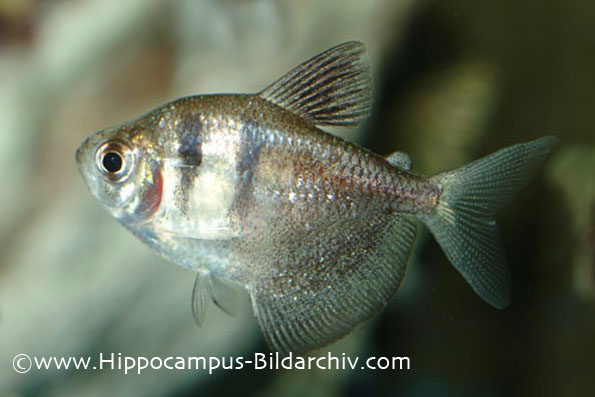
黑裙鱼(Gymnocorymbus ternetzi)活泼、较易开口,黑色裙状臀鳍和体纹使它与鲜艳小鱼形成对比。幼鱼的黑色通常更浓,长大后变淡属于正常变化。群体充足时,咬鳍和争执较容易局限在同种之间。
分布与栖息地
原生于巴西、玻利维亚和阿根廷的巴拉圭河、瓜波雷河流域,生活在缓流的小溪和支流中,岸边常有茂密植被伸向水面。贸易供应主要来自人工繁殖。
饲养环境
布置不苛刻,但需同时有开放游动区和安静角落。局部密植水草,配浮水植物减弱直射光,更有助于显色。不要让所有空间都暴露在强光下,也不要因种草而挤掉整群活动区。
食性与喂食
属于杂食性,薄片和颗粒饲料可作为日常基础,规律搭配水蚤、红虫等小型活饵或冷冻饵料。
习性与混养
总体温和,能与许多适口大小的卵胎生鱼、斑马鱼、波鱼、其他脂鲤及温和底栖鱼搭配,也可考虑较强健的短鲷。它仍有咬鳍倾向,建议至少十二条成群,减少对同伴的追逐。与更大鱼混养时仍需考虑体型,不能把较高的体形视作绝对不会被吞食的保证。
雌雄区分
雄鱼更小、更纤细,背鳍和臀鳍较尖;雌鱼腹部更丰满。
繁殖
可群体繁殖或配对繁殖。另设暗光繁殖缸,放细叶植物、莫丝或产卵拖把,必要时加隔卵网。用优质活饵和冷冻饵料调养亲鱼;若采用配对法,可先分开雌雄,再选择腹部丰满的雌鱼和状态好的雄鱼,合缸后常在次晨产卵。
卵有黏性,亲鱼会吃卵,产后应尽快移出。卵约十八至三十六小时孵化,数天后鱼苗自由游动。先喂纤毛虫等微饵,长大后改喂微虫或丰年虾无节幼体。卵和早期幼鱼怕强光,育苗缸保持昏暗。
补充说明
长鳍型和浅色白裙型来自人工选育。人工注射染色与这些品系不同,会给鱼带来明显应激并可能缩短寿命,选购时应注意区别。
图片
图片来自 SeriouslyFish,版权归各摄影者所有。
English
Overview
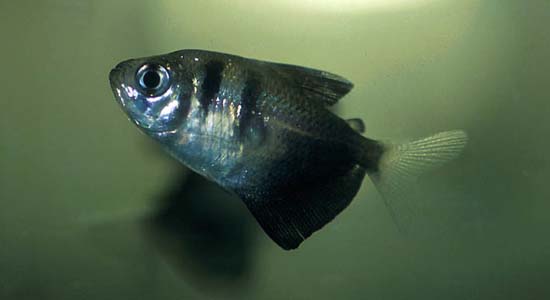
Gymnocorymbus ternetzi, the black skirt tetra, is an active, adaptable aquarium fish. Young specimens show the strongest black coloration, which naturally softens with age. Keeping a substantial group helps contain disputes and fin nipping within the shoal.
Distribution & habitat
It originates from the Paraguay and Guaporé drainage systems in Brazil, Bolivia, and Argentina. Slow small streams and tributaries with overhanging vegetation are typical habitats. Aquarium supplies predominantly come from captive breeding.
Aquarium setup
Combine open swimming room with quieter sheltered areas. Dense patches of plants and floating cover soften the light and improve the display of color. It tolerates varied layouts, provided vegetation does not occupy all of the group's movement space.
Diet & feeding
This is an omnivore. Flakes or granules form a practical base, with regular small live and frozen foods such as water fleas and bloodworms.
Behaviour & compatibility
It is generally peaceful with suitable livebearers, danionins, rasboras, other tetras, and gentle bottom dwellers. More robust dwarf cichlids can also be compatible. Maintain at least twelve to help reduce nipping directed at other fish. Its deep body offers some protection around larger companions, but should not be treated as a guarantee against predation.
Sexual dimorphism
Males are smaller and slimmer, with more pointed dorsal and anal fins. Females have a fuller abdomen.
Breeding
Both group and pair spawning are possible. Use a separate dim aquarium with fine plants, moss, spawning mops, or protective mesh. Condition adults on quality live and frozen food. For pair breeding, keep the sexes apart beforehand, then introduce a ripe female and a well-colored male; spawning often follows the next morning.
The eggs are adhesive, and parents should be removed promptly because they eat them. Hatching takes about eighteen to thirty-six hours. Free swimming begins a few days later. Start with infusoria-sized food, progressing to microworms and newly hatched brine shrimp. Eggs and early fry are light-sensitive, so keep illumination very subdued.
Notes
Long-finned and pale white-skirt forms are selectively bred varieties. Artificial dye injection is a separate practice that causes substantial stress and can shorten life, so it should not be confused with naturally inherited coloration.
来源
- https://www.seriouslyfish.com/species/gymnocorymbus-ternetzi(抓取于 2026-10-10)
gymnocorymbus-ternetzi · 文件: data/species/gymnocorymbus-ternetzi.md · 状态: 草稿