Gymnochanda verae
概要
| 字段 | 值 |
|---|---|
| 类别 | 鱼 |
| 学名 | Gymnochanda verae |
| 分类 | 双边鱼科 Ambassidae › Gymnochanda |
| 水体 | 淡水 |
| 原产地 | 印度尼西亚邦加-勿里洞省勿里洞岛甘东地区 |
| 成体体长 | 2.6 cm |
| 饲养难度 | 中等 |
| 最小水体 | 54 L |
| 最小缸长 | 60 cm |
| 群居方式 | 群游 |
| 水流偏好 | 低 |
| 外部数据 | seriouslyfish gymnochanda-verae;fishbase 66311 |
水质参数
| 参数 | 耐受范围 | 最适范围 | 单位 |
|---|---|---|---|
| 水温 | 20–28 | — | °C |
| pH | 4–6 | — | — |
| 总硬度 | 1–5 | — | dGH |
概述
Gymnochanda verae 是体形很小、较脆弱的透明玻璃鲈,成熟雄鱼的背鳍、臀鳍延长,并带醒目红色。适合能维持成熟稳定水体、准备微小活饵的有经验饲养者。
分布与栖息地
仅知来自印度尼西亚勿里洞岛甘东地区,尚未确认其他种群。具体栖地未明;同属鱼常见于低地沼泽的静水或缓流酸性淡水,底部多泥和泥炭,可作环境参考。
饲养环境
密植水草,加浮水植物、树根枝条和自然落叶,营造遮蔽及柔和光线。无需专门采集天然泥炭。过滤宜轻缓,气动海绵过滤较合适;不能直接放进新开缸,小体积缸的快速水化学变化尤其不利。
食性与喂食
丰年虾、水蚤等小型活饵应视为重要准备,尤其在新鱼适应期。冷冻饵和干粮可能在饲养一段时间后逐渐接受,不能预先假定它会吃。
习性与混养
优先同种专缸。若混养,伙伴应同样小巧、温和且适应相同水况。按本属群居习性,宜从八至十尾的群体开始,而非零星单养。
雌雄区分
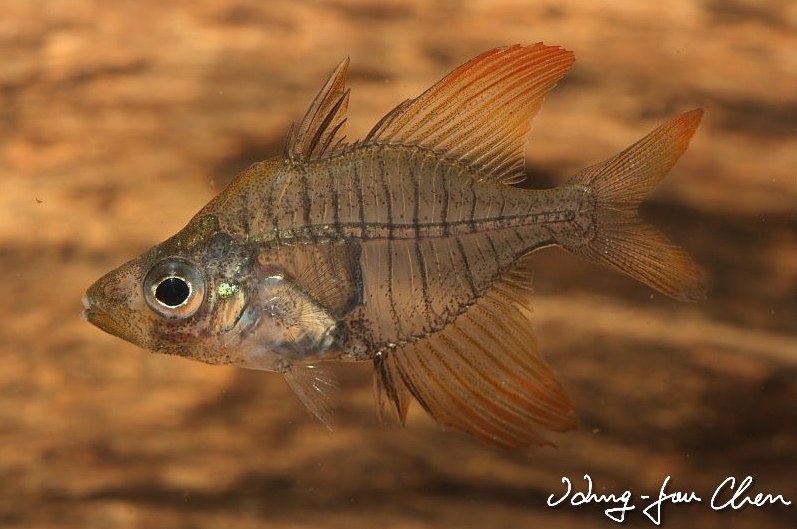
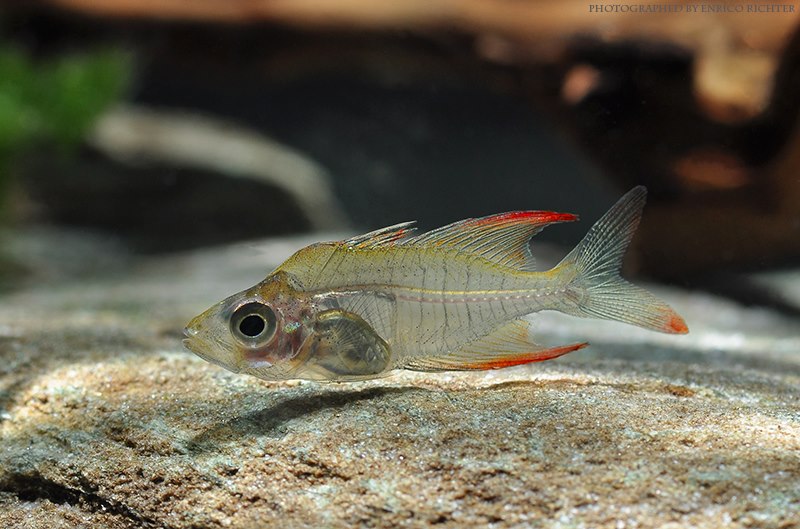
成熟雄鱼第二背鳍和臀鳍延长成三角轮廓,外侧部分及尾鳍上下叶外半部呈胭脂红。雌鱼没有这种延长鳍条和红色,外观基本透明。
繁殖
繁殖尚未报道。
图片
图片来自 SeriouslyFish,版权归各摄影者所有。
English
Overview
Tiny and delicate, Gymnochanda verae develops striking extended red fins in mature males. It is best suited to experienced aquarists able to maintain a stable mature system and provide very small live foods.
Distribution & habitat
Known specimens come from the Gantung area of Belitung Island, Indonesia, with no additional populations confirmed. Exact habitat remains uncertain. Related species occupy lowland swamps with still or slow acidic freshwater over silt and peat.
Aquarium setup
Dense plants, floating shade, roots, twigs, and leaves provide a suitable-looking sheltered layout. Natural peat is unnecessary. Use gentle filtration such as an air-driven sponge and stock only a biologically mature aquarium. Rapid chemical changes in very small volumes are particularly undesirable.
Diet & feeding
Small live Artemia and Daphnia should be available, especially during acclimation. Frozen or dry alternatives may be accepted later, but this should not be assumed for new arrivals.
Behaviour & compatibility
A dedicated species setup is preferable. Any companions should be comparably small, peaceful, and suited to the same conditions. Following the genus’s social habits, begin with eight to ten fish rather than isolated individuals.
Sexual dimorphism
Mature males develop elongated second dorsal and anal fins with a triangular outline. Their outer portions and the outer halves of both tail lobes are carmine red. Females lack the extensions and red coloration and appear essentially colorless.
Breeding
Breeding is unrecorded.
来源
- https://www.seriouslyfish.com/species/gymnochanda-verae(抓取于 2026-10-10)
gymnochanda-verae · 文件: data/species/gymnochanda-verae.md · 状态: 草稿