长丝裸玻璃鱼
概要
| 字段 | 值 |
|---|---|
| 类别 | 鱼 |
| 学名 | Gymnochanda filamentosa |
| 别名 | 長絲裸玻璃魚 |
| 分类 | 双边鱼科 Ambassidae › Gymnochanda |
| 水体 | 淡水 |
| 原产地 | 印度尼西亚、马来西亚 |
| 成体体长 | 3.2 cm |
| 饲养难度 | 中等 |
| 最小水体 | 54 L |
| 最小缸长 | 60 cm |
| 群居方式 | 群游 |
| 水流偏好 | 低 |
| 外部数据 | seriouslyfish gymnochanda-filamentosa;fishbase 24795 |
水质参数
| 参数 | 耐受范围 | 最适范围 | 单位 |
|---|---|---|---|
| 水温 | 20–28 | — | °C |
| pH | 4–6 | — | — |
| 总硬度 | 1–5 | — | dGH |
概述
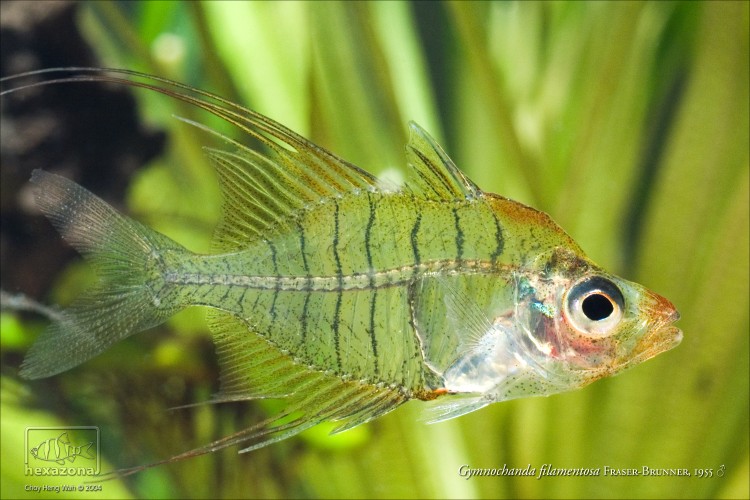
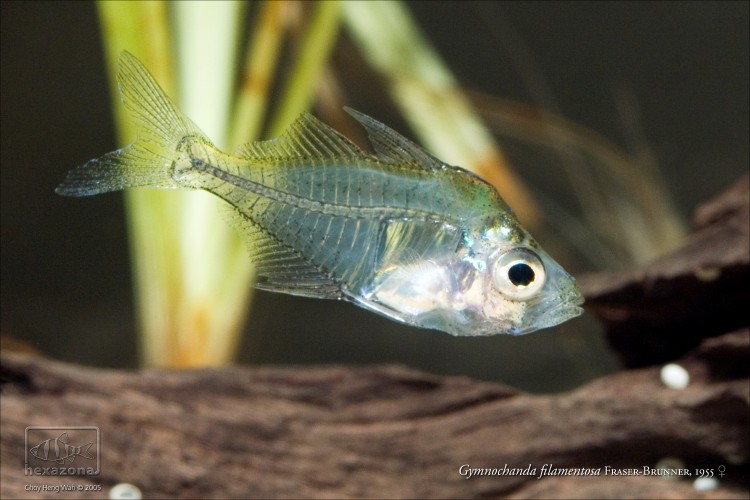
长丝裸玻璃鱼(Gymnochanda filamentosa)体型小、身体透明至半透明黄褐色,成熟雄鱼背鳍和臀鳍有明显丝状延长。它较娇弱,需要成熟稳定的软酸水环境,更适合有经验的饲养者。
分布与栖息地
已确认记录仅来自马来半岛南部柔佛州,以及印度尼西亚婆罗洲西加里曼丹的卡普阿斯河水系。早期模式产地记载在马来亚南部与新加坡之间不明确,不能把该模糊记录当作已确认的新分布。
多生活在低海拔沼泽性淡水中,水静止或缓慢流动、偏酸,底部为淤泥和泥炭。
饲养环境
虽然个体小,底面积仍建议至少约 60 × 30 cm,以降低小水体水化学波动。用密集水草、浮水植物、根枝和自然落叶提供遮蔽,无需专门采挖或使用天然泥炭。
过滤要柔和,气动海绵过滤较合适。必须在缸内生物过滤成熟后引入,不宜放进新缸。
食性与喂食
丰年虾、水蚤等小型活饵应视为重要准备,尤其刚入缸适应时。部分个体可能逐渐接受冷冻饵或干粮,但不能在购买时就假定已经完成转食。
习性与混养
以同种专缸较稳妥,若混养,只考虑体型接近、同样温和的小型鱼,例如 Boraras、Sundadanio 或 Indostomus 属中适宜的种类,并核对软酸水需求。裸玻璃鱼属自然有群居倾向,通常建议从 8~10 条的群体开始。
雌雄区分
成年雄鱼背鳍和臀鳍的部分鳍条延长为细丝,雌鱼缺少这种明显延长。
繁殖
尚无明确人工繁殖记录。
补充说明
本属体表无鳞,身体半透明。本种除雄鱼丝状鳍条外,背鳍、臀鳍和尾鳍没有深红色素,也没有特别延长的第二臀鳍棘,可帮助区别相似裸玻璃鱼。小体型并不代表容易养,选购前应先准备稳定环境和合适活饵。
图片
图片来自 SeriouslyFish,版权归各摄影者所有。
English
Overview
A transparent to translucent yellow-brown body and filamentous male fins characterize Gymnochanda filamentosa. Delicate rather than easy, it needs a mature, stable soft-water aquarium and is better suited to experienced keepers.
Distribution & habitat
Confirmed records are restricted to Johor in southern Peninsular Malaysia and the Kapuas system of West Kalimantan, Indonesian Borneo. The original locality was imprecise, referring variously to southern Malaya and Singapore; that ambiguity does not establish an additional confirmed range.
Lowland swamp habitats contain still or gently moving acidic freshwater over silt and peat.
Aquarium setup
Despite its small size, provide at least about 60 × 30 cm of floor space to reduce water-chemistry fluctuations associated with smaller volumes. Dense plants, floating growth, roots, twigs, and leaves offer cover. Natural peat is unnecessary.
Keep filtration gentle, ideally with an air-driven sponge unit. Establish the aquarium fully before introducing fish; newly set-up tanks are unsuitable.
Diet & feeding
Have small live foods such as Artemia and Daphnia available, especially during acclimation. Frozen or prepared alternatives may be accepted later, but should not be assumed dependable at purchase.
Behaviour & compatibility
A dedicated aquarium is preferable. Any companions should be equally small and peaceful, with matching soft, acidic requirements; suitable members of Boraras, Sundadanio, or Indostomus are possibilities. The genus is naturally social, and a group of roughly eight to ten is generally recommended.
Sexual dimorphism
Adult males develop thread-like extensions of dorsal and anal-fin rays. Females lack these conspicuous filaments.
Breeding
Clear aquarium breeding accounts are unavailable.
Notes
Members of the genus have scaleless translucent bodies. In this species, the male fin filaments occur without an exceptionally lengthened second anal-fin spine or deep red pigment in the dorsal, anal, and caudal fins. Prepare stable housing and appropriate live food before acquisition; tiny size does not imply easy care.
来源
- https://www.seriouslyfish.com/species/gymnochanda-filamentosa(抓取于 2026-10-10)
gymnochanda-filamentosa · 文件: data/species/gymnochanda-filamentosa.md · 状态: 草稿