瓦纳舌鳞银汉鱼 · Lake Wanam Rainbowfish
概要
| 字段 | 值 |
|---|---|
| 类别 | 鱼 |
| 学名 | Glossolepis wanamensis |
| 别名 | 瓦讷舌鳞银汉鱼、瓦納舌鱗銀漢魚 |
| 分类 | 银汉鱼目 Atheriniformes › 黑带银汉鱼科 Melanotaeniidae › Glossolepis |
| 水体 | 淡水 |
| 成体体长 | 10 cm |
| 饲养难度 | 中等 |
| 最小水体 | 81 L |
| 最小缸长 | 90 cm |
| 群居方式 | 群游 |
| 性情 | 温和 |
| 外部数据 | seriouslyfish glossolepis-wanamensis;fishbase 10483 |
| 原产地 | 巴布亚新几内亚瓦纳姆湖 |
| 繁殖方式 | 散卵 |
水质参数
| 参数 | 耐受范围 | 最适范围 | 单位 |
|---|---|---|---|
| 水温 | 25–30 | — | °C |
| pH | 7–8 | — | — |
| 总硬度 | 10–20 | — | dGH |
概述
瓦纳舌鳞银汉鱼(Glossolepis wanamensis)是瓦纳姆湖的彩虹鱼,性情温和但容易受惊。它需要同种群体、较硬的水和高水质,也应留意人工种群的来源及杂交问题。
分布与栖息地
原生范围限于巴布亚新几内亚瓦纳姆湖。湖位于群山间的谷地,岸边睡莲及其他植物形成大片植被,本种多见于这些区域的浅而清澈水中。
饲养环境
底面积至少约 90 × 30 cm,局部密植水草,同时保留泳道。水流以柔和为宜,规律每周部分换水维持水质。它不适合软酸水,需按原有较硬、偏碱性范围安排环境。
食性与喂食
通常可接受多数干饲料、冷冻饵和活饵,规律提供适口活饵有助于呈现良好体色。
习性与混养
虽温和,较快的游动和体形仍可能干扰小型、慢游鱼。体形相近、温和且耐相应硬水的鱼才适合考虑。
至少六至八条同养,更多个体需要扩大空间。群体能降低紧张,也让雄鱼更愿意展示。
雌雄区分
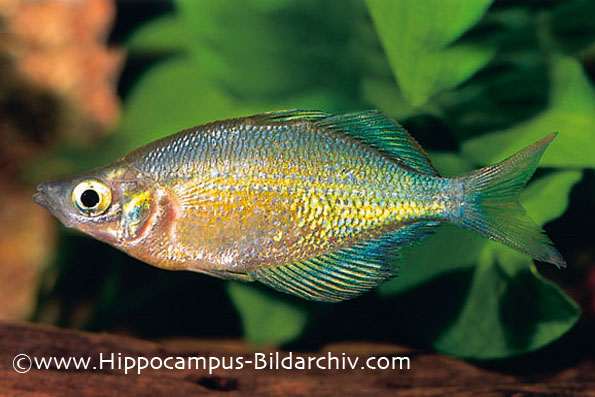
成熟雄鱼更大、更鲜艳,身体更高,第一背鳍和臀鳍也延长。
繁殖
以散卵方式繁殖。调养后的亲鱼可成对放入细叶水草或产卵拖把丰富的繁殖缸,用小型气动过滤维持温和水流。略硬、偏碱水较适合,轻微升温往往能促使求偶。
亲鱼数周内每天产少量卵,卵由细丝附着。为便于育苗,可每天检查介质,将卵转到水质相同的容器。随温度不同,孵化约需七至十二天;最初提供微型饵,一周左右再逐渐转为微虫及丰年虾无节幼体。
鱼苗对不良水质敏感,少量、频繁换水比任由残饵积累更合适。
补充说明
野外数量下降曾被认为与外来鱼及周边人口增加有关,已有保育繁殖工作。部分人工鱼是否混有近似种血统存在争议,保留清楚的来源记录很有价值,不能只凭商品名保证纯种。
图片
图片来自 SeriouslyFish,版权归各摄影者所有。
English
Overview
Glossolepis wanamensis is a peaceful but easily startled rainbowfish from Lake Wanam. Conspecific company, relatively hard water, and excellent water quality are important. Captive origin and possible hybrid ancestry also deserve attention.
Distribution & habitat
It is native only to Lake Wanam in Papua New Guinea. The lake lies in a valley surrounded by hills. Large shoreline beds of lilies and other plants provide shallow, clear habitats where the fish commonly occur.
Aquarium setup
Allow a footprint around 90 × 30 cm or larger, combining dense planted areas with open swimming lanes. Gentle circulation and weekly partial water changes suit it. Soft, acidic water is inappropriate; follow the established harder, alkaline range.
Diet & feeding
Most dry, frozen, and live foods are accepted. Regular suitable live offerings help maintain coloration.
Behaviour & compatibility
Although peaceful, its size and quick movements can unsettle smaller or slower fishes. Consider similarly sized, placid companions that tolerate the same water chemistry.
Keep at least six to eight, with more space for larger groups. Company reduces nervousness and encourages male displays.
Sexual dimorphism
Mature males are larger, brighter, and deeper-bodied, with extended first dorsal and anal fins.
Breeding
It reproduces by scattering eggs. Condition the adults before transferring a pair to a setup containing fine-leaved plants or spawning mops. A small air-driven filter provides gentle circulation. Slightly hard, alkaline water is appropriate, and a modest temperature rise often encourages courtship.
Small numbers of eggs are deposited daily over several weeks and attach by fine threads. Inspect the medium each day and transfer eggs into matching water for easier rearing. Depending on temperature, hatching takes around seven to twelve days. Start with microscopic foods, progressing toward microworms and brine-shrimp nauplii after about a week.
Fry are sensitive to poor conditions, requiring frequent small water changes and control of uneaten food.
Notes
Introduced fishes and increasing human settlement have been implicated in historical population decline, prompting conservation breeding efforts. The ancestry of some captive stocks is disputed because of possible crossing with a relative. Clear origin records are valuable; a trade label alone does not guarantee purity.
来源
- https://www.seriouslyfish.com/species/glossolepis-wanamensis(抓取于 2026-10-10)
glossolepis-wanamensis · 文件: data/species/glossolepis-wanamensis.md · 状态: 草稿