Geophagus winemilleri
概要
| 字段 | 值 |
|---|---|
| 类别 | 鱼 |
| 学名 | Geophagus winemilleri |
| 分类 | 慈鲷目 Cichliformes › 慈鲷科 Cichlidae › Geophagus |
| 水体 | 淡水 |
| 原产地 | 巴西、委内瑞拉 |
| 成体体长 | 20 cm |
| 饲养难度 | 中等 |
| 最小水体 | 648 L |
| 最小缸长 | 180 cm |
| 群居方式 | 群游 |
| 性情 | 温和 |
| 外部数据 | seriouslyfish geophagus-winemilleri;fishbase 62063 |
| 繁殖方式 | 口孵 |
| 领地性 | 是 |
水质参数
| 参数 | 耐受范围 | 最适范围 | 单位 |
|---|---|---|---|
| 水温 | 26–30 | — | °C |
| pH | 4–7 | — | — |
| 总硬度 | 0–8 | — | dGH |
概述
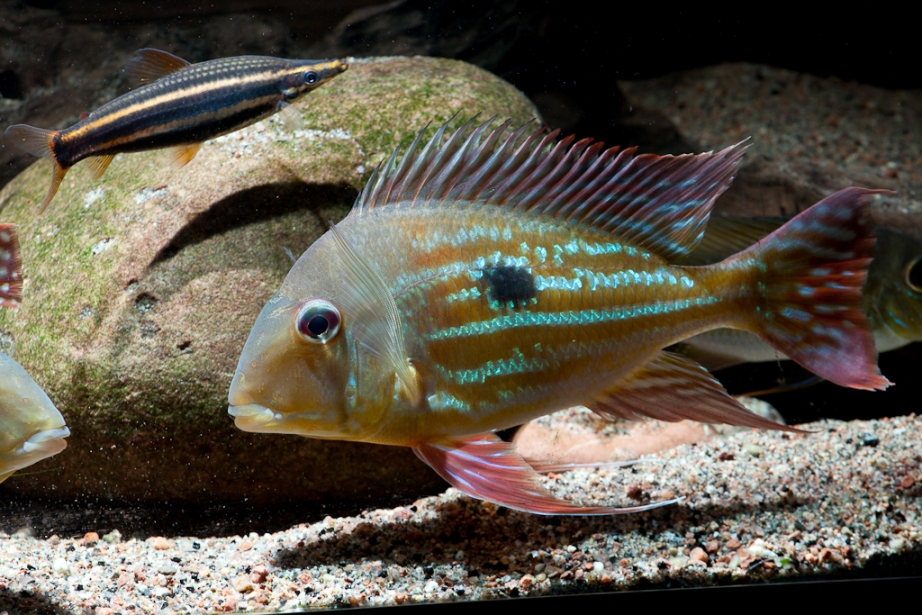
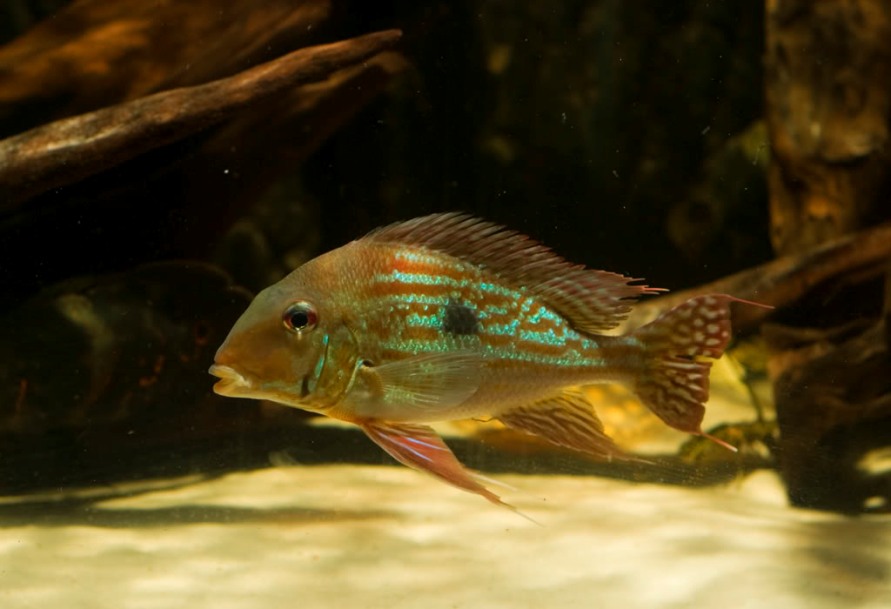
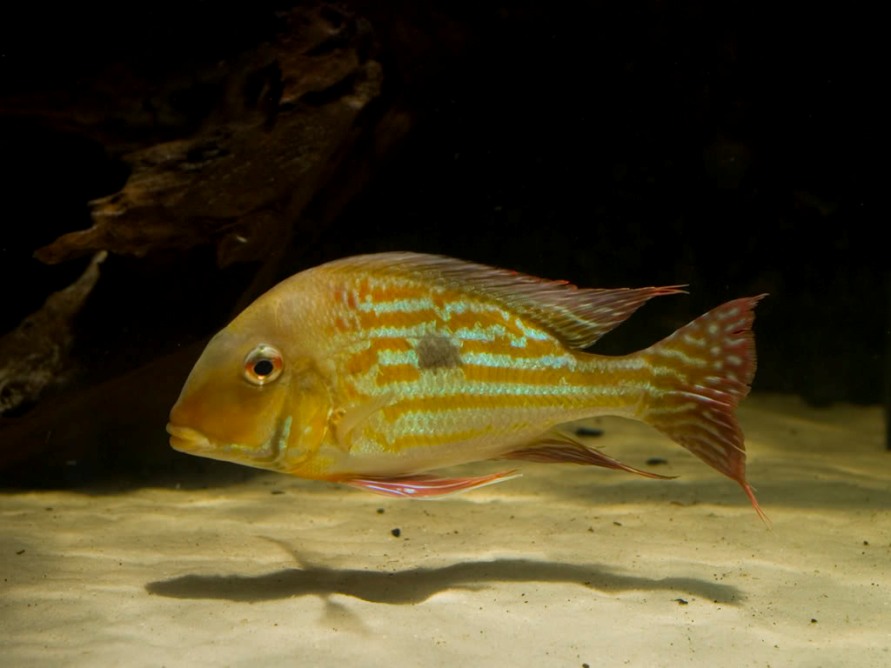
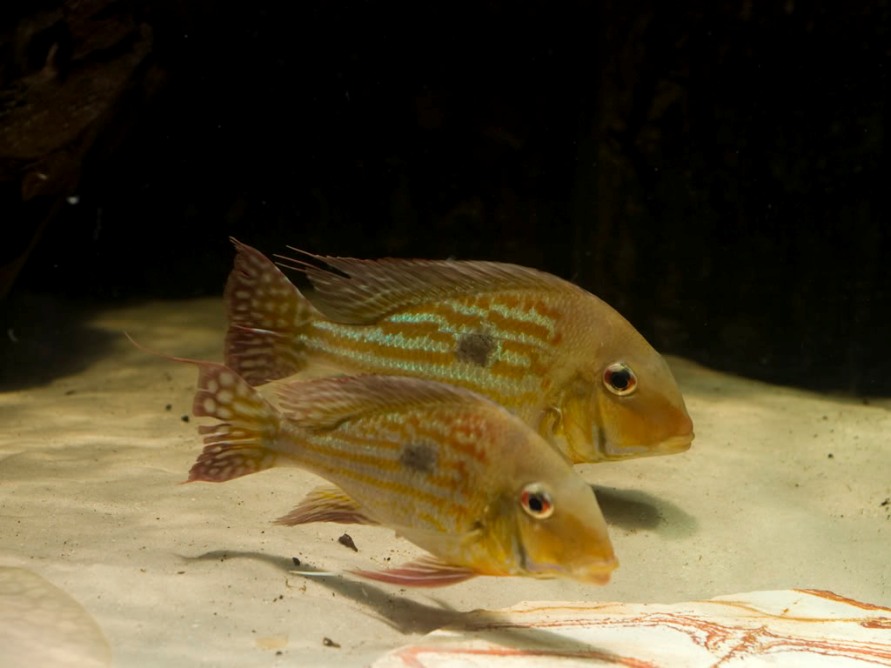
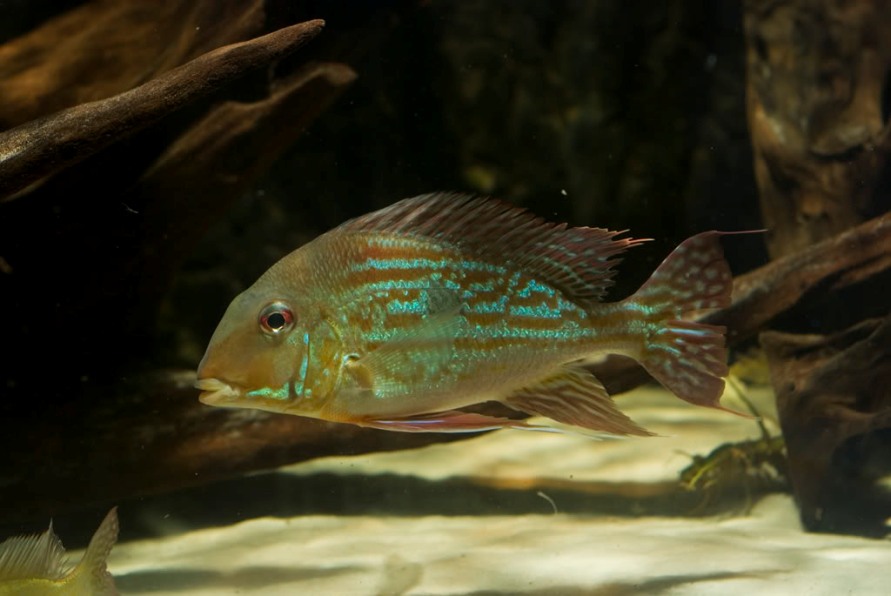
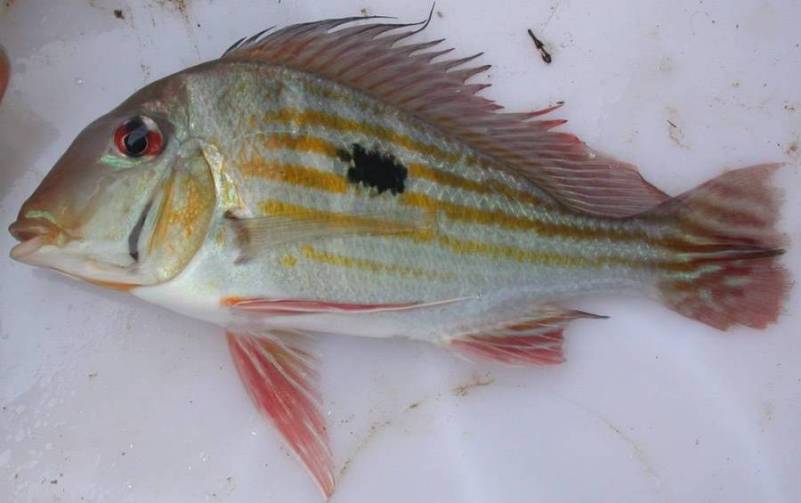
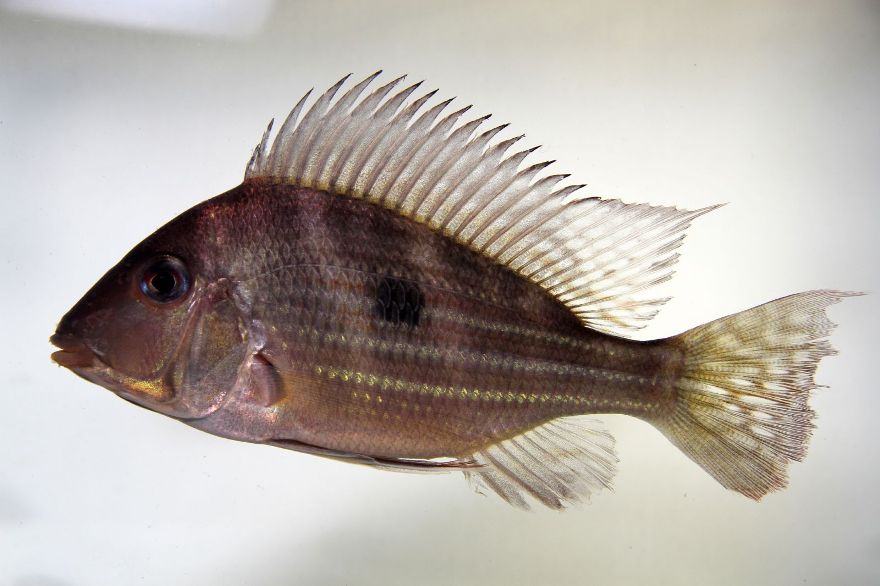
Geophagus winemilleri 是与尼格罗河上游及相连水道有关的食土鲷。鳃盖前方的深色斑、体侧四条向腹部倾斜的条带,以及红底带蓝白斑点的尾鳍,是识别线索。市场名称可能误用,应结合产地核对。
分布与栖息地
明确采集记录位于委内瑞拉南部的尼格罗河上游、西亚帕河及卡西基亚雷水道。巴西北部的分布很可能存在,但更广的尼格罗河范围及奥里诺科河水系记录仍应保留不确定性。
它可能偏限于矿物含量低、酸性的黑水环境,常利用岸边或岛边缓坡的砂泥底,局部有石块、沉木根枝与落叶。不能仅因水道连接就认定相邻整个流域都有本种。
饲养环境
至少约 180 × 60 cm 的底面积,以柔软细砂为基础。粗砾会妨碍筛食、损伤鳃部或在误吞后造成堵塞。弱光、沉木根枝与平滑扁石适用,落叶不宜大量堆积,以免翻砂时形成腐屑悬浮物并堵塞过滤。
只使用成熟稳定的水族箱。以充足的外滤或底滤和每周至少 50–70% 换水维持水质;机械过滤应拦截细颗粒,设备避免持续吸砂。出水分散,避免强流。维护不足可能伴随头部、侧线侵蚀与生长问题。
食性与喂食
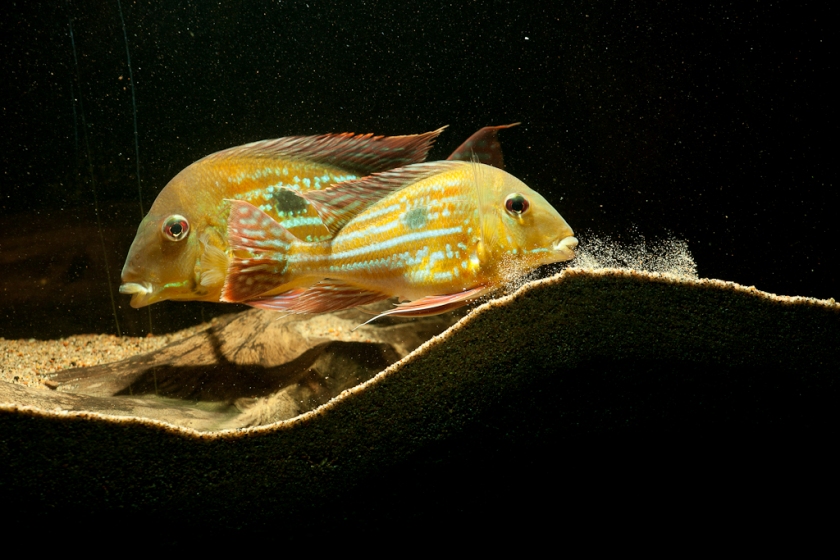
食土鲷属通过含入底质、筛取可食物再排出砂粒取食,属级野外记录包含小型无脊椎动物、种子与有机碎屑。缸内提供细颗粒饲料、小型活饵或冻饵,并有一部分富含植物成分。即使成鱼也避免大块食物,每日分 3–4 次少量投喂。
习性与混养
非繁殖期通常温和,可搭配水质需求相近的平和鱼,避开强势、占据底部领域或需要硬水的伙伴。群养建议从 5–8 条起,并观察等级关系,避免弱鱼被持续压制。食土鲷与淡水魟混养并非没有捕食风险。
雌雄区分
平时没有可靠外观差异,雌鱼产卵时可见产卵管。
繁殖
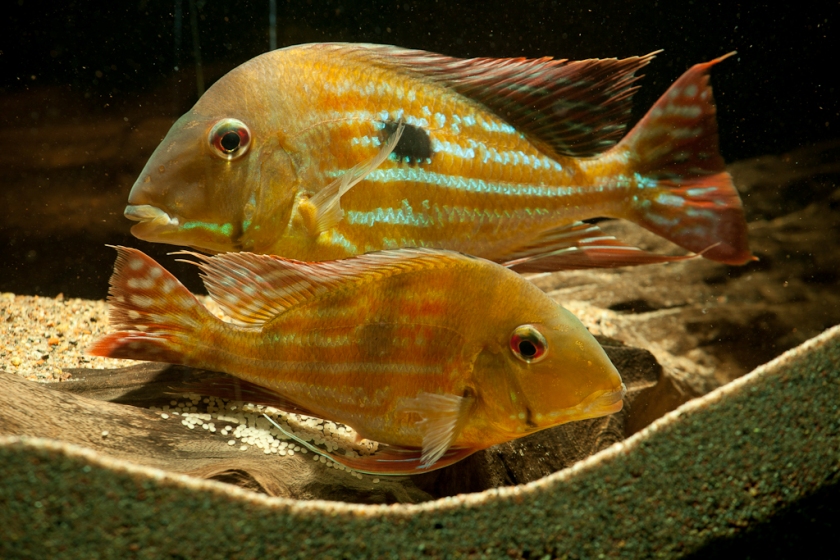
这是先护卵、孵化后再含仔的双亲口孵鱼。让幼鱼自然配对较合适,性成熟可能至少需一年。亲鱼清理并护卫石面或木面,雌鱼逐排产卵、雄鱼随后受精;雌鱼照看卵,雄鱼守卫周围。
约 72 小时后孵化,通常雌鱼先将幼鱼含入口,部分雄鱼会更早参与。后续可双方同时含仔或交换整窝,也可能仅一方照顾。约 8–11 日龄自由游动后,亲鱼逐渐增加放出觅食时间,遇险又收回。仔鱼能吃粉末饲料、丰年虾无节幼体与微虫。若在混养缸繁殖,应为幼鱼安排保护空间。
补充说明
体侧深斑位于第二条纵带内;幼鱼尾柄可多一条带,成熟后消退。蓝白色尾斑在部分个体上连成条纹。商品名 Río Negro I 或 stripetail 是否都指本种仍不能一概而论。
图片
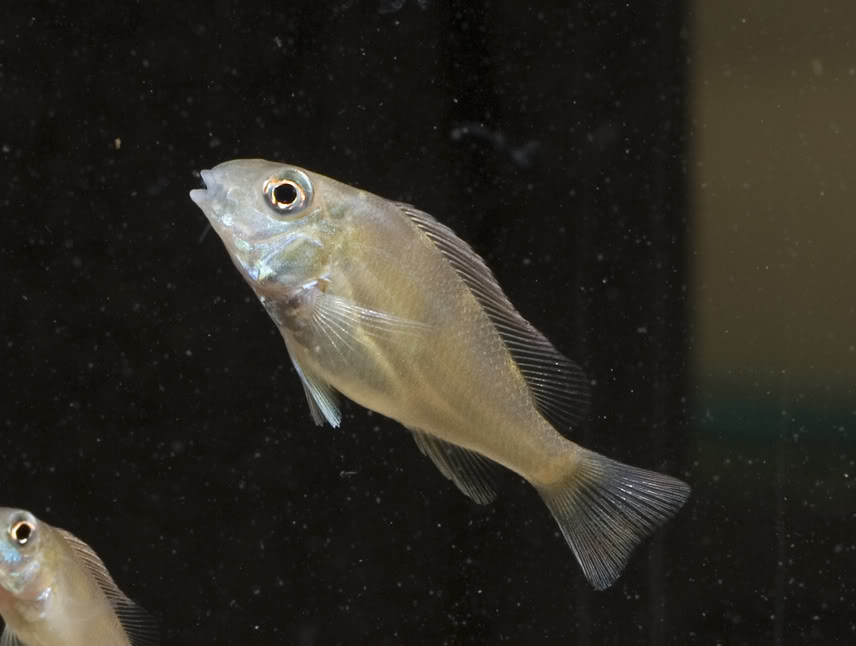
图片来自 SeriouslyFish,版权归各摄影者所有。
English
Overview
Geophagus winemilleri is an eartheater associated with the upper Negro and connected waterways. A dark marking before the gill cover, four downward-slanting flank bars, and a red tail patterned with blue-white spots help identify it. Sales names should be checked against provenance.
Distribution & habitat
Confirmed collections come from southern Venezuela in the upper Negro, Siapa, and Casiquiare waterways. Northern Brazil is a probable extension; a wider Negro distribution and occurrence in the Orinoco drainage remain uncertain.
It may be restricted to acidic, mineral-poor black water. Favored sites have gently sloping sandy or muddy margins, sometimes with stones, submerged roots, branches, and leaves. A waterway connection alone does not establish its presence throughout an adjoining basin.
Aquarium setup
Provide at least about 180 × 60 cm of floor space and soft sand. Coarse gravel obstructs sifting and risks gill injury or internal problems if swallowed. Dim lighting, wood, roots, and flat stones work well. Heavy leaf deposits can produce suspended debris that blocks equipment.
Use a mature aquarium with stable conditions, generous external or sump filtration, and weekly water changes of at least 50–70%. Mechanical media should retain fine particles; protect pumps from continual sand intake. Diffuse returns to avoid strong currents. Poor upkeep may accompany head and lateral-line erosion or impaired growth.
Diet & feeding
The genus obtains food by sifting substrate, with wild diet records including small invertebrates, seeds, and organic debris. Supply fine prepared foods with small live or frozen items and plant-rich formulations. Even adults need modest-sized particles. Three or four small daily feedings suit their browsing behavior.
Behaviour & compatibility
Usually peaceful outside breeding, it can share with calm fish requiring similar water. Avoid aggressive bottom-territory holders and hard-water specialists. A group of five to eight is a useful starting recommendation, with observation of hierarchy and subordinate fish. Eartheaters are not invariably safe alongside freshwater stingrays.
Sexual dimorphism
External differences are unreliable except for the female's ovipositor during spawning.
Breeding
Parents deposit and guard eggs on a surface, then mouthbrood the hatched young. Allow juveniles to form pairs; maturity may take at least a year. The female tends the eggs while the male guards nearby.
Hatching occurs at approximately 72 hours. Usually the female gathers larvae first, although some males participate sooner. Later care may involve shared holding, exchanges of the entire brood, or only one parent. Fry swim freely at around eight to eleven days, leaving for increasingly long feeding excursions and returning when threatened. Powdered foods, brine shrimp nauplii, and microworms are appropriate. Provide protected rearing space in a mixed aquarium.
Notes
The dark flank spot lies within the second bar. Juveniles can carry an additional tail-base bar that fades with maturity, while tail spots sometimes merge into stripes. Río Negro I and stripetail trade labels cannot automatically be treated as confirmed synonyms.
来源
- https://www.seriouslyfish.com/species/geophagus-winemilleri(抓取于 2026-10-10)
geophagus-winemilleri · 文件: data/species/geophagus-winemilleri.md · 状态: 草稿