Geophagus neambi
概要
| 字段 | 值 |
|---|---|
| 类别 | 鱼 |
| 学名 | Geophagus neambi |
| 分类 | 慈鲷目 Cichliformes › 慈鲷科 Cichlidae › Geophagus |
| 水体 | 淡水 |
| 原产地 | 巴西 |
| 成体体长 | 20 cm |
| 饲养难度 | 中等 |
| 最小水体 | 648 L |
| 最小缸长 | 180 cm |
| 群居方式 | 群游 |
| 性情 | 温和 |
| 外部数据 | seriouslyfish geophagus-neambi;fishbase 65428 |
| 领地性 | 是 |
| 繁殖方式 | 口孵 |
水质参数
| 参数 | 耐受范围 | 最适范围 | 单位 |
|---|---|---|---|
| 水温 | 24–32 | — | °C |
| pH | 5.5–7.5 | — | — |
| 总硬度 | 1–8 | — | dGH |
概述
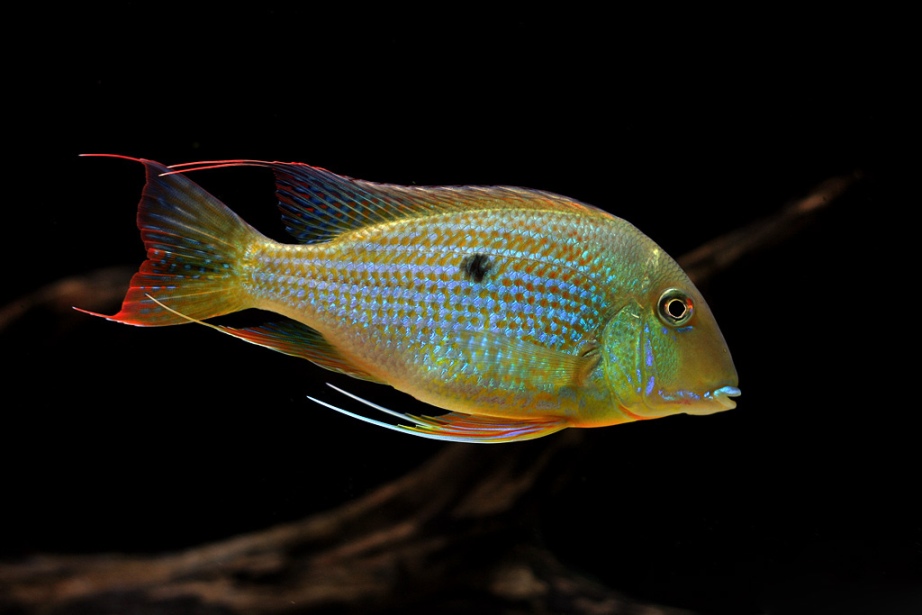
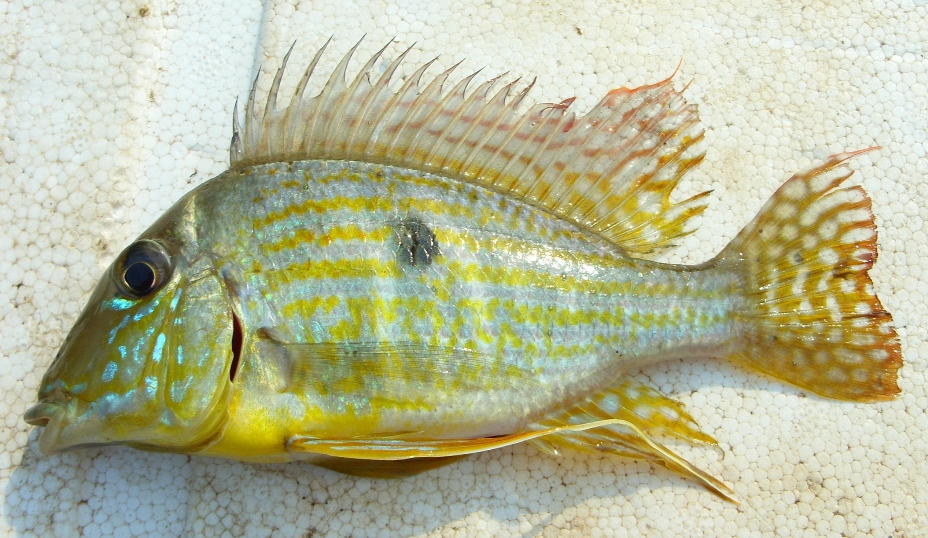
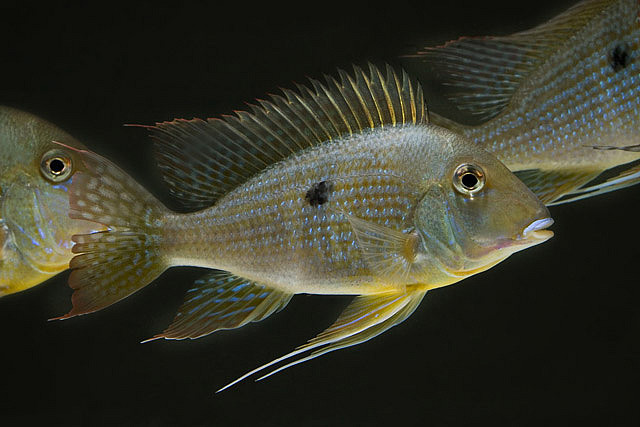
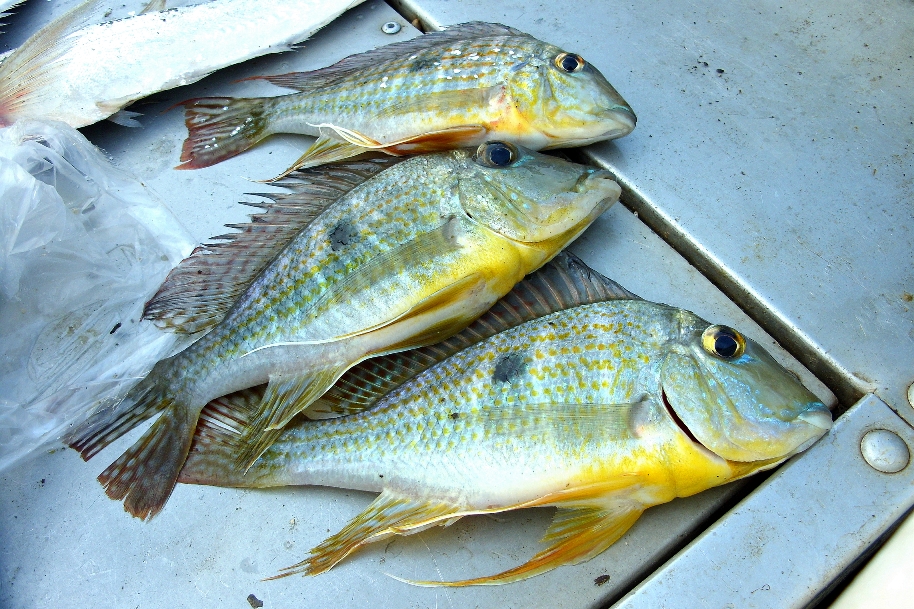
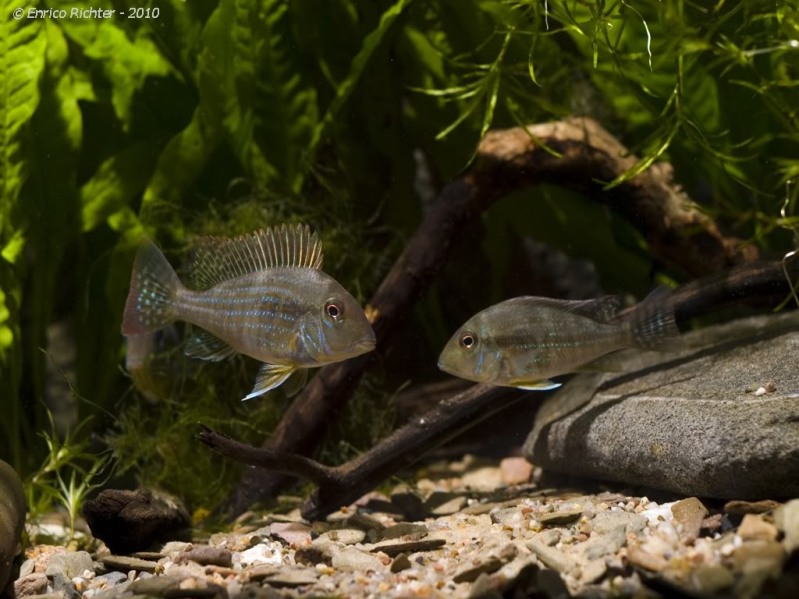
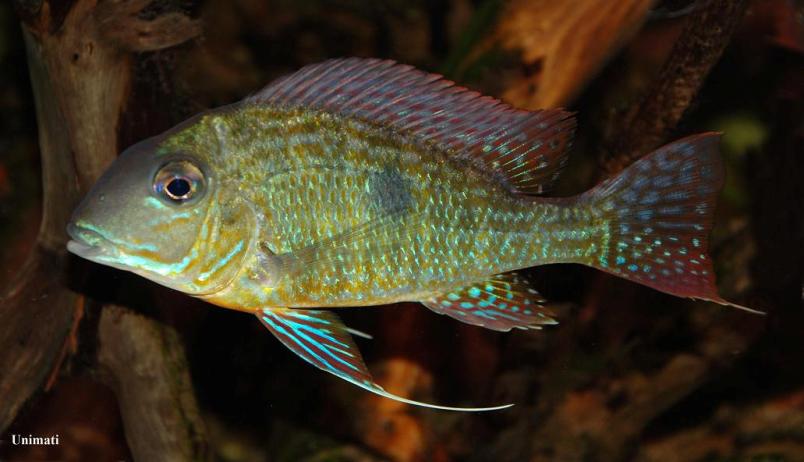
Geophagus neambi 是巴西托坎廷斯水系的群居筛砂慈鲷,受惊或繁殖时体侧可显出 8–9 条竖带。它平时较温和,繁殖时先产卵再含卵,并保护逐渐离口觅食的幼鱼。
分布与栖息地
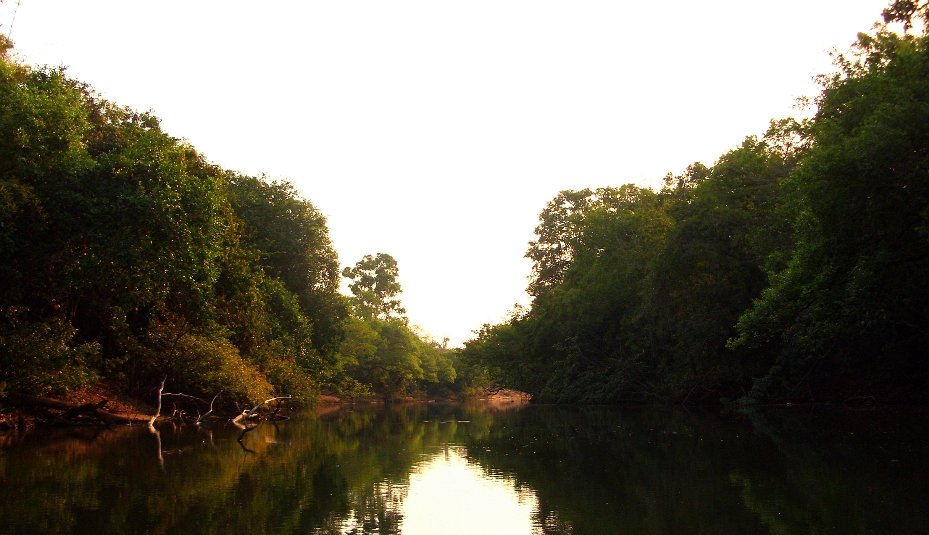
记录集中于托坎廷斯河中上游,可能为这一水系特有。商品鱼据称采自马托格罗索州新沙万蒂纳附近的达斯莫尔特斯河流域。
具体生境偏好主要参考近缘鱼,可能利用岸边或岛边砂泥质缓坡,周围有根枝、石块和落叶。沙洲鱼类研究中已有本种记录,但早期资料可能使用其他学名。
饲养环境
群体至少需要 180 × 60 cm 的缸底空间。必须有细软砂底供筛食,粗砾可能阻碍摄食、伤鳃或误吞。弱光、沉木根枝和平石可提供环境结构。
大量落叶碎屑易被扬起并堵塞设备,不宜堆积。成熟过滤应能处理污染物并截留细颗粒,避免砂进入泵体。每周至少换水 50%–70%,保持稳定,并避免强烈直冲水流。
食性与喂食
同属筛砂鱼从底材取得小型无脊椎动物、植物种子和有机碎屑。人工饲养可用优质细粒干粮配红虫、水蚯蚓、丰年虾等,部分饲料含植物成分。
每日分三四小份投喂,成年也不应只给大颗粒食物;接食时离底游动不代表不再需要砂床。
习性与混养
建议至少 5–8 尾,松散群体中形成等级,数量太少可能导致紧张和集中欺压。可搭配需求相近的温和鱼,避免强势底栖鱼及需要更硬水的伙伴。
雌雄区分
日常缺乏可靠外观性差,产卵时雌鱼产卵管才是明确线索。
繁殖
人工繁殖已有多次成功记录,为卵阶段双亲口孵。让幼鱼自然配对较方便,性成熟至少约一年;稳定维护与优质饮食比特殊刺激更重要。
配对鱼清理平石、沉木或缸底并防卫场地,雌鱼分批产卵,雄鱼随后受精。每窝最多约 200 粒,通常由雌鱼先收入口中,雄鱼参与程度可早可晚,有时也会驱离雌鱼后接管。
后续双亲可能共同含苗或交换整窝。在 25–28 °C 的记录中,鱼苗约 8–11 日龄起游,亲鱼逐渐增加放出觅食时间,遇险再含回。可喂粉料、丰年虾无节幼体或微虫,混养缸应为释放后的鱼苗另行考虑保护。
补充说明
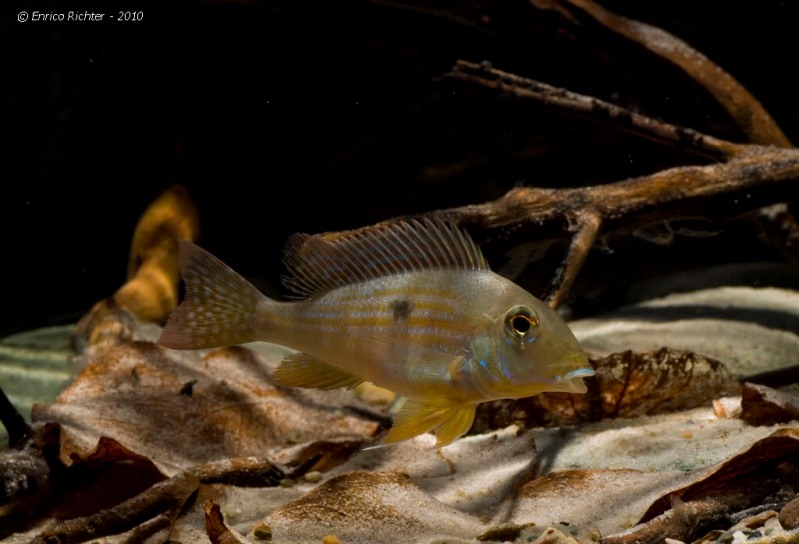
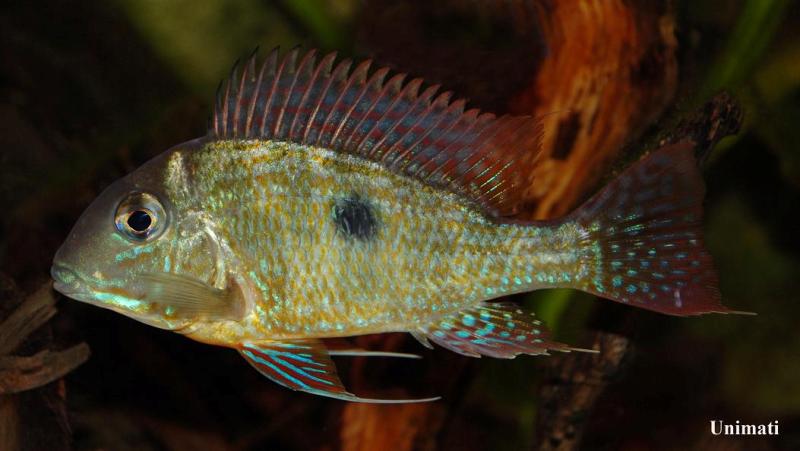
第三条竖带包含体侧黑斑,该条在斑的上下分叉,后方部分竖带也可分叉。早期贸易名常带托坎廷斯或阿雷奥恩斯产地字样,这些历史标签需要与正式学名共同核对。
图片
图片来自 SeriouslyFish,版权归各摄影者所有。
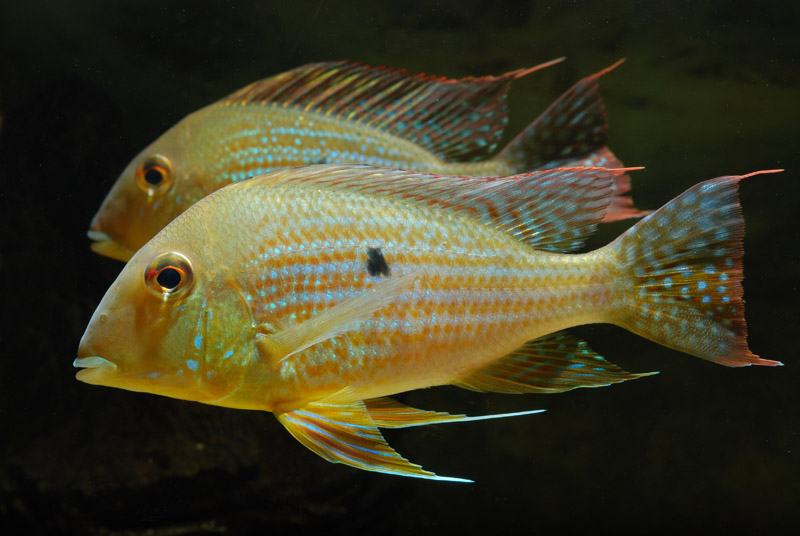
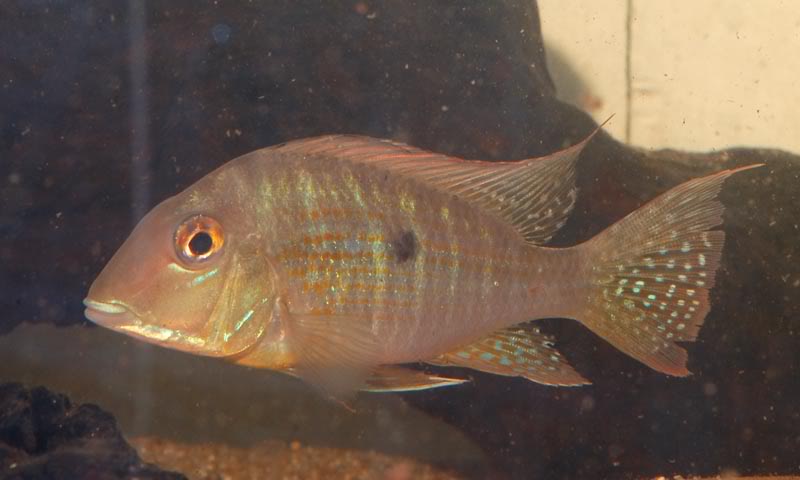
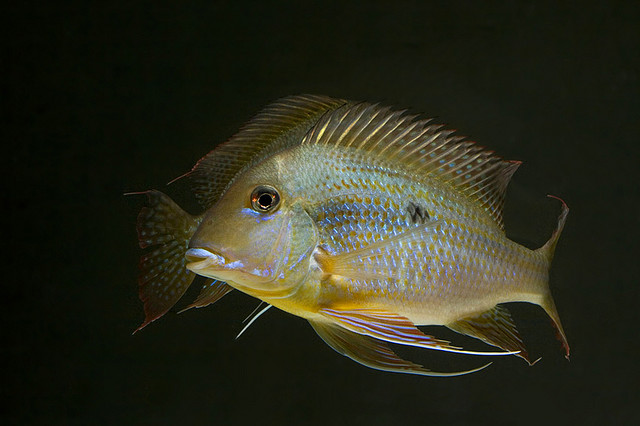
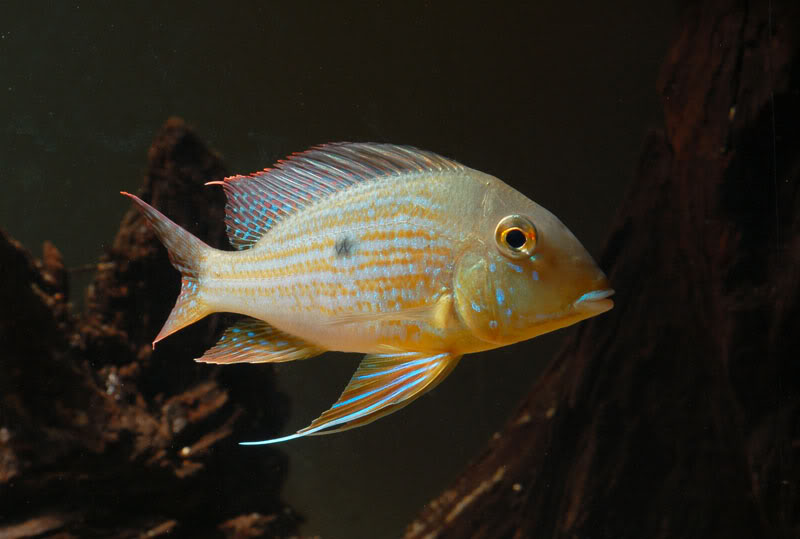
English
Overview
Geophagus neambi is a social Tocantins sand sifter whose eight or nine flank bars become most apparent during stress or reproduction. Usually peaceful, it deposits eggs before mouthbrooding them and later protects young released for feeding.
Distribution & habitat
Records center on the middle and upper Tocantins in Brazil, to which the species may be endemic. Aquarium collections reportedly come from the Das Mortes basin near Nova Xavantina in Mato Grosso.
Detailed habitat preferences are inferred largely from relatives: gentle sandy or muddy margins near shores and islands, with wood, rocks, and leaves. Sandbank research has recorded the fish under an earlier identification.
Aquarium setup
Allow at least a 180 by 60 cm footprint for a group. Fine, soft sand is essential; coarse gravel can impair feeding or cause injury. Subdued light, roots, wood, and flat stones provide suitable structure.
Avoid excessive leaf debris, which browsing fish stir into filtration equipment. Use mature biological processing and fine-particle removal while excluding sand from pumps. Weekly changes of at least 50–70% support stable quality without strong direct currents.
Diet & feeding
The genus sifts substrate for small invertebrates, seeds, and organic material. Offer fine quality dry products, some containing plant ingredients, with bloodworms, tubifex, brine shrimp, and similar small foods.
Three or four modest daily portions are preferable to a large meal. Adults still need fine food, and rising to feed does not remove their need for sand.
Behaviour & compatibility
Keep at least five to eight. Hierarchies develop within loose groups, while inadequate numbers can produce nervousness or concentrated bullying. Choose peaceful companions with matching needs, avoiding territorial bottom dwellers and harder-water fishes.
Sexual dimorphism
Reliable external distinctions are lacking except for the visible female ovipositor during spawning.
Breeding
Repeated captive reproduction is known, with oral care beginning during the egg stage. Allow juvenile groups to pair naturally; maturity takes at least about a year.
Pairs clean and defend rock, wood, or glass. Females lay successive batches for fertilization, totaling up to roughly 200 eggs, and usually collect them first. Male involvement varies and may include taking over after excluding the female.
Later care may be shared or alternate through whole-brood exchanges. At 25–28 °C, fry become free-swimming at about eight to eleven days of age. Parents extend feeding excursions progressively and recall the young when threatened. Fine prepared foods, brine-shrimp nauplii, and microworms are accepted. Protect released fry from other community residents.
Notes
The third bar contains the side spot and divides above and below it, while more posterior bars may also fork. Earlier Tocantins- or Areões-based trade labels should be checked against the formal species name.
来源
- https://www.seriouslyfish.com/species/geophagus-neambi(抓取于 2026-10-10)
geophagus-neambi · 文件: data/species/geophagus-neambi.md · 状态: 草稿