'Geophagus' iporangensis
概要
| 字段 | 值 |
|---|---|
| 类别 | 鱼 |
| 学名 | 'Geophagus' iporangensis |
| 别名 | Geophagus brasiliensis iporangensis |
| 分类 | 慈鲷目 Cichliformes › 慈鲷科 Cichlidae › 'Geophagus' |
| 水体 | 淡水 |
| 原产地 | 巴西 |
| 成体体长 | 10 cm |
| 饲养难度 | 中等 |
| 最小水体 | 108 L |
| 最小缸长 | 120 cm |
| 群居方式 | 成对 |
| 领地性 | 是 |
| 外部数据 | seriouslyfish geophagus-iporangensis |
| 繁殖方式 | 附着产卵 |
水质参数
| 参数 | 耐受范围 | 最适范围 | 单位 |
|---|---|---|---|
| 水温 | 20–26 | — | °C |
| pH | 6–7 | — | — |
| 总硬度 | 1–10 | — | dGH |
概述
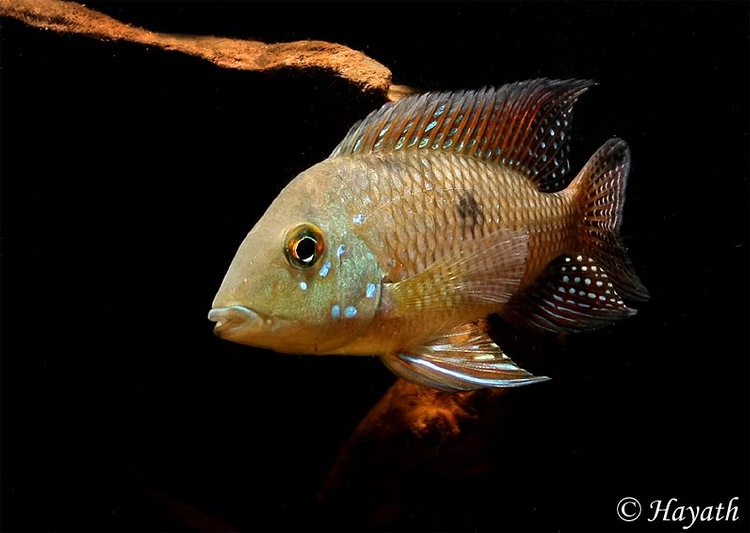
'Geophagus' iporangensis 是巴西东南部河流中的小型慈鲷,与某些近缘种相比成体较小、蓝色反光鳞较少。雄鱼有领地意识,尤其繁殖期需要空间和稳定环境。
分布与栖息地
已知仅来自巴西圣保罗州与巴拉那州交界的里贝拉-德伊瓜佩河流域。该流域不少地区森林浓密,可能分布于其中较大范围,但具体边界仍不明确。
饲养环境
建议至少 120 × 30 cm 的底面积。细软砂适合搜食,粗砾可能影响摄食或伤鳃。弱光、沉木、根枝和少量平石可提供环境结构。
保持成熟过滤,机械部分应能截留翻起的细颗粒,并防止砂进入泵体。大量落叶碎屑容易堵塞设备,不宜堆积。每周至少换水 50%–70%,避免强水流直吹和水质波动。
食性与喂食
本种自然食性可能较杂,但直接的详细胃含物记录来自近缘鱼,不能把其全部食物名单都当作本种实证。它有时会吸砂筛食,不过对这种方式的依赖不像某些典型食土鲷那么强。
缸内可用优质沉底干粮为基础,定期搭配红虫、丰年虾等活饵或冷冻饵。
习性与混养
雄鱼会保卫领地,繁殖期尤甚。非常小的伙伴可能被捕食,混养时需考虑尺寸及退避空间。
雌雄区分
雄鱼往往明显大于雌鱼,优势雄鱼通常会形成一定程度的额隆。
繁殖
属于双亲照护的底床产卵鱼。具体孵化与育苗流程的信息有限,不宜直接套用其他口孵食土鲷的时间表。
补充说明
幼鱼很容易与同一近缘群的其他鱼混淆,成鱼较小且头、身蓝色反光鳞相对少,才更便于区分。属名保留引号,以对应现有分类记录。
图片
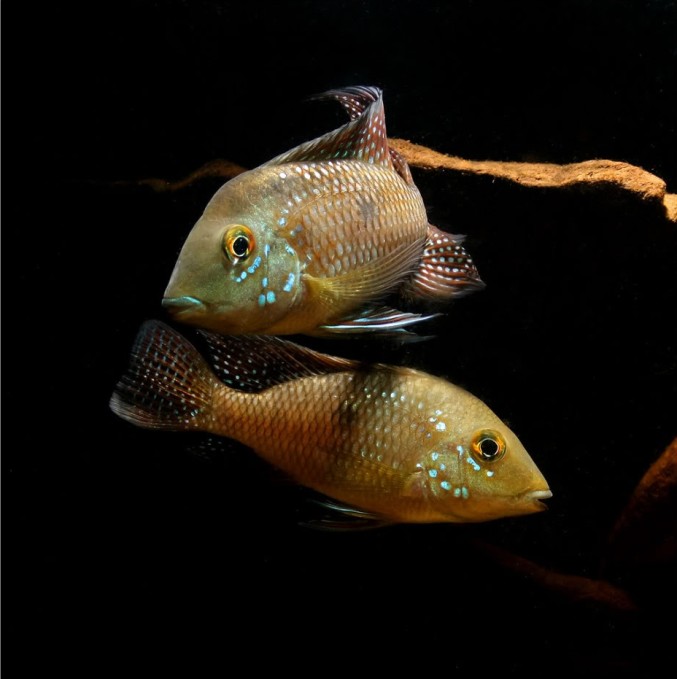
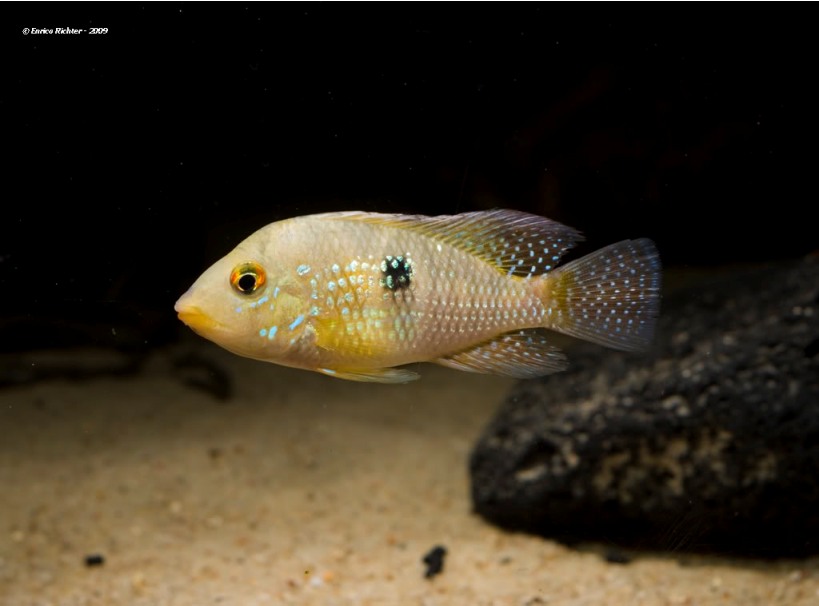
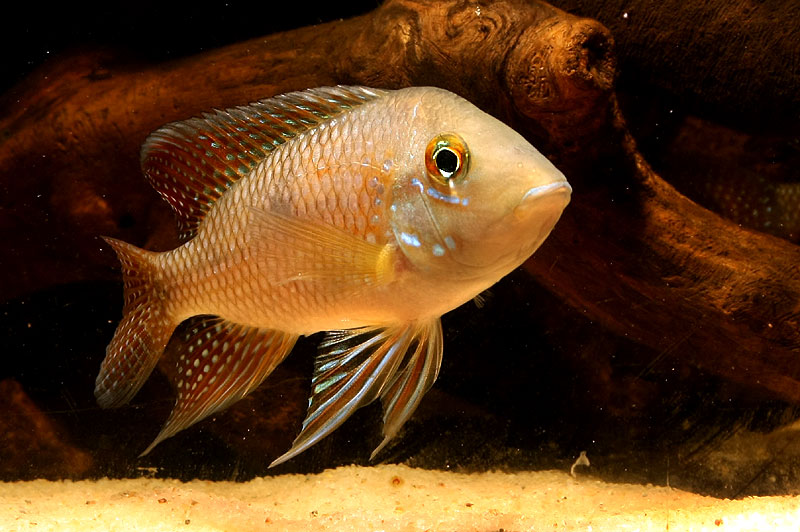
图片来自 SeriouslyFish,版权归各摄影者所有。
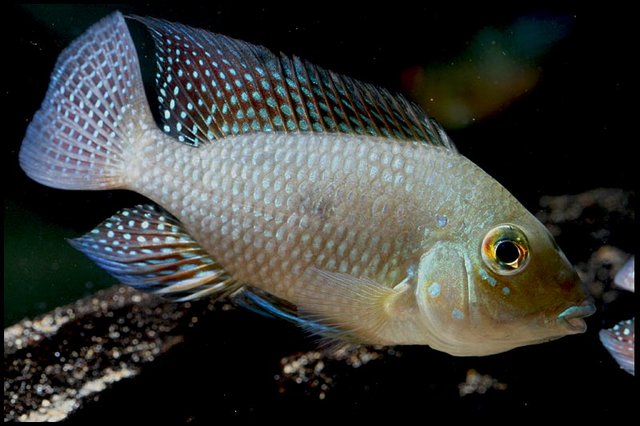
English
Overview
'Geophagus' iporangensis is a relatively small southeastern Brazilian cichlid with fewer reflective blue scales than some close relatives. Males defend space, particularly during reproduction, so manageable size does not eliminate territorial considerations.
Distribution & habitat
Known records are confined to the Ribeira de Iguapé basin along the São Paulo–Paraná border. Much of this drainage is forested. A fairly broad local distribution is considered likely, but its exact extent remains unresolved.
Aquarium setup
A footprint of at least 120 by 30 cm is recommended. Fine sand supports browsing, whereas coarse gravel risks feeding problems or gill damage. Low light, wood, roots, and a few flat stones provide suitable structure.
Use mature filtration with effective removal of stirred-up particles and protection of pumps from sand. Excess leaf debris can clog equipment. Weekly changes of at least 50–70% help maintain quality, while outlets should avoid excessive direct current.
Diet & feeding
A generalized natural diet is considered likely, but the detailed stomach-content evidence concerns a related species rather than this fish itself. Substrate is sometimes sifted, though less exclusively than in typical eartheaters.
Use quality sinking dry foods as a staple, supplemented regularly with live or frozen bloodworms, brine shrimp, and similar fare.
Behaviour & compatibility
Males are territorial, especially when spawning. Very small companions may be eaten, so assess size and access to retreats when planning a community.
Sexual dimorphism
Males often become significantly larger. Dominant individuals generally develop a forehead hump to some degree.
Breeding
Both parents care for eggs deposited on substrate. Detailed incubation and rearing information is limited; schedules from mouthbrooding eartheaters should not be assigned to it.
Notes
Juveniles resemble other members of the same species group. Smaller adult size and fewer reflective blue scales on the head and body make mature fish easier to separate. The quoted generic placement preserves the existing qualified classification.
来源
- https://www.seriouslyfish.com/species/geophagus-iporangensis(抓取于 2026-10-10)
geophagus-iporangensis · 文件: data/species/geophagus-iporangensis.md · 状态: 草稿