卡默珠母丽鱼 · Oiapoque Eartheater
概要
| 字段 | 值 |
|---|---|
| 类别 | 鱼 |
| 学名 | Geophagus camopiensis |
| 别名 | 卡默珠母麗魚 |
| 分类 | 慈鲷目 Cichliformes › 慈鲷科 Cichlidae › Geophagus |
| 水体 | 淡水 |
| 原产地 | 巴西、法属圭亚那 |
| 成体体长 | 20 cm |
| 饲养难度 | 中等 |
| 最小水体 | 304 L |
| 最小缸长 | 150 cm |
| 群居方式 | 群游 |
| 外部数据 | seriouslyfish geophagus-camopiensis;fishbase 12316 |
| 食性 | 杂食 |
| 繁殖方式 | 口孵 |
水质参数
| 参数 | 耐受范围 | 最适范围 | 单位 |
|---|---|---|---|
| 水温 | 25–33 | — | °C |
| pH | 6–7.5 | — | — |
| 总硬度 | 2–12 | — | dGH |
概述
卡默珠母丽鱼(Geophagus camopiensis)是贸易中较少见的食土类慈鲷,需成群饲养并提供适合筛食的细砂。繁殖时先在硬表面产卵,孵化后再把幼鱼含入口中,不能简单理解成产卵后立即含卵的类型。
分布与栖息地
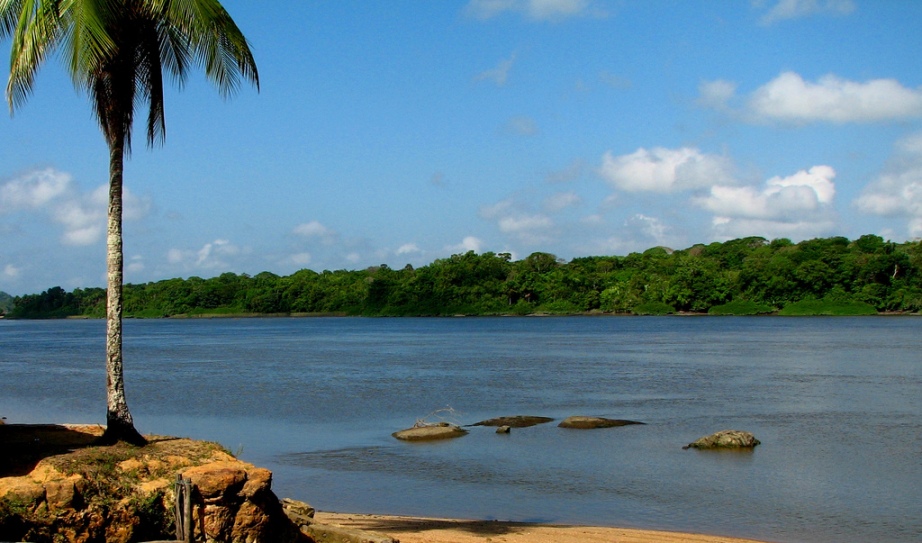
已知范围是巴西与法属圭亚那交界的奥亚波克河流域,以及法属圭亚那的阿普鲁阿格河水系。有记录来自岩底急流段,这些水段旱季可缩成一串水潭;也可能利用砂、细砾和泥组成的岸边缓坡,但后者仍属于推测。
饲养环境
铺柔软细砂,避免会妨碍筛食、损伤鳃或被误吞的粗砾。沉木、根枝、暗光及少量平石可形成合适环境。大量落叶容易被翻碎悬起并堵塞设备,不宜仅因原生境有落叶就厚铺缸底。
使用成熟且能力充足的过滤,维持稳定水质,每周换水约一半至七成。机械过滤应有效截留悬浮颗粒,避免砂进入泵体。虽然部分野外记录来自急流,缸内仍应避免持续过强水流。
食性与喂食
通过含砂筛取小型动物、植物种子和有机碎屑。即使成鱼也应喂细小食物,以优质细颗粒、含植物成分的饲料配合小型活饵和冷冻饵。每天三至四次少量投喂,比一次大量投喂更符合持续觅食特点。
习性与混养
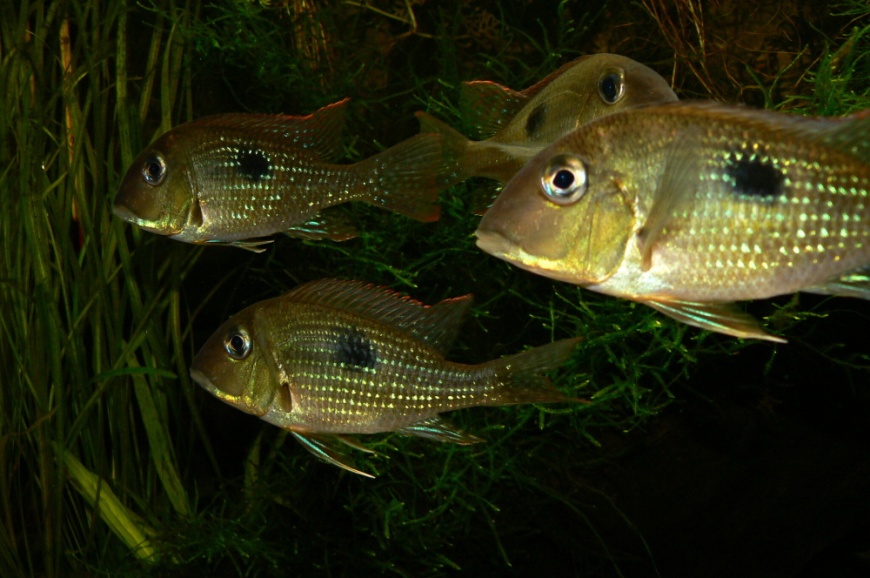
并非同属中最温和的类型,宜至少五至八条,成熟后形成等级。群体太小可能让弱势鱼承受持续攻击。选同样适应水质的温和伙伴,避开领地性强的底栖鱼;很小的鱼苗仍不应视为安全。与淡水魟混养存在损失记录。
雌雄区分
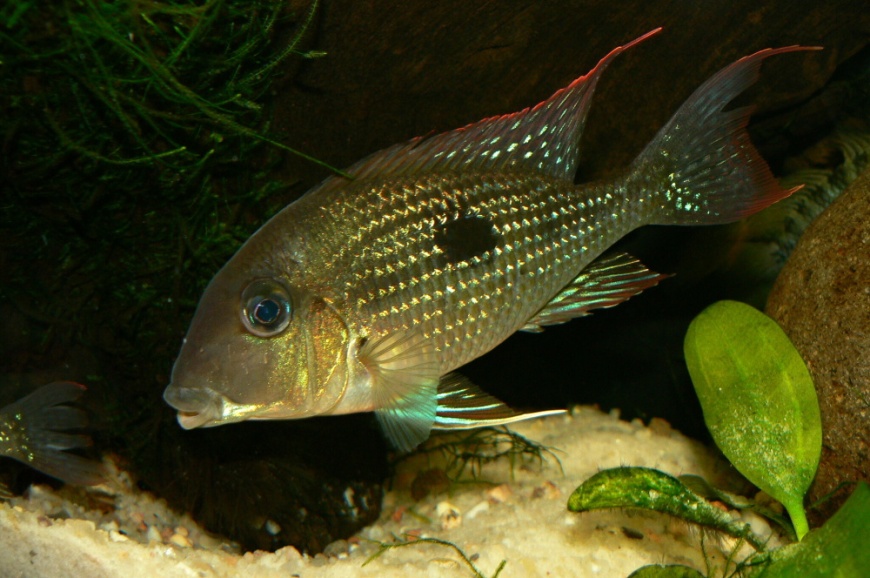
幼鱼难以可靠辨别。成熟雄鱼通常略大、鳍更长,优势雄鱼可能出现额隆;临产雌鱼可见产卵管。
繁殖
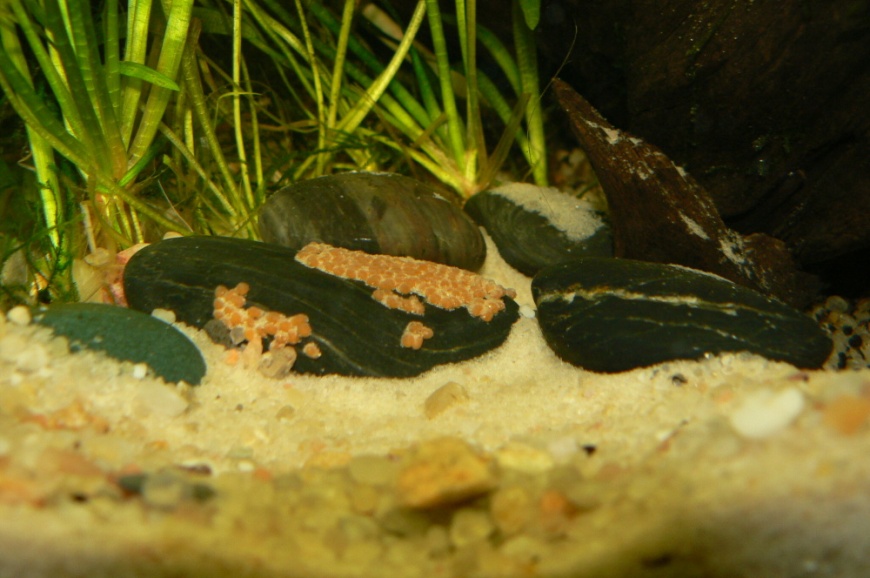
让幼鱼群自然配对,成熟至少可能需要一年。亲鱼清理平石、沉木或缸底后排卵受精,雌鱼照顾卵,雄鱼防守附近。约七十二小时孵化后,雌鱼将幼鱼含入口中,部分配对从此时就共同含育。
雄鱼是否参与差异很大,有的交换整窝幼鱼,有的完全不参与,甚至把雌鱼赶走。幼鱼开始自由游动后,亲鱼逐渐放出它们觅食,受惊时再收回口中。可用细粉饲料、丰年虾幼体和微虫开口。混养缸内离口幼鱼容易被捕食,应考虑独立育幼空间。
补充说明
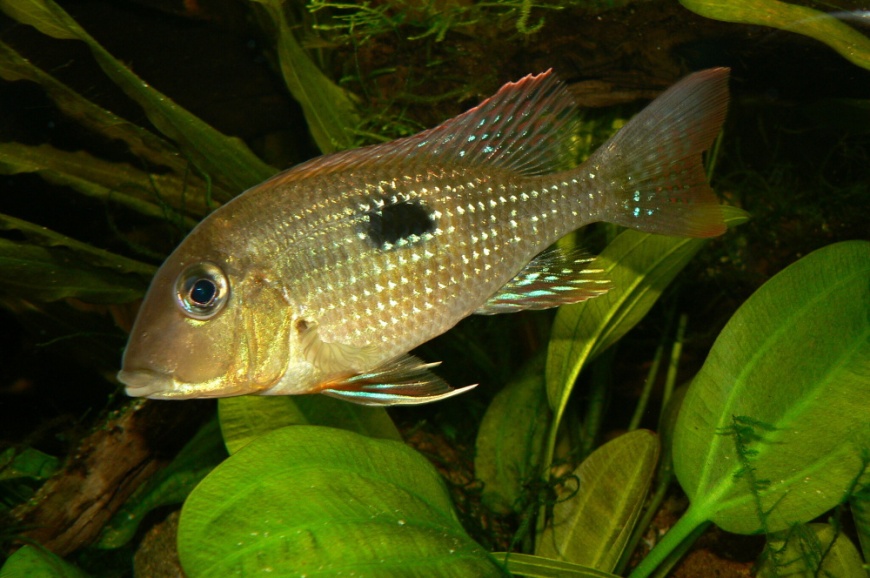
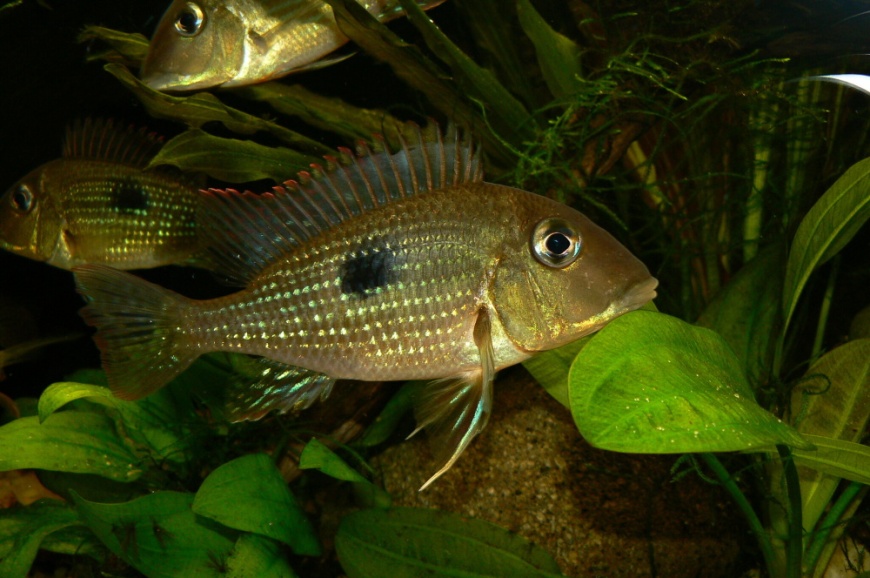
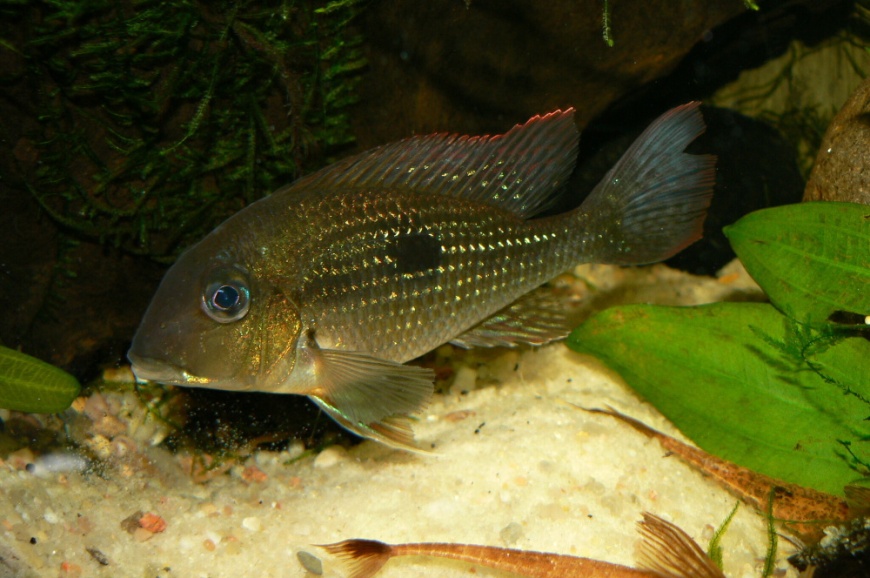
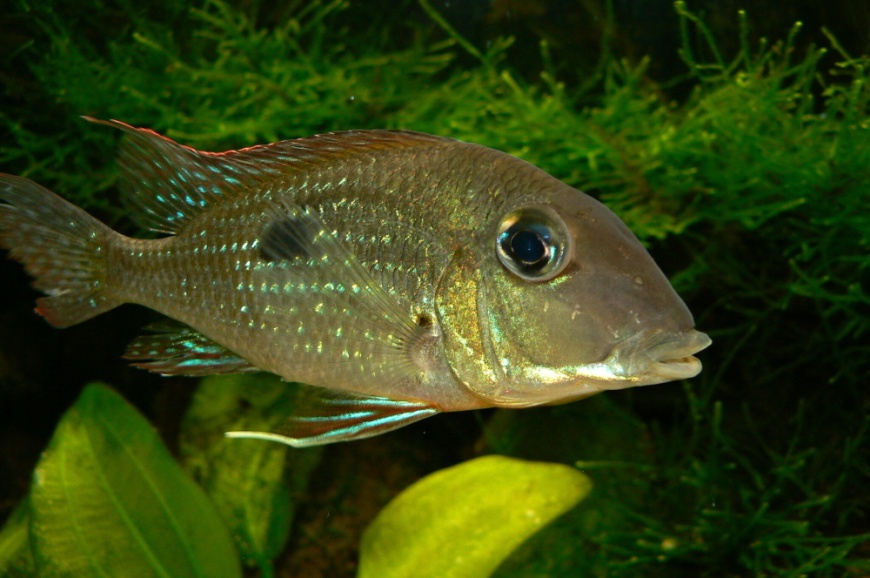
体侧较大的深色斑和尾鳍浅色斑有助于识别,但近缘种幼鱼常难区分。保留可靠产地资料比只相信笼统商品名更有价值。
图片
图片来自 SeriouslyFish,版权归各摄影者所有。
English
Overview
The uncommon eartheater Geophagus camopiensis requires a social group and fine sand for feeding. Its breeding sequence combines surface-laid eggs with later oral incubation of larvae, rather than immediate collection of newly laid eggs.
Distribution & habitat
Confirmed range covers the Oyapock basin along the Brazil–French Guiana border and the Approuague system. Collections include rocky rapids that contract into separate pools in the dry season. Use of gently sloping sandy or muddy margins is considered likely, rather than equally well documented.
Aquarium setup
Fine soft sand permits normal substrate processing; coarse particles can obstruct feeding or damage the fish. Wood, roots, subdued light, and a few flat stones are suitable furnishings. Heavy leaf litter is less practical because sifting disperses decaying fragments into the water and filters.
Use mature, generously sized filtration and replace approximately fifty to seventy percent of the water weekly. Capture suspended particles before they repeatedly enter pumps. Avoid excessive current in the aquarium despite records from fast-flowing natural habitats.
Diet & feeding
Substrate is processed for small invertebrates, seeds, and organic matter. Even adult fish need small food particles. Combine fine quality preparations, including vegetable-rich foods, with small live or frozen additions. Three or four modest daily meals fit its browsing pattern better than one large feeding.
Behaviour & compatibility
It is not among the gentlest members of its genus. Keep five to eight or more, allowing for a dominance hierarchy and the possibility of concentrated harassment in smaller groups. Peaceful companions with similar requirements are preferable to territorial bottom dwellers. Tiny fry remain vulnerable. Some combinations with freshwater stingrays have ended in losses.
Sexual dimorphism
Young fish cannot be reliably sexed by appearance. Mature males tend to be somewhat larger with longer fins, and dominant individuals may develop a forehead hump. Females show an ovipositor near spawning.
Breeding
Allow pairs to emerge from juveniles, recognizing that maturity can take at least a year. A cleaned stone, wood surface, or tank base receives rows of eggs. The female tends the clutch while the male guards its surroundings. Hatching occurs at roughly seventy-two hours, followed by collection of larvae into the female's mouth; some pairs share this from the beginning.
Male participation varies considerably. Parents may exchange the brood, whereas other males contribute nothing or drive the female away. Once the young swim freely, release periods become longer, with danger prompting retreat into an adult's mouth. Powdered preparations, Artemia nauplii, and microworms are suitable first foods. Provide protected rearing space when other residents threaten released fry.
Notes
A large flank blotch and pale tail markings aid identification, but juvenile relatives can look very similar. Reliable collection locality is more informative than a broad trade label.
来源
- https://www.seriouslyfish.com/species/geophagus-camopiensis(抓取于 2026-10-10)
geophagus-camopiensis · 文件: data/species/geophagus-camopiensis.md · 状态: 草稿