Geophagus brokopondo
概要
| 字段 | 值 |
|---|---|
| 类别 | 鱼 |
| 学名 | Geophagus brokopondo |
| 分类 | 慈鲷目 Cichliformes › 慈鲷科 Cichlidae › Geophagus |
| 水体 | 淡水 |
| 原产地 | 苏里南 |
| 成体体长 | 15 cm |
| 饲养难度 | 中等 |
| 最小水体 | 540 L |
| 最小缸长 | 150 cm |
| 群居方式 | 群游 |
| 性情 | 温和 |
| 外部数据 | seriouslyfish geophagus-brokopondo;fishbase 46935 |
水质参数
| 参数 | 耐受范围 | 最适范围 | 单位 |
|---|---|---|---|
| 水温 | 25–33 | — | °C |
| pH | 5–7 | — | — |
| 总硬度 | 0–5 | — | dGH |
概述
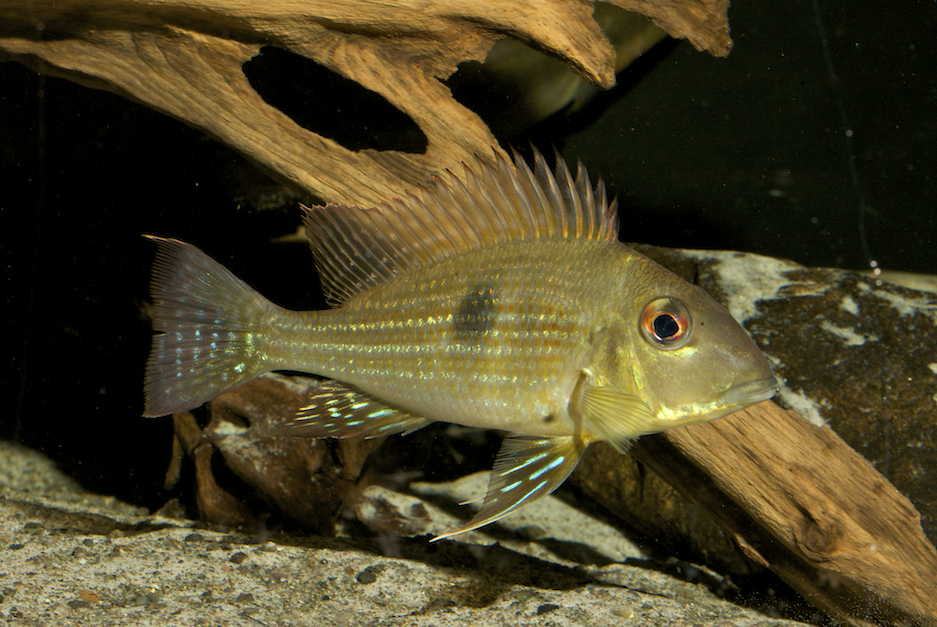
Geophagus brokopondo 是苏里南河水系的筛砂慈鲷,体侧有六条完整竖带,最后一条覆盖整个尾柄。它需要同种群体、细软砂底和稳定水质,不能仅凭与近缘鱼外观相似就假定繁殖方式完全相同。
分布与栖息地
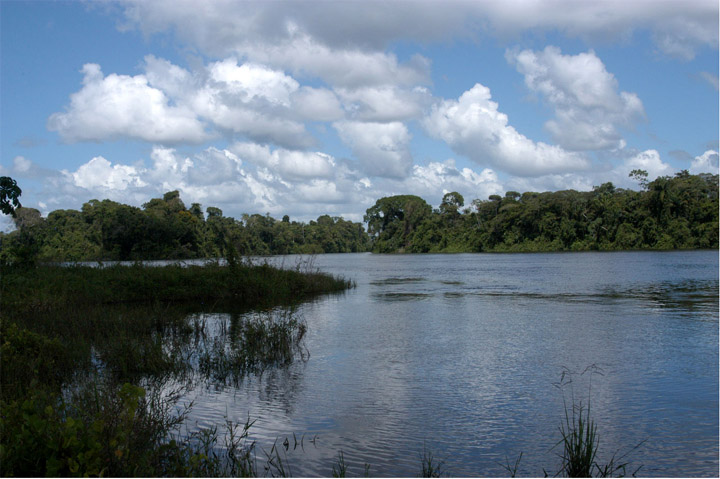
特有于苏里南河流域,最初仅从布罗科蓬多水库认识,后来在河系中下游其他地点也有采集记录。
常在岸边缓坡或岛周围的细砂地活动,水可清澈、略带单宁色或呈黑水。雨季水位与流量变化明显,部分地点有水草。
饲养环境
群体至少需要 150 × 60 cm 的缸底空间。细软砂底供筛食,粗砾可能阻碍摄食、伤鳃或被误吞。弱光、沉木根枝及少量平石可形成环境结构。
大量落叶会被翻成悬浮碎屑,影响过滤。采用成熟的生物系统和细颗粒机械过滤,防止砂持续进入水泵,每周至少换水 50%–70%。水流应温和分布,避免直接强烈冲击。
食性与喂食
同属鱼通过筛砂获取小型无脊椎动物、种子和有机碎屑。即使成年也适合细颗粒食物,可用优质细粒干粮配红虫、水蚯蚓、丰年虾等,其中部分干粮含植物成分。
每日分三四次少量喂食,仍应让鱼有正常筛砂的机会。
习性与混养
至少 5–8 尾较合适,松散群体中会建立等级。数量太少容易紧张,或让弱势个体持续遭到追逐。通常可与温和、需求相近的鱼搭配,避开强领地底栖鱼及需要更硬水的伙伴。
雌雄区分
尚无可靠日常外观差别,产卵时预计可见雌鱼的产卵管。
繁殖
近缘类群存在产卵后立即口孵及孵化后才含苗两种方式,但本种具体策略及可靠人工繁殖记录尚未确认,不宜直接套用某一近缘种的流程。
补充说明
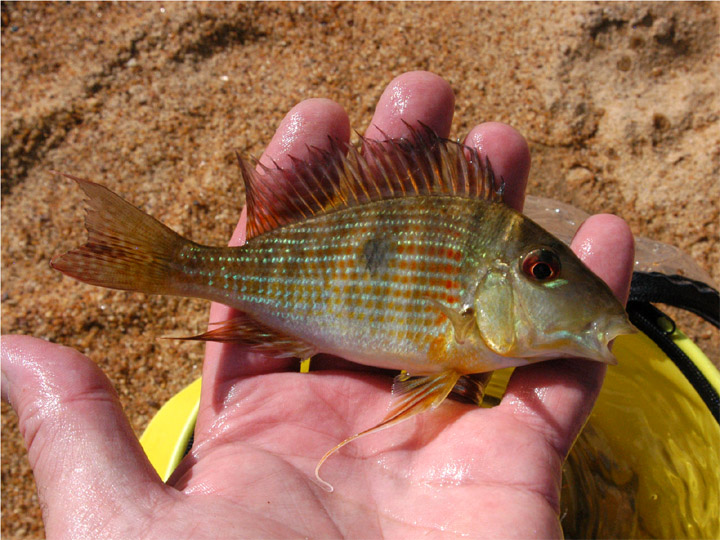
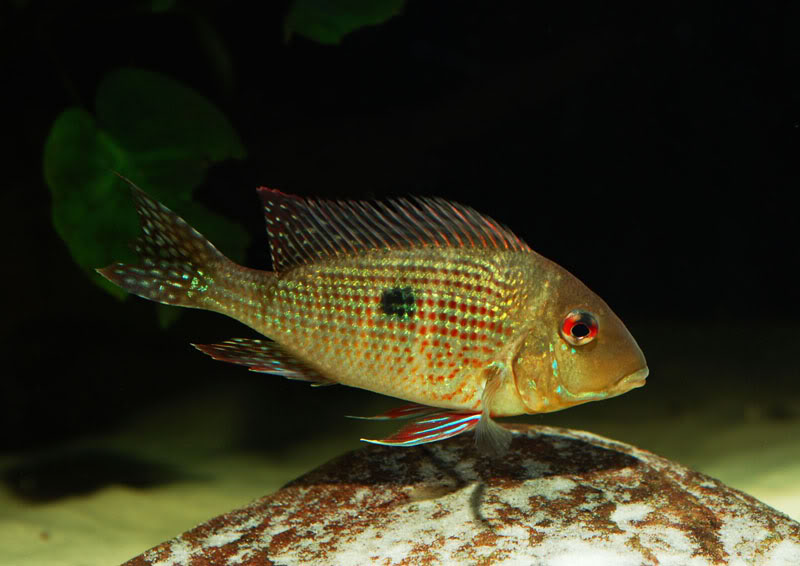
六条不分叉的体侧竖带、第三条内偏方形黑斑,以及横跨整个尾柄的末条竖带,是区别相似鱼的组合特征。尾鳍灰褐底上有浅色圆点,常排成数列。
图片
图片来自 SeriouslyFish,版权归各摄影者所有。
English
Overview
Endemic to the Suriname drainage, Geophagus brokopondo is a sand-sifting cichlid with six solid flank bars, the last spanning the whole tail peduncle. Social numbers, fine sand, and stable water matter in care. Resemblance to relatives does not establish an identical breeding strategy.
Distribution & habitat
Initially known only from Brokopondo Reservoir, it has subsequently been collected more widely in the middle and lower Suriname system.
Fish use gently sloping shores and island margins over fine sand in clear, lightly stained, or black water. Rainy-season levels and flow change markedly, and aquatic vegetation occurs at some sites.
Aquarium setup
Allow at least a 150 by 60 cm footprint for a group. Soft sand supports sifting, whereas coarse gravel may obstruct feeding or injure the fish. Subdued light, roots, wood, and occasional flat stones provide structure.
Heavy leaf accumulation becomes suspended debris during browsing. Use mature biological filtration and fine-particle removal, keeping sand out of pumps. Weekly changes of at least 50–70% help maintain quality. Distribute filter flow without subjecting the fish to strong direct currents.
Diet & feeding
The genus sifts substrate for small invertebrates, seeds, and organic material. Even adults need fine foods. Combine small quality prepared products, including plant-containing formulations, with bloodworms, tubifex, brine shrimp, and similar offerings.
Three or four small daily portions suit their browsing pattern, alongside continued access to suitable sand.
Behaviour & compatibility
Keep at least five to eight. Loose groups develop hierarchies; insufficient numbers can leave fish nervous or focus harassment on weaker individuals. Peaceful companions with matching requirements are suitable, while strongly territorial bottom dwellers and harder-water fishes are poor choices.
Sexual dimorphism
Routine external differences remain unconfirmed. A female ovipositor is expected to become visible at spawning.
Breeding
Related fishes include both immediate egg mouthbrooders and species that collect larvae only after hatching. The precise strategy and confirmed aquarium reproduction of this species remain unresolved, so a relative's schedule should not be assigned to it.
Notes
Six unsplit bars, a roughly square spot in the third, and a final bar covering the entire tail peduncle form useful identification clues. The gray-brown tail carries pale round spots arranged in several rows.
来源
- https://www.seriouslyfish.com/species/geophagus-brokopondo(抓取于 2026-10-10)
geophagus-brokopondo · 文件: data/species/geophagus-brokopondo.md · 状态: 草稿