Geophagus abalios
概要
| 字段 | 值 |
|---|---|
| 类别 | 鱼 |
| 学名 | Geophagus abalios |
| 分类 | 慈鲷目 Cichliformes › 慈鲷科 Cichlidae › Geophagus |
| 水体 | 淡水 |
| 原产地 | 巴西、委内瑞拉 |
| 成体体长 | 20 cm |
| 饲养难度 | 中等 |
| 最小水体 | 648 L |
| 最小缸长 | 180 cm |
| 群居方式 | 群游 |
| 性情 | 温和 |
| 外部数据 | seriouslyfish geophagus-abalios;fishbase 62061 |
| 领地性 | 是 |
| 繁殖方式 | 口孵 |
水质参数
| 参数 | 耐受范围 | 最适范围 | 单位 |
|---|---|---|---|
| 水温 | 26–32 | — | °C |
| pH | 4–7 | — | — |
| 总硬度 | 1–10 | — | dGH |
概述
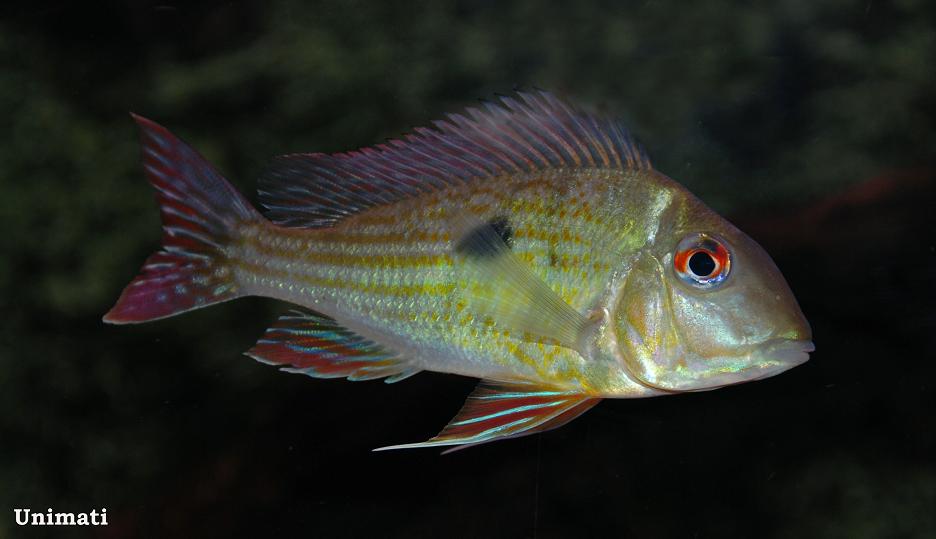
Geophagus abalios 是委内瑞拉奥里诺科水系的群居筛砂慈鲷,平时较温和,繁殖时会保护巢区和后代。商品中常被当作其他相似种出售,产地信息和体侧竖带比笼统销售名更有用。
分布与栖息地
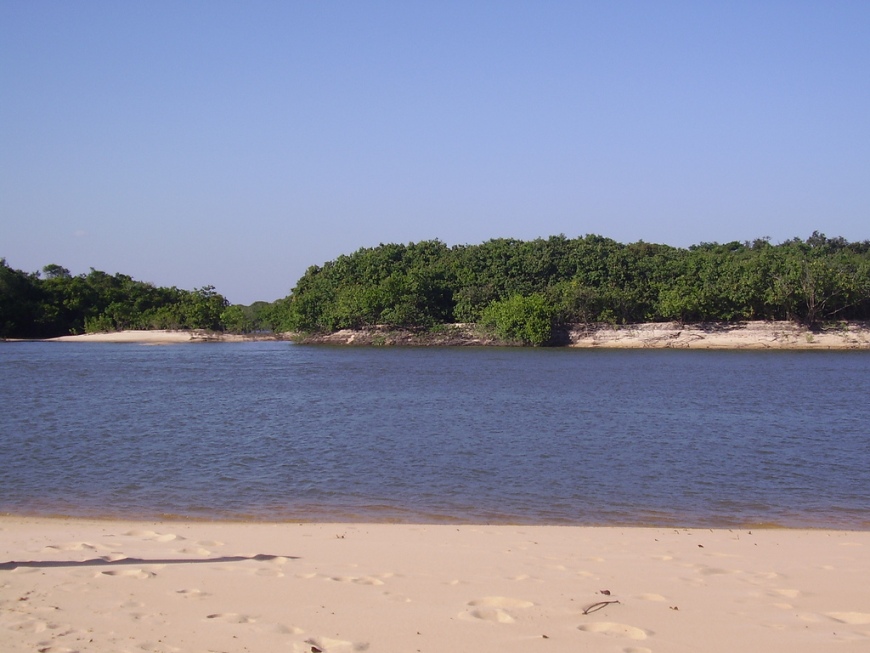
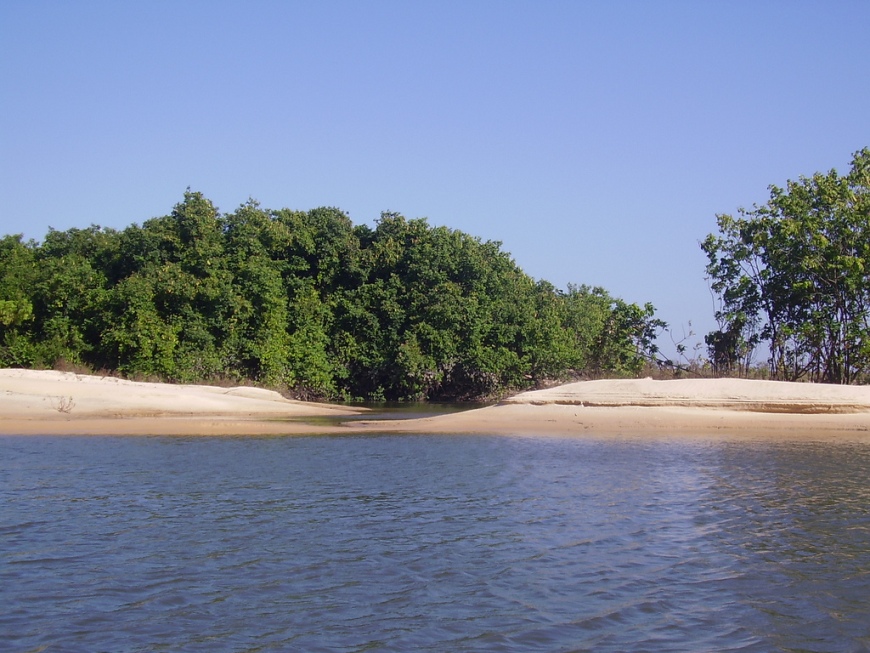
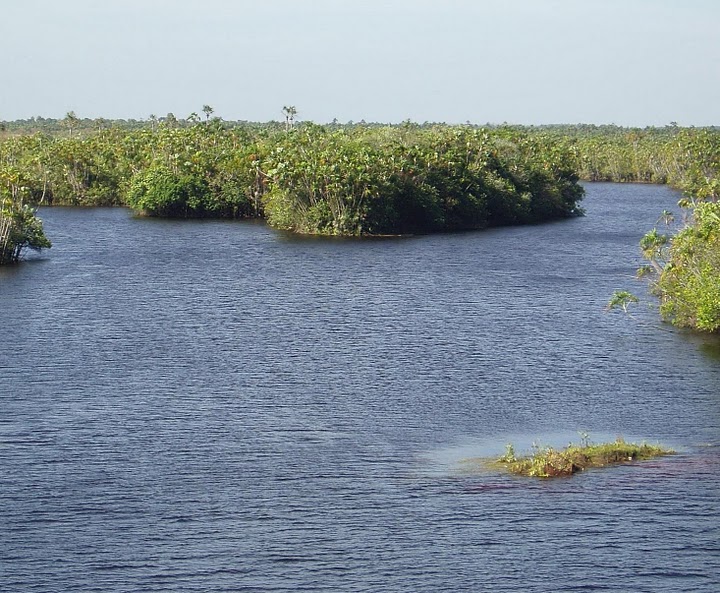
主要见于委内瑞拉利亚诺斯平原的黑水、清水支流,也分布于奥里诺科中上游,向南到卡西基亚雷河附近。部分地点为浑浊的白水,所谓白水指悬浮物而非急流。
常利用低地洪泛河流,雨季进入淹水区域,旱季更多在静缓潟湖活动。底部为柔软的砂或泥,散布根枝、石块及落叶。
饲养环境
群体长期至少需要 180 × 60 cm 的底面积。柔软细砂是关键,粗砾可能阻碍筛食、伤鳃,误吞还可能造成损伤。弱光、沉木根枝和少量平石即可提供结构。
虽然自然有落叶,家缸中大量腐叶容易被翻成悬浮碎屑、堵塞设备。过滤需兼顾生物处理和细颗粒截留,避免砂持续进入泵体。只在成熟系统入鱼,每周换水至少 50%–70%,同时避免强流直接冲击。
食性与喂食
同属鱼会把底砂吸入口中,筛出食物再排砂,自然食物包括小型无脊椎动物、种子和有机碎屑。稳定后虽会上游接食,仍需保留正常筛砂机会。
即使成年也适合细粒食物,使用优质微粒或细碎配合饲料,搭配红虫、水蚯蚓、丰年虾等,部分干粮应含植物成分。每日分三四次少量喂,比一次大餐更符合取食习惯。
习性与混养
建议至少 5–8 尾,群体会建立等级,数量太少可能造成紧张或持续欺压。伙伴应温和、需求相近,避免攻击性底栖鱼、强领地鱼和更硬水需求的鱼。不能因其平时温和就保证鱼苗安全。
雌雄区分
平时没有可靠外部差别,产卵时雌鱼产卵管才是较明确线索。
繁殖
已有多次人工繁殖记录,先在坚硬表面产卵,随后含卵,为双亲参与的口孵型。可从幼鱼群自然配对,成熟至少需约一年,稳定维护与良好饮食比特殊刺激更关键。
配对鱼清理并守卫平石、沉木或缸底,雌鱼分批产卵,雄鱼受精,最多约 200 粒。通常雌鱼先含卵,但个别雄鱼会更早参与,甚至驱赶雌鱼独自照护。
后续双亲分担或交换整窝,也有雄鱼参与较少的情况。鱼苗起游后逐步被放出觅食,遇险再回亲鱼口中;可喂适口粉料、丰年虾无节幼体或微虫。混养鱼包括同种也可能捕食释放后的鱼苗,育苗时需分隔。
补充说明
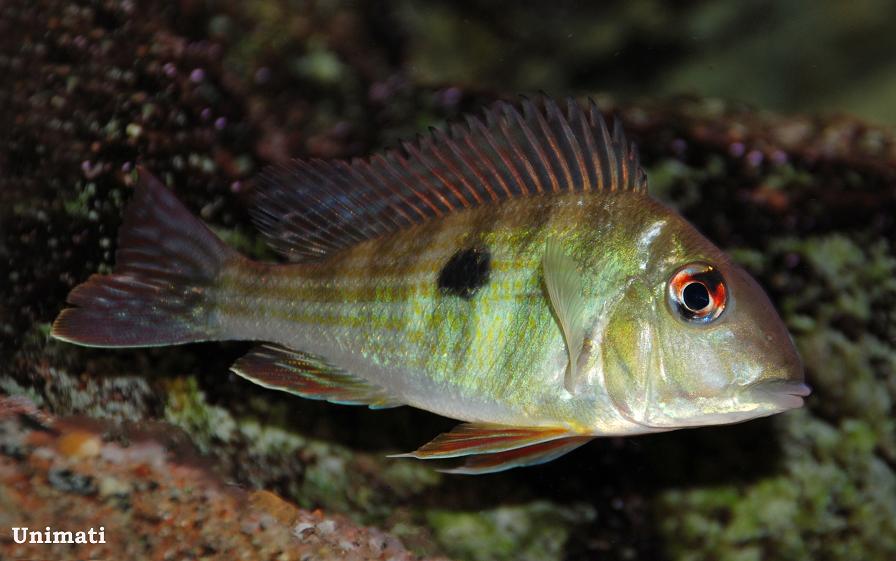
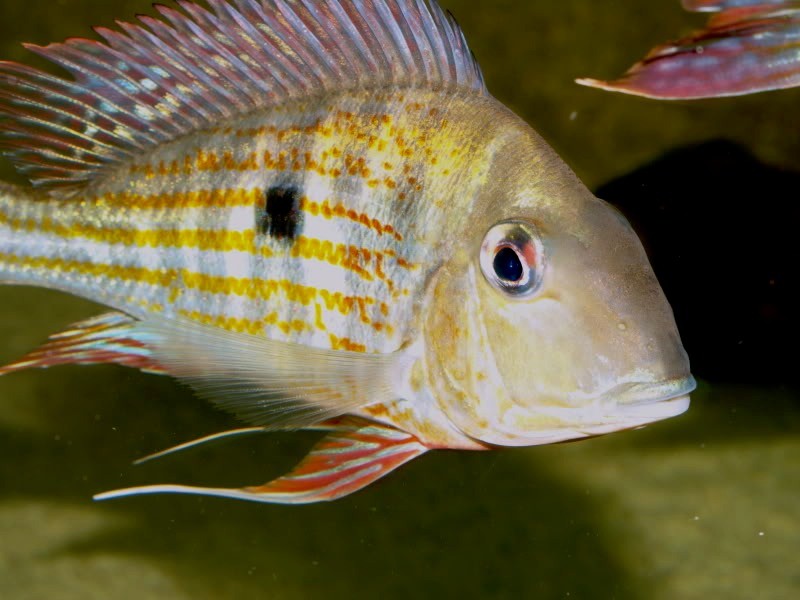
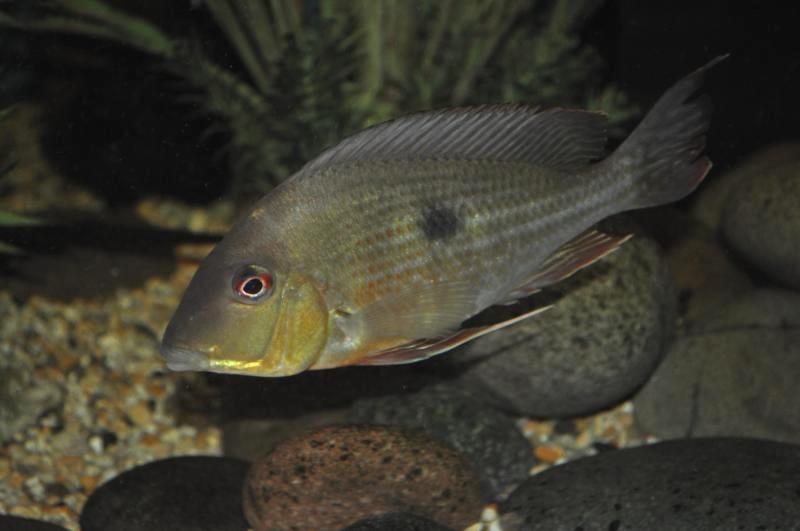
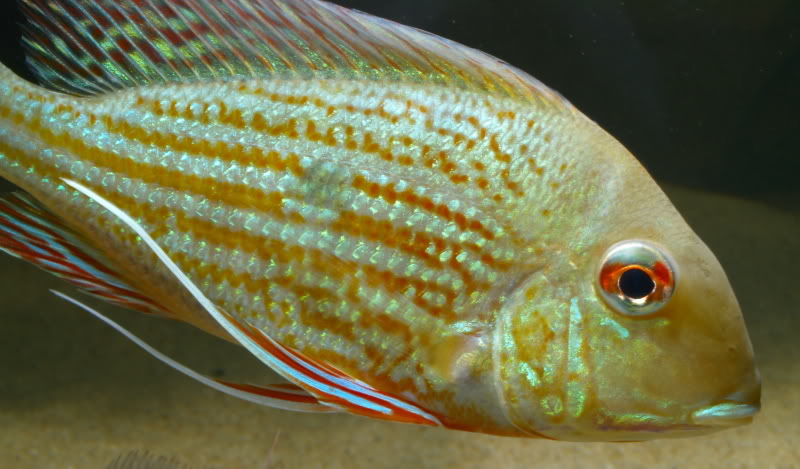
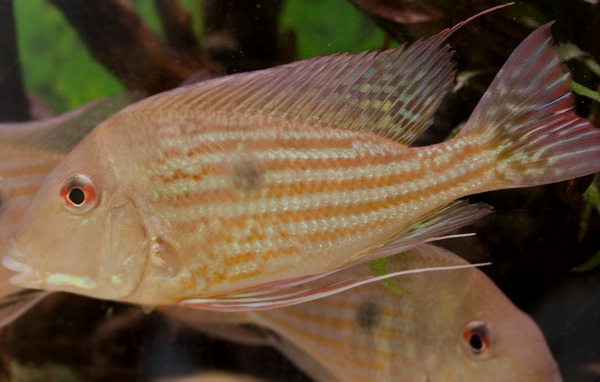
体侧前部三条竖带中间有浅色分隔,看似分成两细条;尾柄后方竖带仅占上部。这些纹路常在受惊或繁殖时更明显,有助于区别相似鱼。
图片
图片来自 SeriouslyFish,版权归各摄影者所有。
English
Overview
A social sand-sifting cichlid from Venezuela's Orinoco region, Geophagus abalios is usually peaceful but defends its breeding area and young. Misidentification in trade is common, making provenance and flank-bar pattern more informative than a generic sales label.
Distribution & habitat
Records span blackwater and clearwater tributaries of the Venezuelan Llanos, the middle and upper Orinoco, and southward toward the Casiquiare. Some sites are turbid whitewater; that term describes suspended material rather than strong current.
Lowland floodplains are used seasonally, with movement into inundated areas during rains and greater use of quiet lagoons at other times. Soft sand or mud is scattered with wood, rocks, and leaves.
Aquarium setup
A group requires at least a 180 by 60 cm footprint. Fine, soft sand permits normal sifting; coarse gravel can obstruct feeding, injure gills, or cause harm if swallowed. Subdued lighting, roots, wood, and occasional flat stones are adequate furnishings.
Large quantities of decaying leaves become suspended debris when disturbed and may clog equipment. Combine mature biological filtration with fine-particle capture, preventing continuous sand entry into pumps. Weekly changes of at least 50–70% support stable quality without directing excessive current at the fish.
Diet & feeding
Members of the genus sift mouthfuls of substrate for small invertebrates, seeds, and organic material. Rising to offered food does not eliminate the need to browse sand.
Adults still require relatively small food items. Use fine prepared foods, including plant-rich products, with bloodworms, tubifex, brine shrimp, and similar fare. Three or four modest daily portions suit their feeding pattern better than one large meal.
Behaviour & compatibility
Keep at least five to eight. A hierarchy develops, and inadequate groups can produce nervousness or focused harassment. Choose peaceful fishes with matching requirements, avoiding aggressive bottom dwellers and harder-water species. Tiny fry cannot be assumed safe.
Sexual dimorphism
Reliable external differences are absent outside spawning, when the female's ovipositor becomes visible.
Breeding
Repeated aquarium success is known. Eggs are laid on a solid surface before oral incubation, with both parents potentially involved. Start with a young group and allow natural pairing; maturation takes at least about a year.
Pairs clean and defend rock, wood, or aquarium glass. Females deposit successive batches for fertilization, totaling up to about 200 eggs. Females usually collect first, although males vary greatly in their participation and may occasionally exclude the female.
Later care may be shared simultaneously or through transfer of the entire brood. Swimming fry are released progressively to feed and return to parental mouths when threatened. Fine prepared foods, brine-shrimp nauplii, and microworms are suitable. Separate broods from companions, including conspecifics, when high survival is desired.
Notes
The front three flank bars split around lighter central areas, while the rearmost marking occupies only the upper tail peduncle. These marks may be clearest during stress or reproduction and help separate similar species.
来源
- https://www.seriouslyfish.com/species/geophagus-abalios(抓取于 2026-10-10)
geophagus-abalios · 文件: data/species/geophagus-abalios.md · 状态: 草稿