栉头腹吸鳅
概要
| 字段 | 值 |
|---|---|
| 类别 | 鱼 |
| 学名 | Gastromyzon ctenocephalus |
| 别名 | 櫛頭腹吸鰍 |
| 分类 | 鲤形目 Cypriniformes › 腹吸鳅科 Gastromyzontidae › Gastromyzon |
| 水体 | 淡水 |
| 原产地 | 印度尼西亚、马来西亚 |
| 成体体长 | 4 cm |
| 饲养难度 | 中等 |
| 最小水体 | 54 L |
| 最小缸长 | 60 cm |
| 群居方式 | 群游 |
| 性情 | 温和 |
| 水流偏好 | 高 |
| 特征 | 会跳缸: 是 |
| 外部数据 | seriouslyfish gastromyzon-ctenocephalus;fishbase 22841 |
水质参数
| 参数 | 耐受范围 | 最适范围 | 单位 |
|---|---|---|---|
| 水温 | 20–24 | — | °C |
| pH | 6–7.5 | — | — |
| 总硬度 | 2–12 | — | dGH |
概述
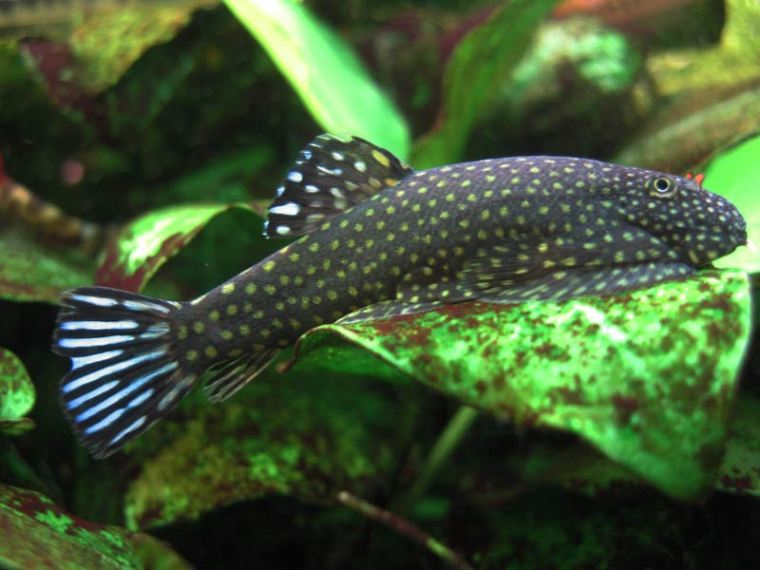
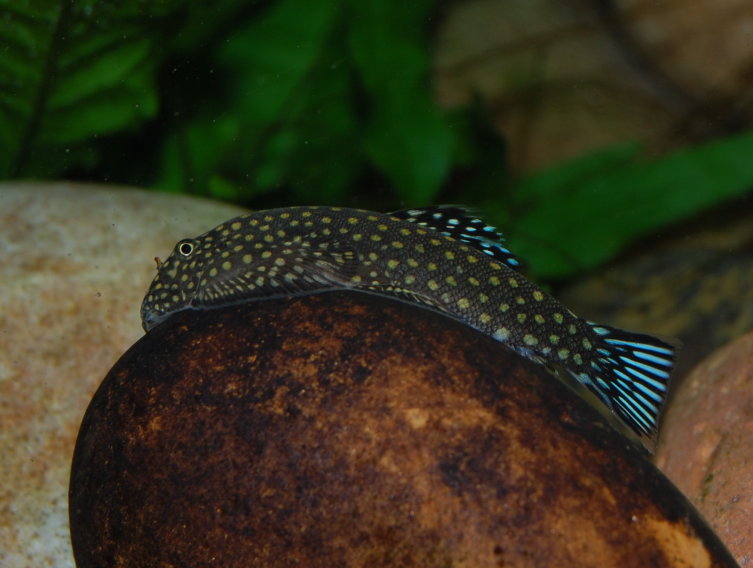
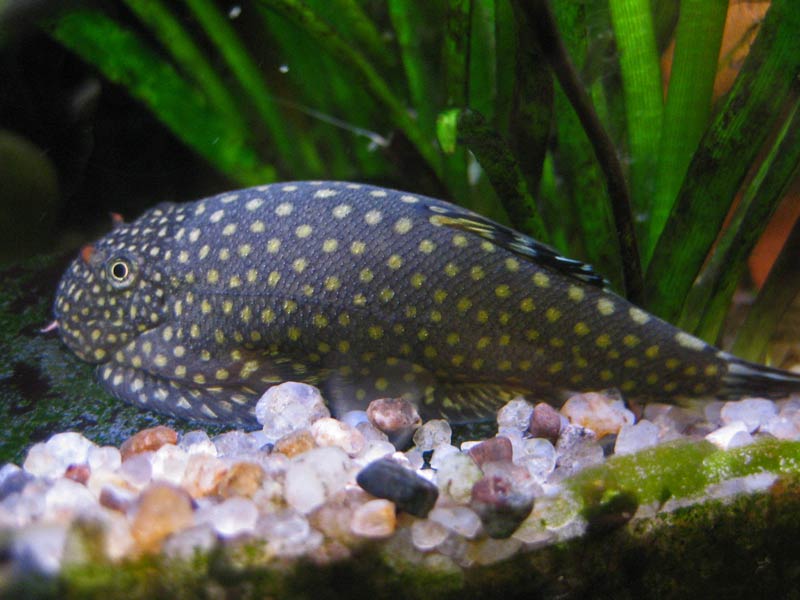
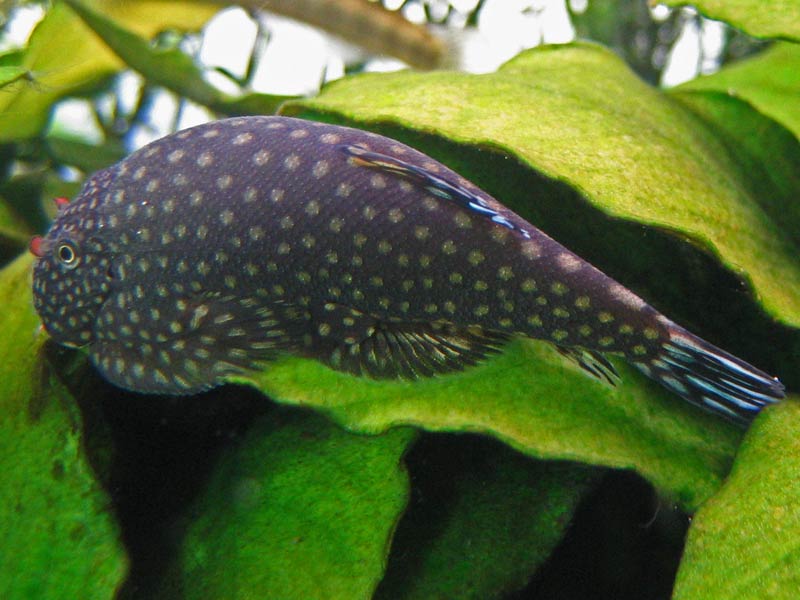
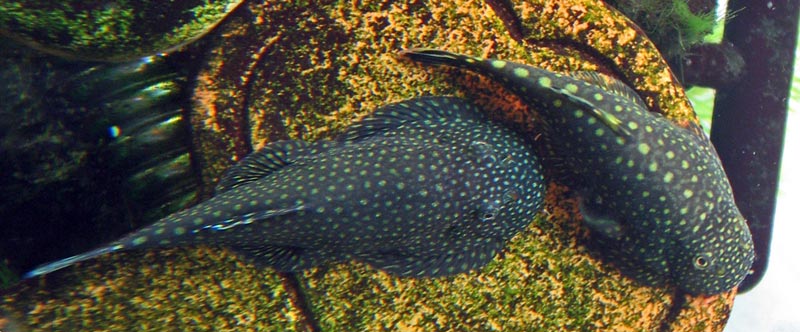
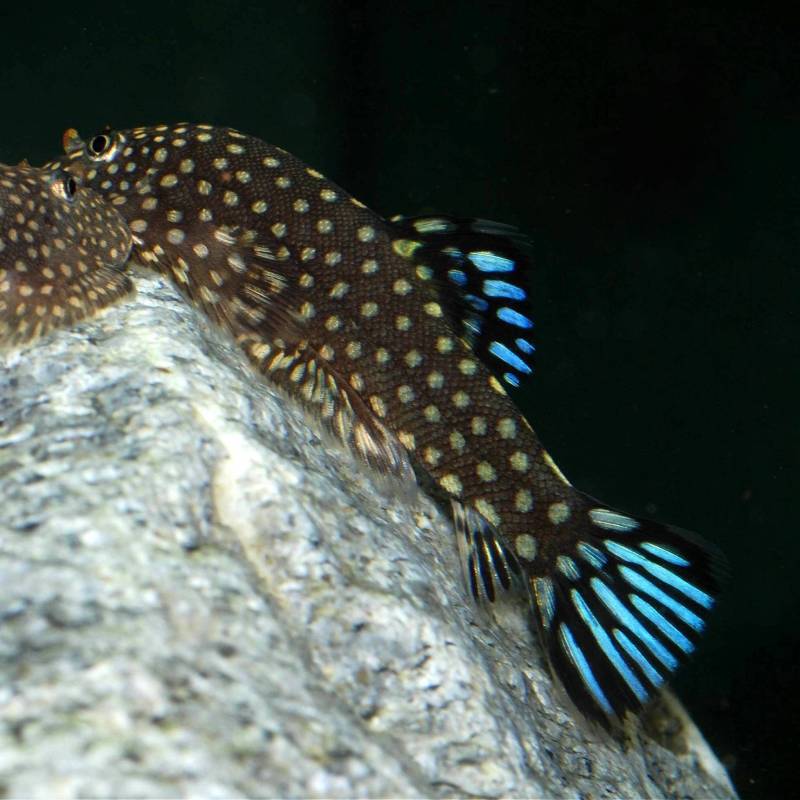
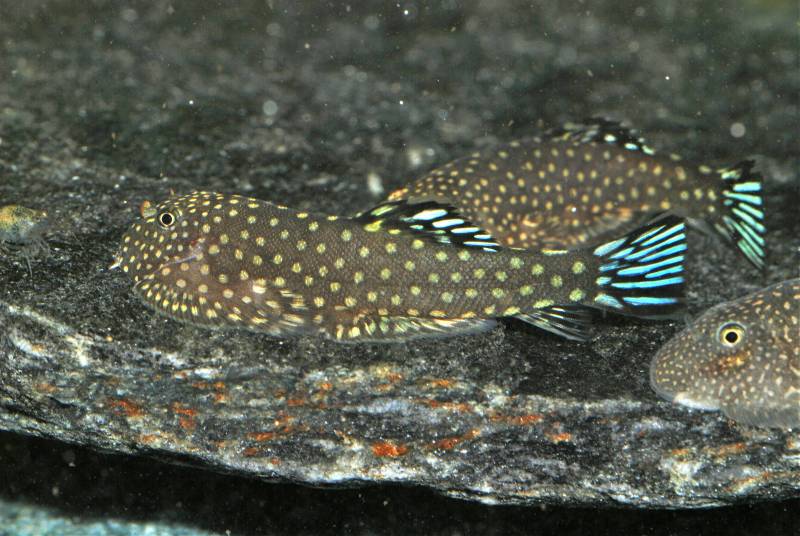
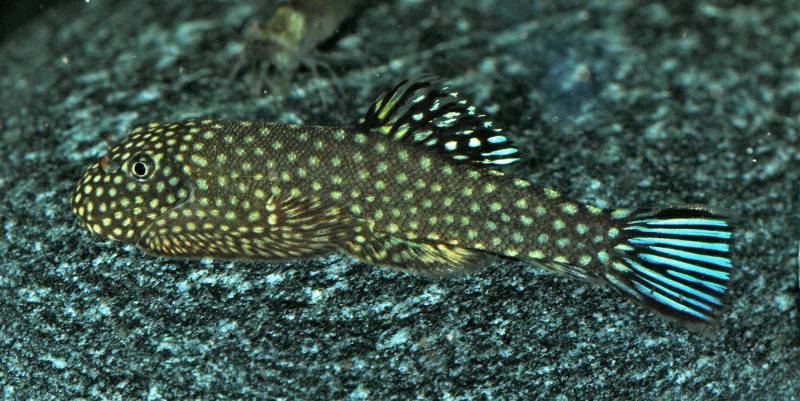
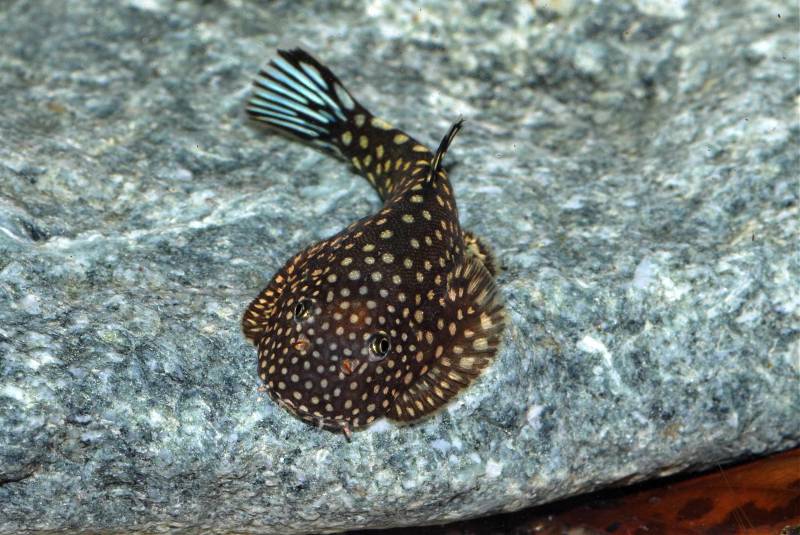
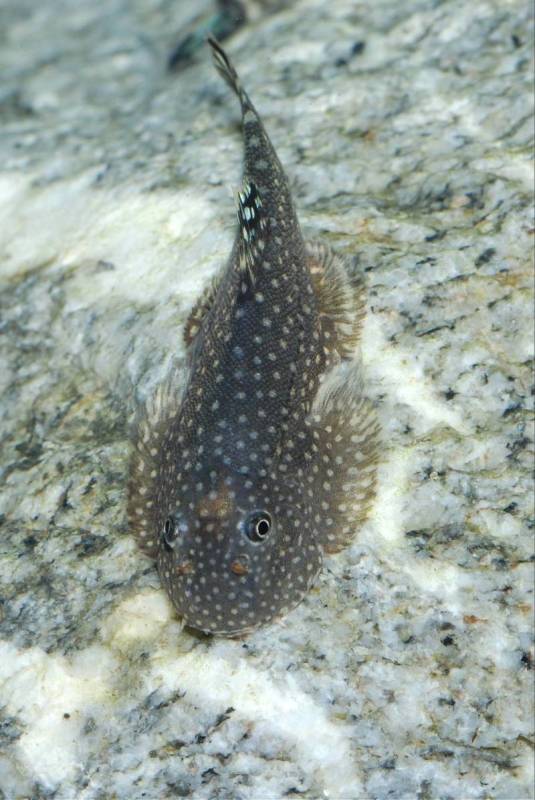
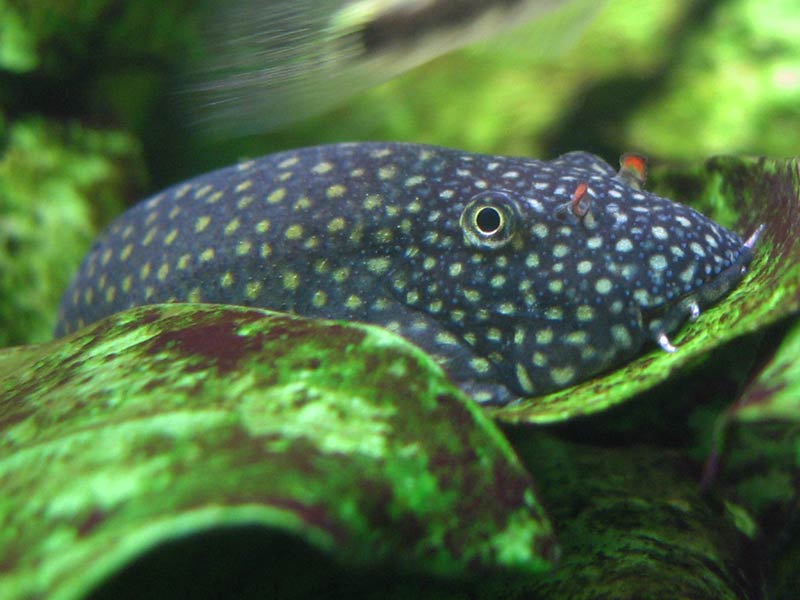
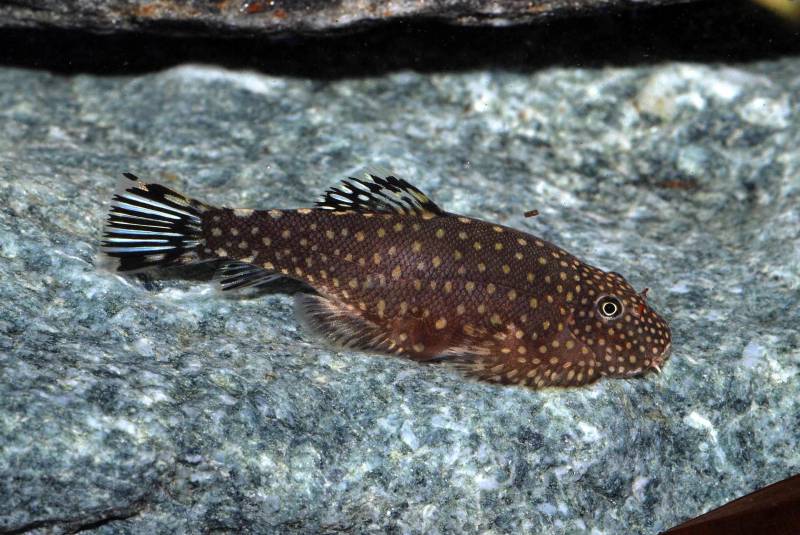
栉头腹吸鳅(Gastromyzon ctenocephalus)来自婆罗洲西部,黑色身体散布浅色小点,背鳍和尾鳍可见蓝色光泽纹。它常混在其他吸鳅中销售,体色存在中间型,认种不能只看一张照片或商品名。
分布与栖息地
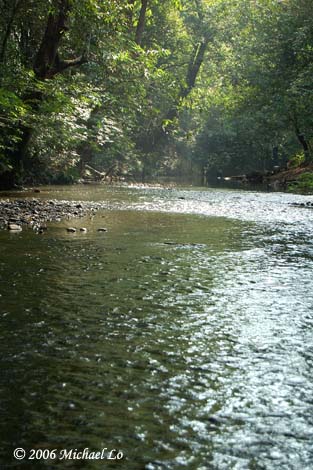
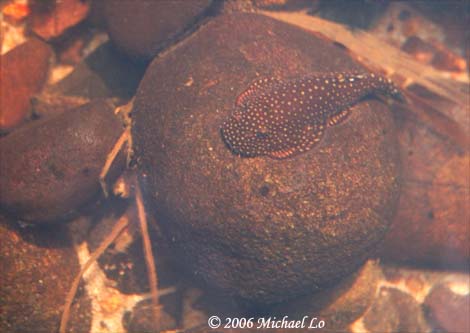
已知仅在马来西亚砂拉越河及印度尼西亚西加里曼丹三发河的上游。可参考同属清澈、富氧的浅急流环境,底部由砾石、岩块及基岩组成,常有部分或完整遮阴,石面覆盖附着生物。
饲养环境
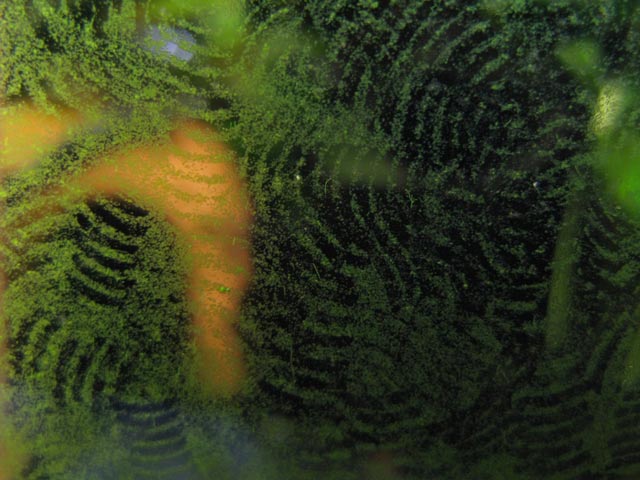
群养底面积可参考 60 × 30 厘米,砂砾底铺足够圆石。使用强过滤、增氧和造流,每小时循环可参考水体的 10–15 倍。较强光照培养藻膜,避免新木严重染水;耐受附生植物和外露过滤海绵可增加觅食面。只入成熟缸,规律部分换水,保留多数附着物,并盖严防攀爬。
食性与喂食
可能主要刮食藻类及伴生微生物。优质干粮、富蔬菜和螺旋藻的凝胶饲料可补充,红虫等动物食物适量,蛋白过多可能带来健康问题。硅藻和软绿藻比黑毛藻更有用,必要时另培长藻石轮换;瘦弱个体先减少食物竞争。
习性与混养
性情温和,避免大型、强势或抢食激烈的伙伴。同属可参考四尾以上的松散群养建议,部分个体可能守护觅食位置;伙伴也须适应相同的水流和溶氧。
雌雄区分
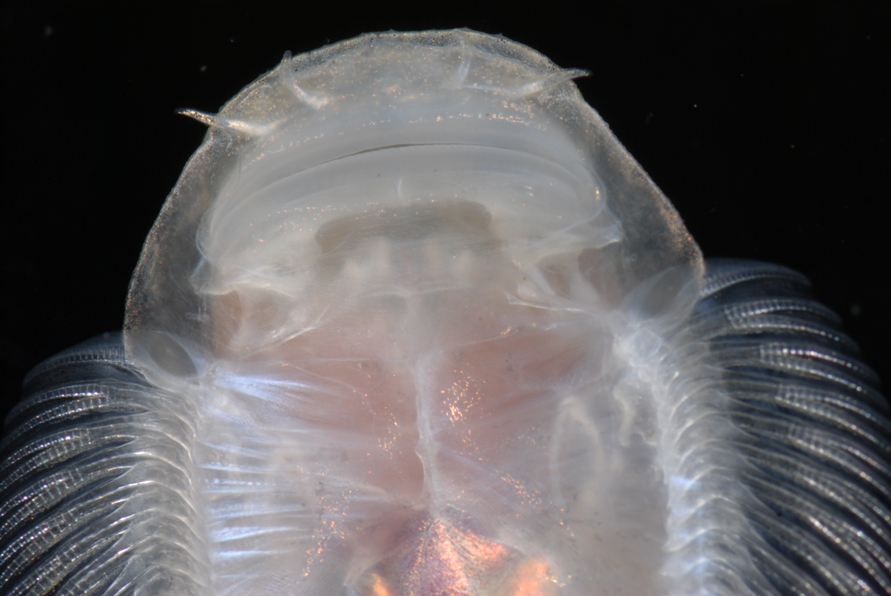
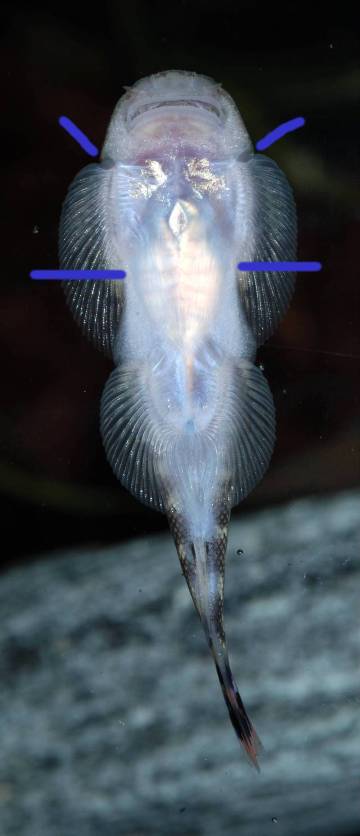
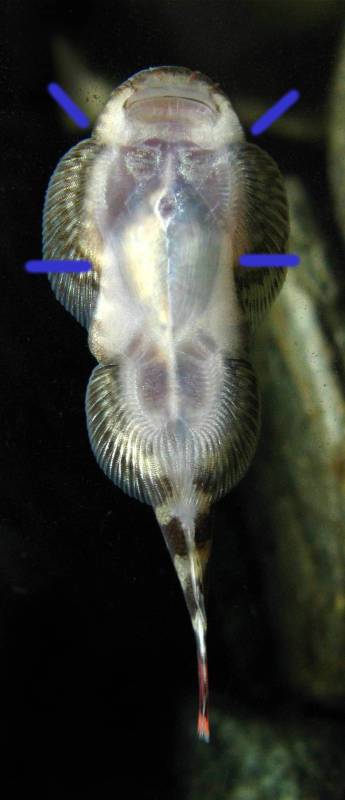
俯视或仰视时,成熟雌鱼通常更厚实、稍大。雄鱼头部和胸鳍基部有梳齿状突起,胸鳍前部鳍条有圆锥状突起;雌鱼也可有圆锥状突起,所以不能把任何小突起都当作雄性标志。
繁殖
可参考高山腹吸鳅(Gastromyzon monticola)在粗砾、石板和充分增氧环境中陆续出现鱼苗的观察,作为探索方向,并非本种已证实的繁殖流程。另一近亲的试验虽孵出幼鱼,最终却因水质恶化全失,提醒育苗不能只重视诱产。
补充说明
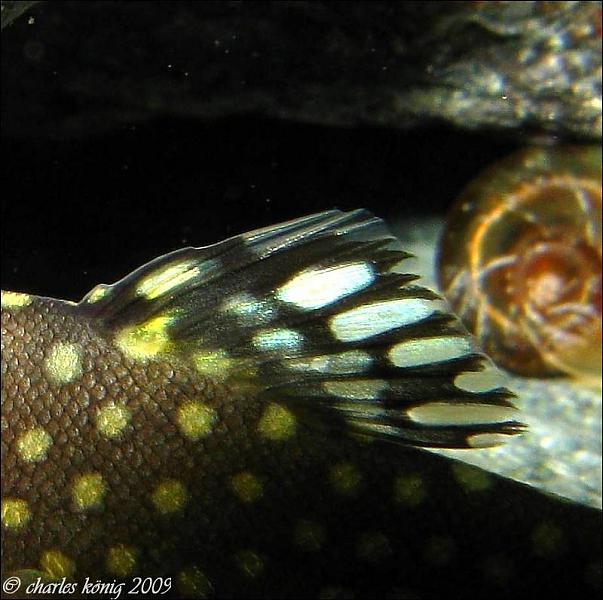
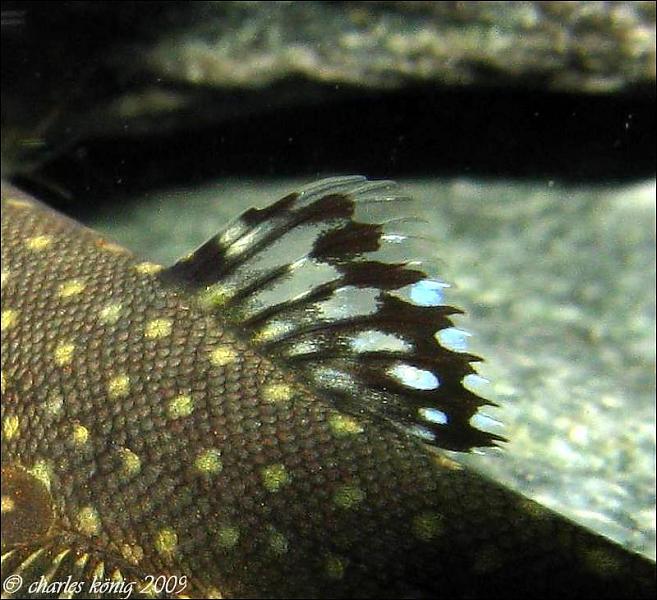
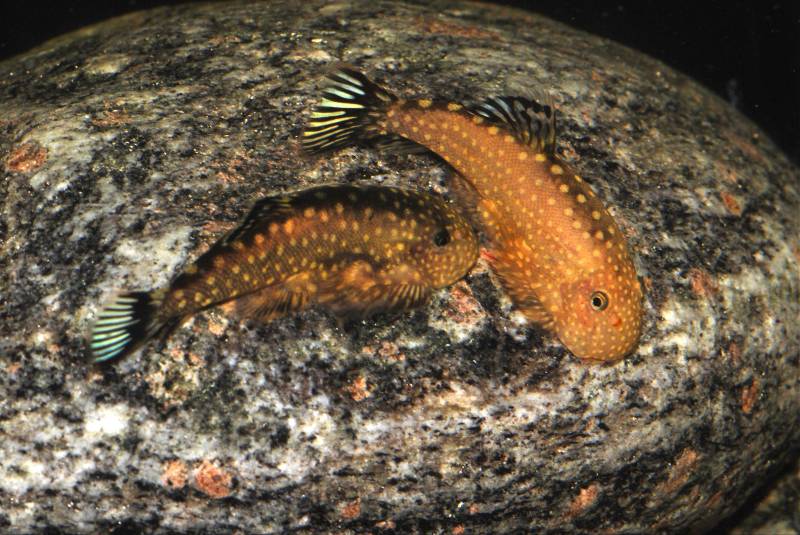
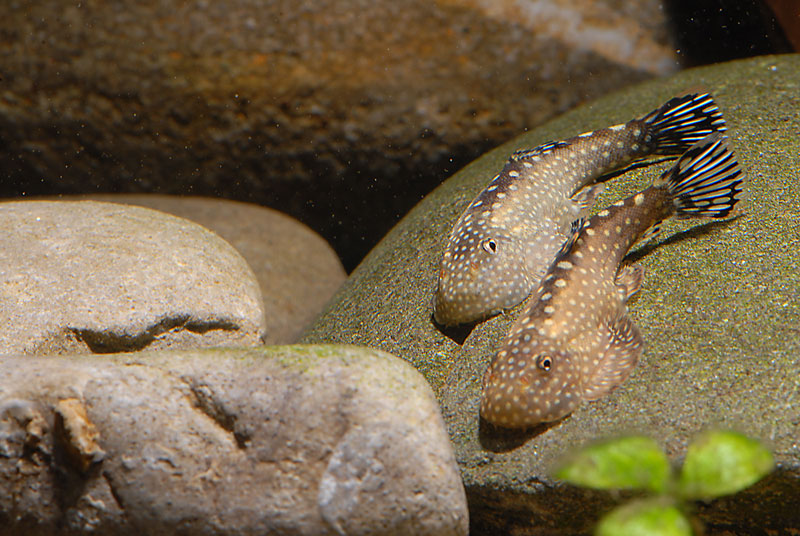
体色、斑点大小及背鳍颜色有变异,近似种之间可能难以仅凭外形分开。腹部无鳞不代表全身无鳞。
图片
图片来自 SeriouslyFish,版权归各摄影者所有。
English
Overview
A western Bornean hillstream loach, Gastromyzon ctenocephalus combines pale spots on a dark body with blue markings in the dorsal and caudal fins. Mixed shipments and intermediate-looking forms make identification more complicated than matching a trade name or single photograph.
Distribution & habitat
It is known from the headwaters of the Sarawak and Sambas rivers in Malaysian and Indonesian Borneo. Genus-level habitat accounts describe clear shallow torrents over rock and gravel, often shaded, with extensive surface growth.
Aquarium setup
A group can use a 60 by 30 cm footprint with many smooth rocks over sand or gravel. Supply strong filtration, oxygenation, and the suggested turnover of 10–15 tank volumes per hour. Lighting should maintain grazing growth without heavy tannin staining. Plants and exposed sponges add feeding surfaces. Mature water, regular partial changes, and a secure lid are essential.
Diet & feeding
Algae and associated microorganisms are the likely main natural foods. Prepared foods and vegetable-rich gels are useful supplements, with animal prey offered moderately. Excessive protein may be harmful. Rotate rocks carrying diatoms or soft green algae when necessary, and give weakened fish uncontested access to food.
Behaviour & compatibility
Avoid large, aggressive, or highly competitive companions for this peaceful fish. Genus-level guidance favors groups of at least four, with some defense of feeding space. Every companion must also suit the current and oxygen conditions.
Sexual dimorphism
Females are generally broader and slightly larger. Males develop comb-like tubercles on the head and pectoral base, plus conical ones on anterior pectoral rays. Females can also bear conical tubercles, so the mere presence of bumps is insufficient for sexing.
Breeding
Repeated fry appearances in a heavily aerated gravel-and-slate setup for G. monticola offer a possible direction to investigate, not an established protocol for this species. A separate congener trial produced larvae but lost them after water quality deteriorated, highlighting the importance of rearing conditions.
Notes
Variation in body shade, spot size, and fin coloration complicates separation from similar species. A scaleless abdomen should not be mistaken for a scaleless body.
来源
- https://www.seriouslyfish.com/species/gastromyzon-ctenocephalus(抓取于 2026-10-10)
gastromyzon-ctenocephalus · 文件: data/species/gastromyzon-ctenocephalus.md · 状态: 草稿