Gastrodermus nijsseni · Nijssen's Cory
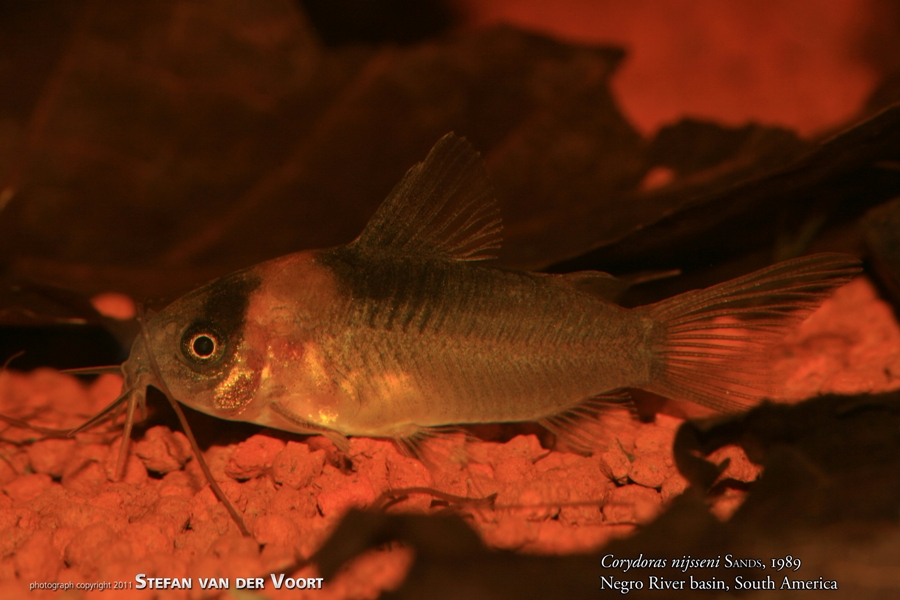
概要
| 字段 | 值 |
|---|---|
| 类别 | 鱼 |
| 学名 | Gastrodermus nijsseni |
| 别名 | Corydoras nijsseni |
| 分类 | 鲶形目 Siluriformes › 美鲶科 Callichthyidae › Gastrodermus |
| 水体 | 淡水 |
| 成体体长 | 5 cm |
| 饲养难度 | 入门 |
| 最小水体 | 41 L |
| 最小缸长 | 45 cm |
| 群居方式 | 群游 |
| 性情 | 温和 |
| 外部数据 | seriouslyfish gastrodermus-nijsseni;fishbase 57880 |
| 原产地 | 巴西 |
| 食性 | 杂食 |
| 繁殖方式 | 附着产卵 |
水质参数
| 参数 | 耐受范围 | 最适范围 | 单位 |
|---|---|---|---|
| 水温 | 22–26 | — | °C |
| pH | 5–7 | — | — |
| 总硬度 | 0–10 | — | dGH |
概述
Gastrodermus nijsseni 是尼格罗河黑水环境中的温和甲鲶,适合软水混养或尼格罗河风格的缸。它容易进食,但水质恶化和脏底床会伤害口须,不能当作免维护的清洁鱼。
分布与栖息地
特有于巴西尼格罗河流域,主要生活在黑水河道、溪流和支流。腐败有机物释放的物质把水染成棕色,天然水体偏强酸。
饲养环境
可用河沙、沉木根枝和干落叶营造低光黑水环境,原生水域并不以水草为主要结构。让木叶缓慢染水,旧叶每隔数周清理更换,避免堆积腐烂。水族用安全泥炭也可辅助营造黑水;也可选用彻底干燥、去皮的山毛榉枝,落叶可用山毛榉或栎叶。
普通密植缸也可以饲养,前提是认真维护,底床保持干净,不用底砂过滤。人工繁殖鱼可能较能适应偏高酸碱度,但偏酸水更能表现其状态,不宜据此忽视既定软水条件。
食性与喂食
杂食且容易喂养,以优质沉底颗粒或片剂为主,搭配水蚤、丰年虾、红虫等活饵和冷冻饵。必须确认底部鱼吃到足量食物,其他鱼漏下的碎屑不能代替完整投喂。
习性与混养
温和,适合体型和水质相容的小型脂鲤、鲤科鱼、迷鳃鱼、短鲷和温和鲶鱼,避免特别大或好斗的同伴。建议至少六条,群养会更活跃、自信。
雌雄区分
俯视时雌鱼更宽、更圆,抱卵尤其明显。雌鱼通常也稍大,颜色不如雄鱼浓。
繁殖
可设置独立繁殖缸,裸底或细沙、细砾均可,放莫丝等植物,使用保护鱼苗的气动海绵或盒式过滤。约 24 °C、pH 6.5 可作为条件,泥炭过滤或反渗透水有助于获得软酸水。
每条雌鱼搭配约两条雄鱼,用多样活饵、冷冻饵及干粮调养。明显抱卵后,以适温范围内稍凉水换水约 50%~70%,增加充氧和水流,可每天重复直到产卵。近缘鼠鱼有的受季节影响或成熟较慢,失败时应考虑这些差异和刺激时机。
典型过程是雄鱼追逐、双方 T 字抱对,雌鱼以腹鳍夹住一枚或数枚卵,再贴在玻璃等位置。有关精子经过雌鱼口鳃到达卵的解释仍属推测。
成鱼会吃卵,产后移走亲鱼或卵。孵化容器使用相同水体并保持充氧,去除霉卵;亚甲蓝或桤木果是常见辅助防霉选择,也有用淡水小虾清理病卵的经验。
约三至五天孵化,卵黄吸收后可喂微虫和丰年虾无节幼体。薄沙底似乎比裸底较少出现鱼苗疾病,洁净水质仍不可替代。
补充说明
本种曾以 Gastrodermus elegans 的亚种身份描述,圆吻相似,但花纹与其他近缘鱼也有相似之处,不能只凭色纹定名。
相关甲鲶能借肠道吸收空气,偶尔上浮正常;若吞气明显增加,应留意水质是否恶化。胸鳍硬棘容易挂网并可能刺伤皮肤,转移时需谨慎。
图片
图片来自 SeriouslyFish,版权归各摄影者所有。
English
Overview
The peaceful Gastrodermus nijsseni suits a Negro-style blackwater aquarium or a compatible softwater community. Feeding is straightforward, but deteriorating water and dirty substrate can damage its barbels. It should never be treated as a maintenance-free cleaner.
Distribution & habitat
Endemic to Brazil's Negro drainage, it mainly occupies blackwater rivers, creeks, and tributaries. Decomposing organic material stains these naturally acidic waters brown.
Aquarium setup
River sand, branching wood, and dried leaves create a shaded blackwater setting. Aquatic plants are not a prominent feature of its natural habitat. Replace old leaves every few weeks before heavy decay pollutes the water. Aquarium-safe peat can assist with staining; thoroughly dried, debarked beech branches are an alternative, with dried beech or oak leaves as litter.
A conventional planted aquarium is another option. Maintain it carefully, keep the substrate clean, and avoid undergravel filtration. Captive-bred fish may tolerate higher pH, but acidic water is preferred for best condition.
Diet & feeding
An easily fed omnivore, it can receive good sinking pellets or tablets as a staple, supplemented with live or frozen water fleas, Artemia, and bloodworms. Ensure an adequate ration reaches the catfish rather than relying on food missed by upper-water inhabitants.
Behaviour & compatibility
Compatible small characins, cyprinids, anabantoids, dwarf cichlids, and peaceful catfishes make suitable companions. Avoid very large or aggressive fishes. Six or more conspecifics encourage activity and confidence.
Sexual dimorphism
Females appear broader and rounder from above, particularly when gravid. They also tend to be slightly larger and less intensely colored than males.
Breeding
Use a separate aquarium with bare flooring or fine sand or gravel, vegetation such as moss, and fry-safe air-powered filtration. Around 24 °C and pH 6.5 are suitable starting conditions. Peat filtration or reverse-osmosis water can help produce soft, acidic water.
Condition approximately two males per female on varied live, frozen, and dry foods. When females are full of eggs, change roughly 50–70% with slightly cooler water within the appropriate range and increase aeration and flow. Repeat daily until spawning if necessary. Seasonal rhythms and delayed maturity in related catfishes may also affect outcomes.
Courtship involves male pursuit and a T-shaped pairing, followed by the female holding one or several eggs between her pelvic fins and attaching them to glass or another surface. The proposed movement of sperm through the female's mouth and gills remains an interpretation rather than a settled mechanism.
Separate adults and eggs to prevent predation. Incubate in the same water with good aeration and remove fungused eggs. Methylene blue or alder cones are commonly used as aids; some breeders employ small freshwater shrimp to remove diseased eggs.
Hatching takes about three to five days. Microworms and Artemia nauplii are offered after yolk absorption. Thin sand appears to reduce fry ailments compared with bare flooring, but excellent cleanliness remains essential.
Notes
Originally described as a subspecies of Gastrodermus elegans, it shares that fish's rounded snout, while its markings resemble other relatives. Color pattern alone does not settle identification.
Related armored catfishes supplement respiration through the intestine. Occasional surface gulps are normal, but increasing frequency can accompany declining water conditions. Pectoral spines may snag in nets and puncture skin, requiring care during transfers.
来源
- https://www.seriouslyfish.com/species/gastrodermus-nijsseni(抓取于 2026-10-10)
gastrodermus-nijsseni · 文件: data/species/gastrodermus-nijsseni.md · 状态: 草稿