原栖兵鲶 · Guaporé Cory
概要
| 字段 | 值 |
|---|---|
| 类别 | 鱼 |
| 学名 | Gastrodermus guapore |
| 别名 | 原棲兵鯰、Corydoras guapore |
| 分类 | 鲶形目 Siluriformes › 美鲶科 Callichthyidae › Gastrodermus |
| 水体 | 淡水 |
| 原产地 | 玻利维亚东北部与巴西西部的瓜波雷河(伊特内斯河)水系 |
| 成体体长 | 5 cm |
| 饲养难度 | 入门 |
| 最小水体 | 81 L |
| 最小缸长 | 90 cm |
| 群居方式 | 群游 |
| 性情 | 温和 |
| 外部数据 | seriouslyfish gastrodermus-guapore;fishbase 12176 |
| 游动层 | 中层 |
| 繁殖方式 | 附着产卵 |
水质参数
| 参数 | 耐受范围 | 最适范围 | 单位 |
|---|---|---|---|
| 水温 | 22–28 | — | °C |
| pH | 5–7 | — | — |
| 总硬度 | 2–12 | — | dGH |
概述
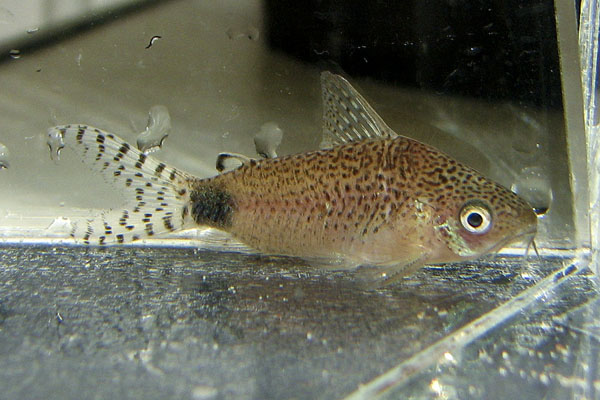
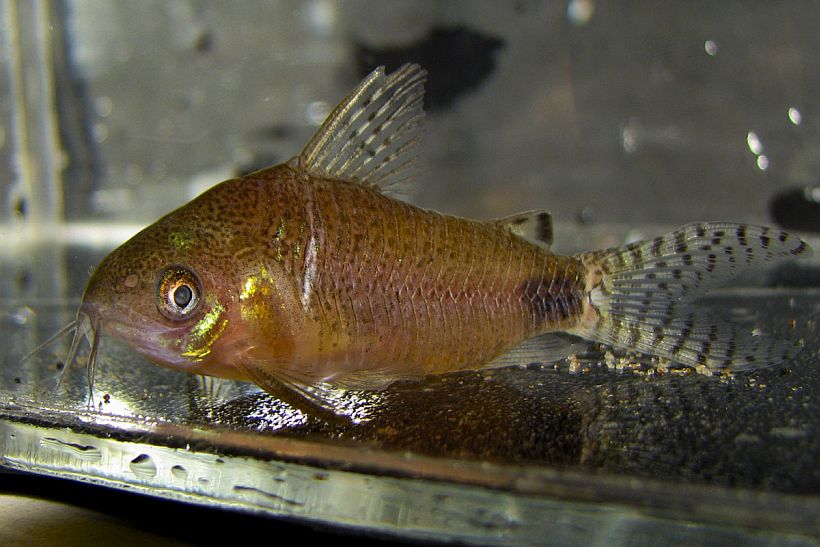
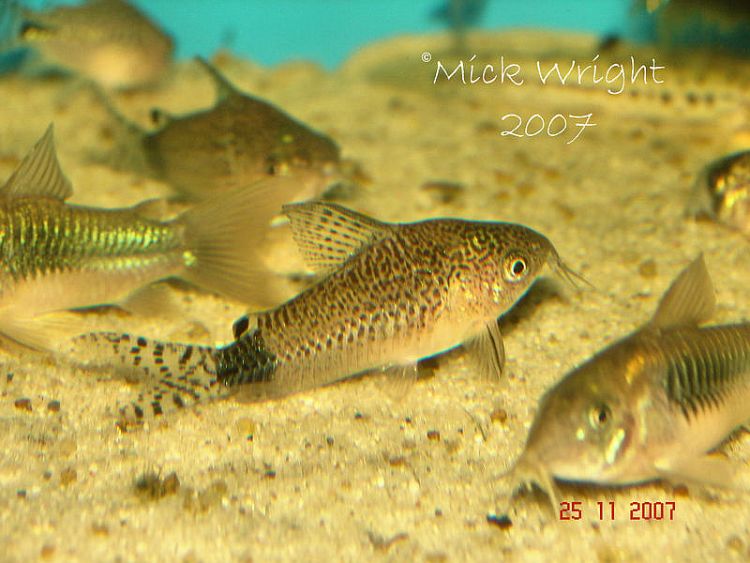
原栖兵鲶(Gastrodermus guapore)与常见贴底鼠鱼不同,会花很多时间在中层群游,并从水中捕食部分浮游动物。较大的眼睛、较朝前的口部和明显分叉的尾鳍,与这种生活方式相适应。
分布与栖息地
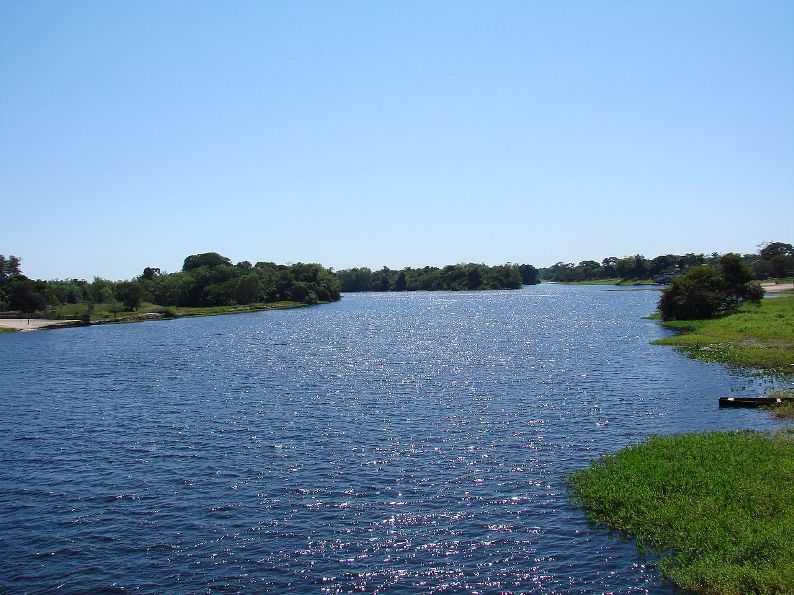
特有于玻利维亚东北部和巴西西部的瓜波雷河水系,玻利维亚一侧称伊特内斯河,属于马代拉河上游。主河道两国境内均有记录,部分支流的范围仍有推测成分。河水温暖、清澈、偏酸,并受单宁染色。
饲养环境
细砂底较理想,也可用保持洁净的圆润砾石。用沉木根枝、落叶和水面植物提供遮蔽,同时给群体保留离底游动空间。
食性与喂食
与主要在底部觅食的鼠鱼相比,它对水中浮游动物有一定适应,应经常提供活水蚤、丰年虾等食物。可结合适口下沉饲料和小型冷冻饵观察接受情况,但不能让它靠其他鱼漏下的残饵生活。
习性与混养
温和且群居,至少四至六条同养。大部分时间不必紧贴底部,经常会在中层聚集。
雌雄区分
雌鱼一般更大,成熟后比雄鱼宽厚、体高更大。
繁殖
水族箱繁殖少见,成功时的方法与其他鼠鱼相似。可每雌配两雄或更多,怀卵后尝试较凉新水、增加充氧与水流。卵可附在玻璃、细叶植物或沉水产卵拖把上,拖把方便移卵。
产后隔开成鱼与卵,使用水质一致、供氧充足的孵化容器,留意发霉的卵。通常三四天孵化,卵黄消耗后以微虫或丰年虾无节幼体开口。鱼苗需要很好的水质,薄砂底似乎更有利,不能因成鱼体型小就低估育苗难度。
补充说明
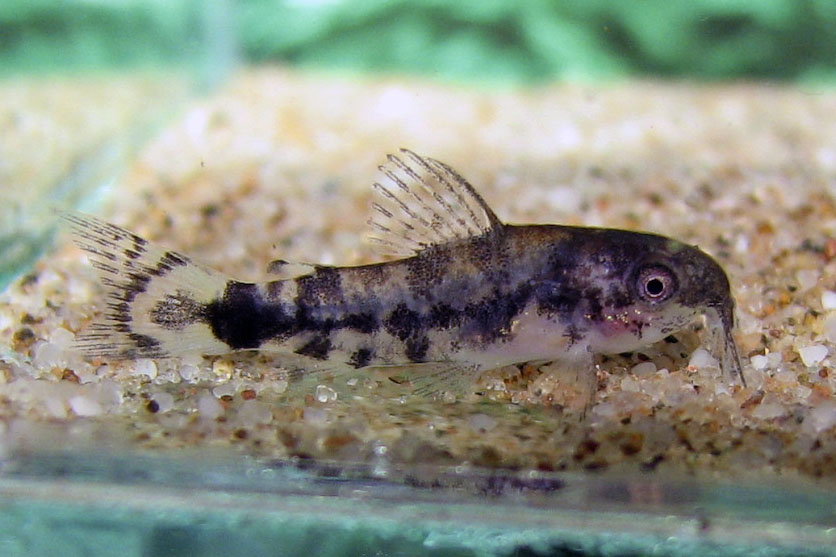
尾斑相近的鼠鱼未必有相同体形和中层捕食适应,判断时需综合眼睛、口位、尾鳍及行为。偶尔浮上水面吞气属辅助呼吸,移鱼时注意胸鳍硬刺。
图片
图片来自 SeriouslyFish,版权归各摄影者所有。
English
Overview
Gastrodermus guapore spends much of its time above the floor, gathering in midwater and taking some food from the water column. Large eyes, a forward-facing mouth, and a strongly forked tail accompany this behavior. Its feeding plan should reflect those differences from more strictly bottom-foraging corys.
Distribution & habitat
It is endemic to the Guaporé, called the Iténez in Bolivia, within the upper Madeira system of northeastern Bolivia and western Brazil. Main-channel records come from both countries; the extent into some tributaries remains tentative. The river has warm, clear, acidic water stained by tannins.
Aquarium setup
Use fine sand or thoroughly cleaned rounded gravel. Roots, branches, leaf litter, and surface vegetation provide security while leaving room for the group to swim above the substrate.
Diet & feeding
Its partial adaptation to catching pelagic zooplankton makes live water fleas, brine shrimp, and similar foods particularly useful. Suitable prepared or frozen foods can complement the menu according to acceptance. Do not leave these fish dependent on leftovers from other aquarium residents.
Behaviour & compatibility
A peaceful, social species, it should have at least four to six companions of its own kind. Groups frequently gather in midwater rather than spending all their time on the bottom.
Sexual dimorphism
Females typically grow larger and develop a wider, deeper body at maturity.
Breeding
Aquarium spawning is uncommon, but successful attempts resemble standard cory methods. Use a male-biased group and consider cooler replacement water with increased circulation and aeration once females are ripe. Glass, fine plants, and submerged mops can receive the eggs, with mops simplifying transfer.
Separate adults and eggs after laying. Maintain matching water and good oxygenation during incubation and monitor fungal losses. Hatching normally takes three or four days. Microworms and brine shrimp nauplii become suitable after yolk absorption. The fry require excellent water quality, and a thin sand layer appears preferable to a wholly bare floor.
Notes
Similar tail markings do not imply identical body shape or feeding behavior in related catfishes. Compare eyes, mouth position, tail shape, and activity when assessing identity. Occasional air gulps are normal; sharp pectoral spines require care during handling.
来源
- https://www.seriouslyfish.com/species/gastrodermus-guapore(抓取于 2026-10-10)
gastrodermus-guapore · 文件: data/species/gastrodermus-guapore.md · 状态: 草稿