小点兵鲶 · Elegant Cory
概要
| 字段 | 值 |
|---|---|
| 类别 | 鱼 |
| 学名 | Gastrodermus elegans |
| 别名 | 小點兵鯰、Corydoras pestai、Corydoras elegans |
| 分类 | 鲶形目 Siluriformes › 美鲶科 Callichthyidae › Gastrodermus |
| 水体 | 淡水 |
| 原产地 | 秘鲁、厄瓜多尔、巴西的亚马孙河流域西部 |
| 成体体长 | 5.5 cm |
| 饲养难度 | 入门 |
| 群居方式 | 群游 |
| 性情 | 温和 |
| 外部数据 | seriouslyfish gastrodermus-elegans;fishbase 12168 |
| 食性 | 杂食 |
| 游动层 | 中层 |
| 繁殖方式 | 附着产卵 |
水质参数
| 参数 | 耐受范围 | 最适范围 | 单位 |
|---|---|---|---|
| 水温 | 20–26 | — | °C |
| pH | 6–7.5 | — | — |
| 总硬度 | 1–15 | — | dGH |
概述
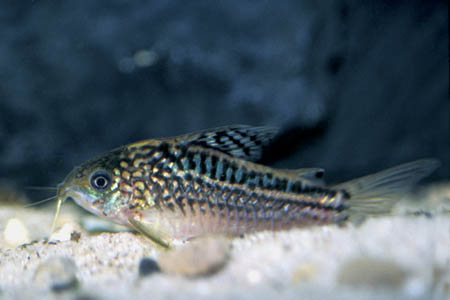
小点兵鲶(Gastrodermus elegans)是温和的群居鼠鱼,常离开底部在中层结群活动。它并非始终贴底的清洁鱼,养成小群并确保专门投喂,更能看到自然行为。
分布与栖息地
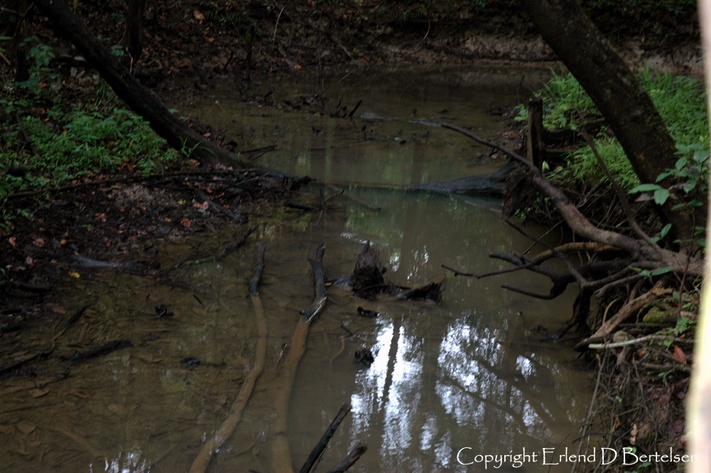
广布于秘鲁、厄瓜多尔和巴西的亚马孙河流域西部,包括多条上游支流和索利蒙伊斯河。栖息于森林溪流,底部有砂、泥、落叶与倒枝。
饲养环境
细砂是较理想选择,圆润砾石也可使用,但须保持清洁。提供一些遮蔽,其余装饰可灵活安排,同时保留群体游动空间。
食性与喂食
杂食,可吃下沉干饲料,也接受红虫、水蚯蚓等小型活饵或冷冻饵。食物保持多样,不能期待它只靠其他鱼剩下的食物生存,更不能代替水缸清洁。
习性与混养
性情温和且喜欢同伴,至少四至六条饲养。它有相当一部分时间在离底的水层活动,经常形成中层小群。
雌雄区分
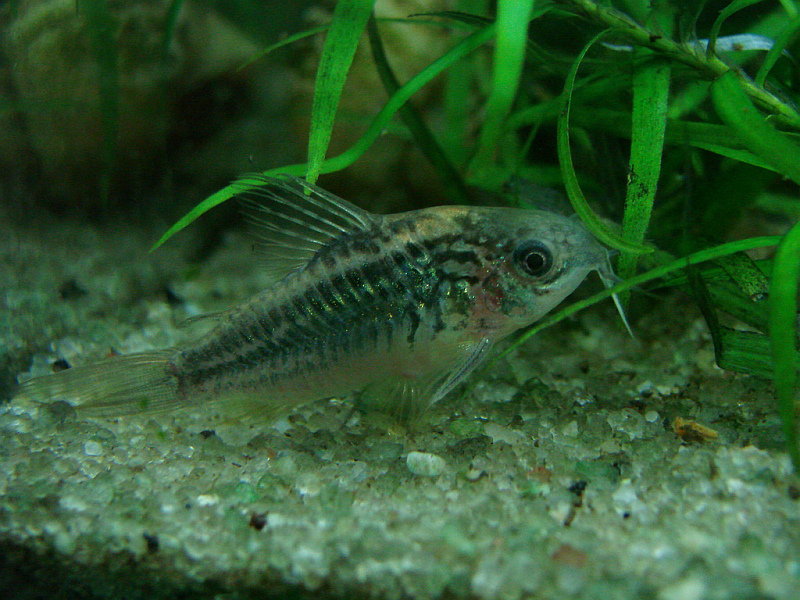
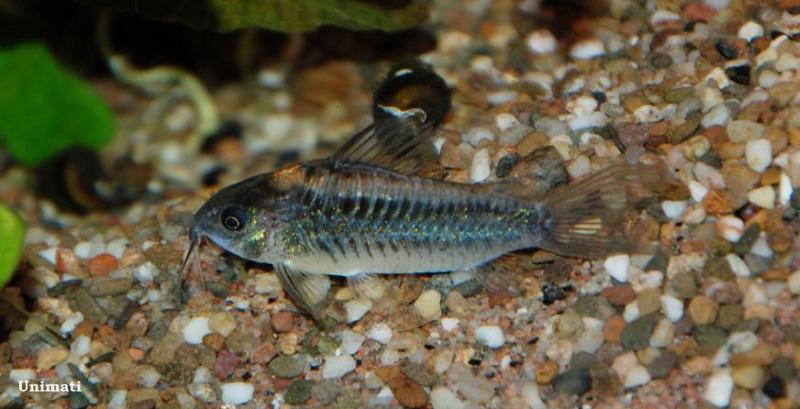
雌鱼一般更大、更圆宽,怀卵后尤其明显;雄鱼花纹通常更浓,身体与背鳍上的深色部分占比更大。
繁殖
可采用常见鼠鱼繁殖方式,尽量以两雄配一雌,先养好亲鱼状态。雌鱼明显怀卵后,较凉新水与加强充氧、水流可作刺激。通常把卵黏在玻璃上,也应提供细叶植物或产卵拖把作选择。
产后移走成鱼或将卵分开孵育,保持水质一致、含氧充足并注意霉卵。通常三四天孵化,卵黄消耗完后可吃微虫或丰年虾无节幼体。薄砂底似乎比完全裸底育苗更有利,但仍应保持干净。
补充说明
与多种花纹相近的鼠鱼同属一个非正式近似群,其中部分编号鱼身份未定,不能仅凭相似斑纹合并物种。偶尔上浮吞气是辅助呼吸,搬动时注意胸鳍硬刺。
图片
图片来自 SeriouslyFish,版权归各摄影者所有。
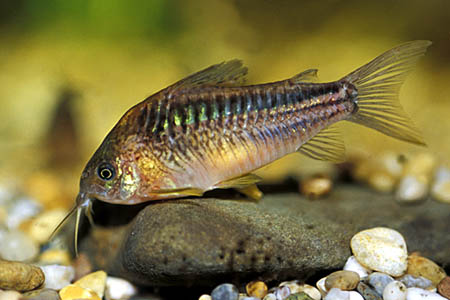
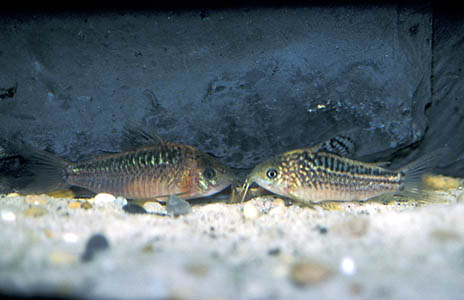
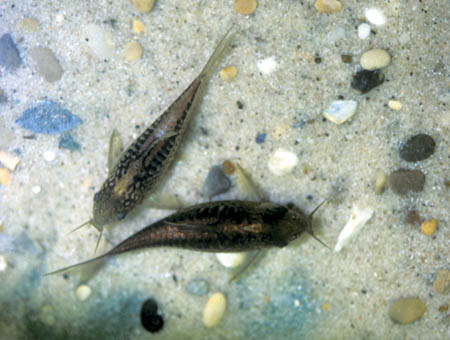
English
Overview
Gastrodermus elegans is a social cory that often leaves the floor to gather in midwater. This behavior makes it more than a bottom-level presence in a community aquarium. Keeping a group and providing its own food ration allow that activity to be appreciated.
Distribution & habitat
Its western Amazon range covers Peru, Ecuador, and Brazil, including numerous tributaries and the Solimões. Forest streams with sand, mud, fallen branches, and leaf litter provide habitat.
Aquarium setup
Choose fine sand or clean, rounded gravel. Include secure retreats, but leave swimming space for the group. Other aspects of decoration are flexible.
Diet & feeding
An omnivorous menu can include sinking prepared food, bloodworms, aquatic worms, and other small live or frozen offerings. Feed a varied ration deliberately. Scraps from tankmates do not provide a dependable diet, and the fish are not a substitute for cleaning.
Behaviour & compatibility
Keep at least four to six of this peaceful species. A substantial amount of time may be spent above the substrate, with loose groups frequently forming in midwater.
Sexual dimorphism
Females tend to be larger and fuller, especially before laying. Males usually show stronger patterning and a greater amount of dark pigment on the body and dorsal fin.
Breeding
A ratio of about two males to each female can be used. Cooler replacement water, greater aeration, and increased circulation may stimulate females that are already carrying eggs. Glass is a common laying surface, but fine foliage and spawning mops provide alternatives.
Separate adults and eggs after spawning. Incubation water should match the breeding aquarium and remain well oxygenated, with fungal losses monitored. Eggs generally hatch after three or four days. Once yolk has been absorbed, offer microworms or newly hatched brine shrimp. Fry appear to fare better over a thin sand layer than in an entirely bare aquarium, provided cleanliness is maintained.
Notes
An informal group of similar-looking corys contains several unresolved C- and CW-numbered forms. Similar patterning alone therefore does not establish identity. Occasional surface gulps reflect air breathing; pectoral spines require care during handling.
来源
- https://www.seriouslyfish.com/species/gastrodermus-elegans(抓取于 2026-10-10)
gastrodermus-elegans · 文件: data/species/gastrodermus-elegans.md · 状态: 草稿