食蚊鱼 · Western Mosquitofish
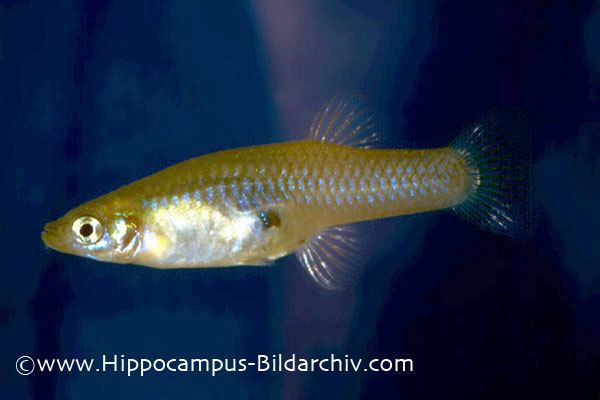
概要
| 字段 | 值 |
|---|---|
| 类别 | 鱼 |
| 学名 | Gambusia affinis |
| 别名 | 大肚鱼、白头婆、山坑鱼、食蚊魚、白頭婆(香港)、大肚魚(香港)、山坑魚(香港) |
| 分类 | 鳉形目 Cyprinodontiformes › 花鳉科 Poeciliidae › Gambusia |
| 水体 | 淡水 |
| 成体体长 | 4 cm |
| 饲养难度 | 入门 |
| 外部数据 | seriouslyfish gambusia-affinis;fishbase 3215 |
| 原产地 | 墨西哥、美国南部 |
| 食性 | 杂食 |
| 繁殖方式 | 卵胎生 |
水质参数
| 参数 | 耐受范围 | 最适范围 | 单位 |
|---|---|---|---|
| 水温 | 18–27 | — | °C |
| pH | 6–8 | — | — |
| 总硬度 | 5–30 | — | dGH |
概述
食蚊鱼(Gambusia affinis)繁殖快、适应力强,但会抢食、欺负小鱼和咬鳍,通常以单养更合适。它虽然吃蚊子的水生幼体,也会捕食其他动物,不能把放流当作无害的控蚊办法。
分布与栖息地
原产墨西哥和美国南部。因控蚊用途被广泛引入,超过 60 个国家有种群记录,这些并非原生分布。
在原产区常见于静水或缓流水体的浅岸带,周围水草密集,部分地区也进入半咸水。
饲养环境
过滤宜柔和,密植水草既能减轻胆怯,也给鱼苗提供躲藏处。单对可从约 30 × 20 × 20 cm、12.5 L 的小缸起步,但多雄间仍会发生争执,不能把单对的空间直接套给大群体。
食性与喂食
属于杂食鱼,多数常见鱼食都能接受。丰年虾、水蚤等小型活饵或冷冻饵很受欢迎,应在日常食谱中占一定比例。
习性与混养
不适合作为普通混养缸的温和成员。它竞争食物积极,会压迫较小同伴,并有明显咬鳍行为。建议同种专缸;即使单养,多条雄鱼仍可能经常争吵。它会吃其他鱼的卵和幼鱼,也会追食自己的后代。
雌雄区分
雄鱼明显小于雌鱼,臀鳍特化为交接器。
繁殖
雌雄同养时容易持续繁殖,在适用水质范围内无需特殊触发。妊娠约 4 周,每胎约 10~100 条。要提高存活率,可将怀孕雌鱼移至独立育苗缸,产后再移回主缸。
幼鱼出生后能吃丰年虾无节幼体、微虫和粉碎薄片。雌鱼出生数周就可能参与繁殖,一年可产数百条幼鱼,饲养前应考虑后代数量与安置。
补充说明
本种过去曾与 Gambusia holbrooki 混为一谈。雄性交接器前缘是否具锯齿是区别之一:本种没有,后者具有;背鳍鳍条通常分别为 6 条和 7 条,后者雄鱼一般也有更多深色斑点。
广泛引入食蚊鱼可能损害当地生态,因为它也大量捕食小型甲壳动物、鱼卵及幼鱼。吃蚊幼体并不代表其控蚊效果一定优于当地原生鱼。
图片
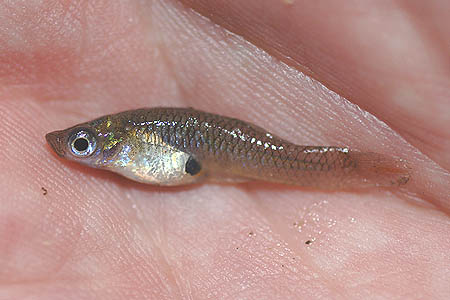
图片来自 SeriouslyFish,版权归各摄影者所有。
English
Overview
Rapid reproduction and toughness make Gambusia affinis easy to maintain, but they do not make it an easy community companion. Food stealing, fin damage, and pressure on smaller fishes favor a dedicated aquarium. Mosquito consumption also does not make release ecologically harmless.
Distribution & habitat
Its native range is Mexico and the southern United States. Introductions, largely for mosquito control, have established populations in more than 60 countries.
Natural habitats commonly include shallow, densely vegetated margins of still or slow water. Some populations also occupy brackish conditions.
Aquarium setup
Use gentle filtration and substantial planting. Cover helps fish settle and gives newborns refuge. A single pair can be maintained in approximately 30 × 20 × 20 cm, or 12.5 L, but that allowance should not be extrapolated to larger groups, especially groups containing multiple males.
Diet & feeding
This omnivore accepts a broad range of aquarium foods. Include a substantial live or frozen component, with small items such as Artemia and Daphnia particularly well received.
Behaviour & compatibility
A general community is a poor choice. Strong feeding competition can leave smaller companions intimidated, and fin nipping is a significant concern. Even a species-only group may show frequent disputes between males.
Eggs and young of other fishes are prey, and adults also pursue their own offspring.
Sexual dimorphism
The much smaller male has an anal fin modified into a gonopodium.
Breeding
Mixed-sex groups reproduce readily without special conditioning triggers, provided conditions remain within the established ranges. Pregnancy lasts about four weeks, producing roughly 10–100 fry. A separate nursery for a gravid female, followed by her return after delivery, improves protection from adult predation.
Newborns accept Artemia nauplii, microworms, and powdered flakes. Females can mature within weeks and produce hundreds of offspring annually, so space and future homes should be considered before starting a breeding group.
Notes
Historical identification sometimes combined this species with Gambusia holbrooki. The male's gonopodium lacks the serrated leading edge found in that relative. Dorsal-ray counts are usually six here and seven in G. holbrooki, whose males also tend to carry more dark spotting.
Introductions can damage native ecosystems through predation on small crustaceans, eggs, and fry. Feeding on mosquito larvae and pupae does not establish superior control compared with native fishes.
来源
- https://www.seriouslyfish.com/species/gambusia-affinis(抓取于 2026-10-10)
gambusia-affinis · 文件: data/species/gambusia-affinis.md · 状态: 草稿