多带小孔鮰 · Diamond Killifish
概要
| 字段 | 值 |
|---|---|
| 类别 | 鱼 |
| 学名 | Fundulus xenicus |
| 别名 | 异域小孔鮰、多帶小孔鮰、異域小孔鮰、Diamant-Killifisch、Adinia multifasciata |
| 分类 | 鳉形目 Cyprinodontiformes › 底鳉科 Fundulidae › Fundulus |
| 水体 | 淡水 |
| 原产地 | 美国 |
| 成体体长 | 5 cm |
| 饲养难度 | 入门 |
| 群居方式 | 群游 |
| 外部数据 | seriouslyfish adinia-xenica;fishbase 3166 |
| 食性 | 杂食 |
| 繁殖方式 | 产卵 |
水质参数
| 参数 | 耐受范围 | 最适范围 | 单位 |
|---|---|---|---|
| 水温 | 21–35 | — | °C |
| pH | 7.5–9 | — | — |
| 总硬度 | 10–30 | — | dGH |
概述
多带小孔鮰(Fundulus xenicus)来自墨西哥湾北岸,是适合单种群养的小型鳉鱼。它长期处在淡水中状态会变差,不能按一般淡水鳉鱼处理;合适盐度、雌雄比例与繁殖季遮蔽是养护重点。
分布与栖息地
原生于美国佛罗里达南端至得克萨斯州的墨西哥湾沿岸。常在不到 30 厘米深的潟湖、盐沼、孤立水潭和小型溪流中活动,喜欢沉水植物或丝状藻密集处。多生活在咸淡水,也能耐受很高盐度;长期淡水暴露似乎会导致血液盐分下降。
饲养环境
一对或小群可参考 60 × 30 厘米底面,更大群体应增加空间。布置可以简单,但必须大量分隔视线,提供细毛线拖把、莫丝、金鱼藻或丝状藻,既给产卵位置,也让雌鱼和弱势雄鱼躲开强势雄鱼。
可裸底,也可用惰性砂或砾石,过滤不必很强。需要用海盐按每升水 3–10 克配成咸淡水,不能把长期纯淡水作为默认环境。
食性与喂食
杂食,从水草和水面取食藻类、花粉、植物组织及多种小型无脊椎。人工通常吃干饲料,同时规律补丰年虾、水蚤、红虫等活冷冻饵;缸内没有活藻时,可选含螺旋藻的优质干粮。幼鱼比成鱼更偏动物性食物,但仍应按嘴的大小调整饵料。
习性与混养
不适合普通混养,单种群体更便于满足水质和繁殖需求。雌雄比例宜每雄配两三雌,繁殖期强势雄鱼可能追压其他个体,必须让受追逐的鱼有独立退避处。
雌雄区分
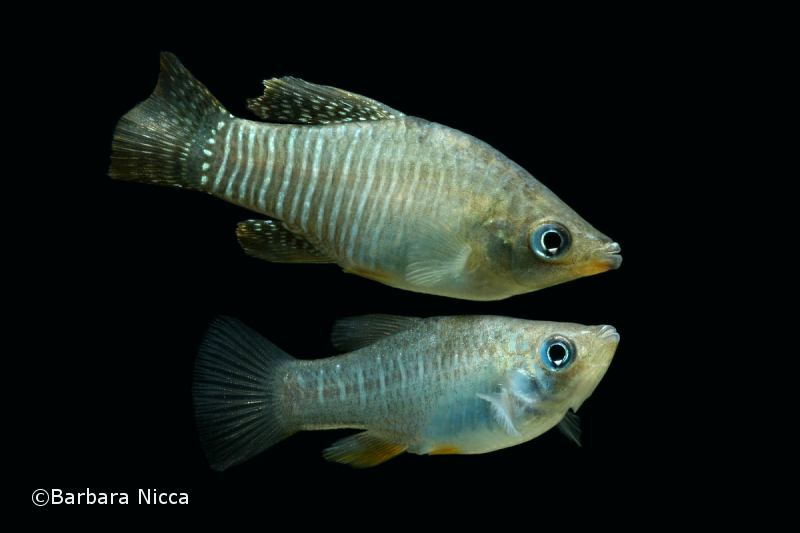
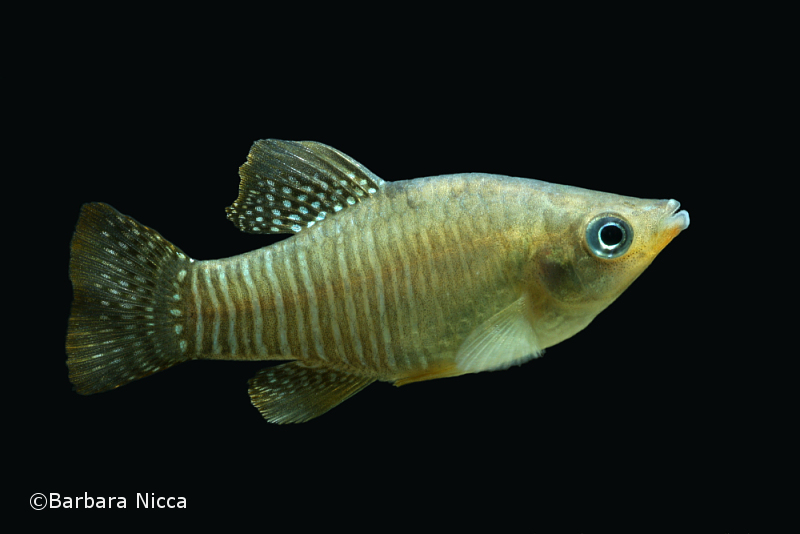
成年雄鱼通常更大、颜色更鲜明,成熟时背鳍、臀鳍、尾鳍延长,臀鳍及其上后方身体区域还出现骨质接触器。
繁殖
条件合适时人工繁殖通常不难,属于分批持续产卵型,3–9 月常在下午逐粒产卵,单雌一天可达约三十粒。成鱼常吃卵和幼鱼,应每天检查材料收卵,或在产卵后分开亲鱼。
可小心取下带卵的一小段产卵材料,避免直接夹卵,也可每隔几天整体更换材料。将卵移入水质与温度相同的容器,通常 9–11 天孵化,自由游动后即可吃丰年虾无节幼体或微虫。
图片
图片来自 SeriouslyFish,版权归各摄影者所有。
English
Overview
Native to the northern Gulf Coast, Fundulus xenicus is best maintained as a species group. Prolonged freshwater exposure is poorly tolerated. Appropriate salinity, sex ratio, and refuges during breeding are central to its care.
Distribution & habitat
The native range follows the Gulf Coast from southern Florida to Texas. Shallow lagoons, marshes, isolated pools, and small streams are used, often under 30 cm deep and densely vegetated. Brackish water is usual and very high salinity is tolerated, while prolonged freshwater exposure appears to deplete blood salts.
Aquarium setup
A 60 by 30 cm footprint can house a pair or small group; larger groups need correspondingly more space. Break up sightlines with fine spawning mops, moss, hornwort, or filamentous algae. These provide egg sites and protection for females and subordinate males.
A bare base or inert substrate is acceptable, with gentle filtration. Marine salt at 3–10 g/L is required; prolonged plain freshwater maintenance is unsuitable.
Diet & feeding
It grazes a broad mixture of algae, pollen, plant material, and small invertebrates from vegetation and the surface. Dry foods are usually accepted, with regular live or frozen Artemia, daphnia, or bloodworms. A spirulina-containing product can help where live algae are absent. Juveniles are more carnivorous than adults.
Behaviour & compatibility
Species-only housing makes its water requirements and breeding behavior easier to manage. Use two or three females per male. Dominant males can harass others during breeding, making unobstructed access to refuges essential.
Sexual dimorphism
Males tend to be larger and more colorful. At maturity they develop longer unpaired fins and bony contact organs around the anal fin and adjacent body region.
Breeding
When conditions are suitable, breeding is usually straightforward. Females lay individual eggs repeatedly from March to September, commonly in the afternoon, with daily output sometimes around thirty. Adults eat eggs and fry, so collect eggs regularly or separate breeders after spawning.
Move small egg-bearing pieces of medium without gripping the eggs, or replace whole mops every few days. Match incubation water chemistry and temperature to the breeding aquarium. Eggs generally hatch after 9–11 days; free-swimming fry accept Artemia nauplii or microworms.
来源
- https://www.seriouslyfish.com/species/adinia-xenica(抓取于 2026-10-10)
fundulus-xenicus · 文件: data/species/fundulus-xenicus.md · 状态: 草稿