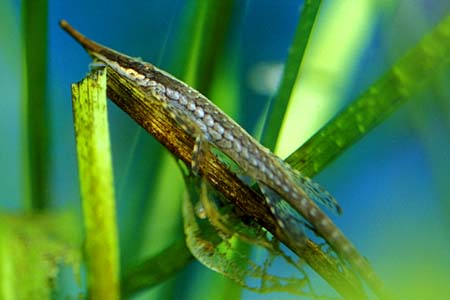
饰纹管吻鲶 · Twig Catfish
概要
| 字段 | 值 |
|---|---|
| 类别 | 鱼 |
| 学名 | Farlowella vittata |
| 别名 | 飾紋管吻鯰、Farlowella agustini、Farlowella angosturae、Farlowella guaricensis、Farlowella roncallii |
| 分类 | 鲶形目 Siluriformes › 骨甲鲶科 Loricariidae › Farlowella |
| 水体 | 淡水 |
| 原产地 | 哥伦比亚、委内瑞拉 |
| 成体体长 | 15 cm |
| 饲养难度 | 入门 |
| 最小水体 | 81 L |
| 最小缸长 | 90 cm |
| 群居方式 | 独居 |
| 性情 | 温和 |
| 外部数据 | seriouslyfish farlowella-vittata;fishbase 50537 |
| 食性 | 草食 |
| 繁殖方式 | 附着产卵 |
水质参数
| 参数 | 耐受范围 | 最适范围 | 单位 |
|---|---|---|---|
| 水温 | 24–27 | — | °C |
| pH | 6–7 | — | — |
| 总硬度 | 3–10 | — | dGH |
概述
饰纹管吻鲶(Farlowella vittata)形似细树枝,常静止贴在枝木上,移位多为短距离跳动。它对水质恶化和变化非常敏感,需要成熟且有生物膜、藻类或落叶的缸,不能只因活动少就视为容易饲养。
分布与栖息地
原生哥伦比亚、委内瑞拉奥里诺科河流域,栖息缓流溪河岸边的沉水植物、枯叶、枝条和交错根系之间。
饲养环境
约 90 × 30 × 30 厘米可供饲养,沙底、圆滑石块、大量枝木与弱光能营造合适环境,水草缸也可。水必须含氧充分,带轻微水流,维护保持稳定;安定后尽量不要反复搬动。
食性与喂食
主食为植物材料,提供黄瓜、羽衣甘蓝、菠菜及藻片等,动物性活冷冻饵只能偶尔补充。它会不断刮食叶、木、石、底床与玻璃上的硅藻和常见绿藻,但不吃所有问题藻,例如黑毛藻类。
习性与混养
极温和而退缩,容易被较大或活跃鱼抢食,不适合随意加入普通混养缸。伙伴宜小且不争食;雄鱼可能轻度争地盘,通常很少造成损伤。
雌雄区分
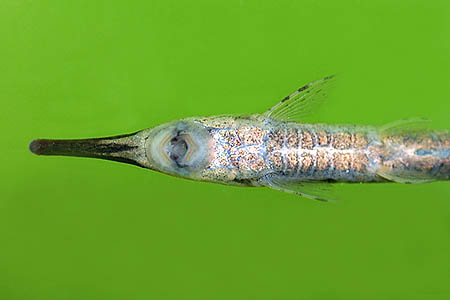
雄鱼吻部更宽,成熟后长有成排齿状棘;雌鱼没有这些棘。
繁殖
产卵不算难,育苗却困难。可六尾以上幼鱼自然选配,以营养丰富植物饵调理,夜间常在玻璃等垂直表面产卵。雄鱼扇水护卵,约六至十天孵化,也可能接纳其他雌鱼添加的卵。幼鱼卵黄很小,几天即耗尽,之后易饿死,需要随时有大量柔软可消化的植物材料;可用浸软绿叶、长藻石或干落叶。即使水质和饵料良好,早期仍可能高损耗。转移育苗时水质应与原缸一致。
补充说明
它常被误作其他同属种,较长而细的吻是辨认线索之一。对刺激性化学物质和药物敏感,出现异常停在近水面且吻部露水时,应立即排查并改善水质。寿命据认为可达十五年,但不能由此保证每尾的寿命。
图片
图片来自 SeriouslyFish,版权归各摄影者所有。
English
Overview
The sticklike Farlowella vittata often remains motionless against wood, moving between surfaces in short hops. Low activity does not mean simple care: stable clean water and an established supply of biofilm, algae, or leaves are essential.
Distribution & habitat
It occupies the Orinoco basin of Colombia and Venezuela, among submerged vegetation, leaves, sticks, and tangled roots along gently flowing margins.
Aquarium setup
An aquarium around 90 by 30 by 30 cm can be suitable. Sand, smooth rocks, branches, and subdued lighting create useful habitat, though planted setups also work. Maintain oxygen-rich water with a little current and consistently high water quality. Once settled, avoid unnecessary relocation.
Diet & feeding
Use vegetables and plant-based prepared foods as the main diet, with only occasional small animal-food supplements. It grazes leaves, wood, rocks, substrate, and glass, consuming diatoms and common green algae. This does not extend to troublesome brush or beard algae.
Behaviour & compatibility
Its retiring, peaceful nature makes food competition a greater concern than aggression. Avoid larger or vigorous feeders. Males may dispute space, but serious damage is unusual when suitably housed.
Sexual dimorphism
Mature males have broader snouts with rows of odontodes, absent in females.
Breeding
Obtaining eggs is easier than raising the fry. Start with six or more juveniles, maintain clean water, and condition with nutritious greens. Spawning usually occurs at night on vertical surfaces, often glass. The male fans the eggs for six to ten days until hatching and may accept additional clutches. Small yolk reserves disappear within days, leaving fry vulnerable to starvation. They need constant access to soft digestible plant material, algae-coated rocks, or suitable dried leaves. Early losses can remain high despite careful feeding. Any separate rearing tank must contain water matching the breeding aquarium.
Notes
Misidentification is common; its long slender snout is a useful clue. Sensitivity to chemicals can cause fish to rest near the surface with the snout exposed, calling for prompt water-quality attention. A lifespan reaching fifteen years has been suggested, rather than established for every individual.
来源
- https://www.seriouslyfish.com/species/farlowella-vittata(抓取于 2026-10-10)
farlowella-vittata · 文件: data/species/farlowella-vittata.md · 状态: 草稿