绿腹丽鱼 · Green Chromide
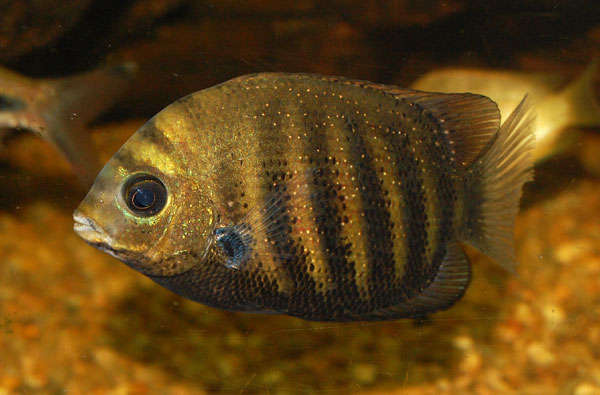
概要
| 字段 | 值 |
|---|---|
| 类别 | 鱼 |
| 学名 | Etroplus suratensis |
| 别名 | 綠腹麗魚、Chaetodon suratensis、Chaetodon caris、Etroplus meleagris |
| 分类 | 慈鲷目 Cichliformes › 慈鲷科 Cichlidae › Etroplus |
| 水体 | 半咸水 |
| 原产地 | 印度、斯里兰卡 |
| 成体体长 | 35 cm |
| 饲养难度 | 中等 |
| 群居方式 | 群游 |
| 性情 | 温和 |
| 外部数据 | seriouslyfish etroplus-suratensis;fishbase 4681 |
| 食性 | 杂食 |
| 繁殖方式 | 附着产卵 |
| 特征 | 翻底砂: 是;吃小鱼: 是 |
水质参数
| 参数 | 耐受范围 | 最适范围 | 单位 |
|---|---|---|---|
| 水温 | 20–30 | — | °C |
| pH | 7–8.5 | — | — |
| 总硬度 | 10–20 | — | dGH |
概述
绿腹丽鱼(Etroplus suratensis)是能适应淡水和汽水的较大型慈鲷,具有群居需求,长期饲养需要非常宽敞的设施。平时相对温和,繁殖后则会守护产卵区域及幼鱼。
分布与栖息地
通常认为原产印度半岛和斯里兰卡,以河口、沿海潟湖及河流下游的汽水环境为主,也见于淡水湖泊。部分内陆和东海岸种群可能与人工放养有关;马来半岛和新加坡的种群属于引入。不能把所有分布记录都当作自然原产范围。
饲养环境
淡水或汽水均可饲养,但应避免酸性条件。砂底、岩石和沉木可提供适当环境结构。它不耐有机污染积累,应每周换水约四分之一至一半,保持水质清洁。选择缸体时要同时考虑成鱼体型和群体数量,普通小型混养缸并不合适。
食性与喂食
食物范围较广,会刮取附着生物和丝状藻,胃内容物也有动物、植物材料及碎屑。以优质配合饲料搭配小型活饵、冷冻饵料,部分干粮应含较多植物成分,可补充碎豌豆等。不要仅因它喜欢红虫、丰年虾等,就把食谱长期改成纯动物性。
习性与混养
非繁殖期通常较温和,但很小的鱼仍有被捕食的风险。建议至少八条形成群体;成熟后有等级关系,数量太少可能让弱势个体反复受欺负。可配需求一致的群居陪游鱼,避开强烈领地型伙伴及需要软酸水的物种。
雌雄区分
同龄雄鱼往往较大,非繁殖期外观判别较难。繁殖雄鱼颜色加强,眼后至鳃盖之间可能出现黑纹;雄鱼生殖突较细长尖锐,雌鱼则较宽圆,临产时发红、膨大并形成产卵管。
繁殖
繁殖期临时配对,在岩石或缸壁等硬表面产卵,双亲共同护卵育幼。宜从群体中让其自行选伴。卵通过短丝附着,亲鱼扇水、清洁卵,并在周围挖多个育幼坑。
孵化约需四十八至七十二小时,再过三至四天自由游动。幼鱼可立即吃丰年虾幼体,留在亲鱼身边时,也会在开始游动后的早期啄食亲鱼体表黏液。若同伴或亲鱼反复吃卵,可连同附卵石块转至使用亲鱼缸水的独立容器,维持卵面水流,发现发霉卵及时移除。
图片
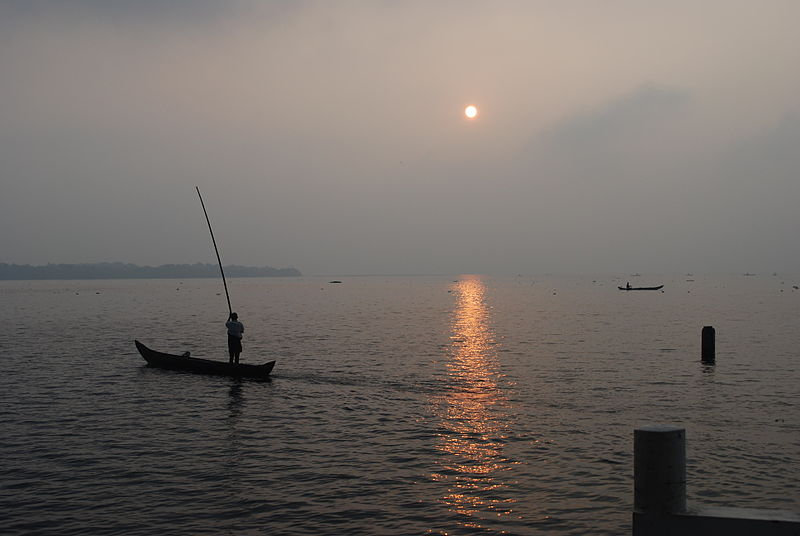
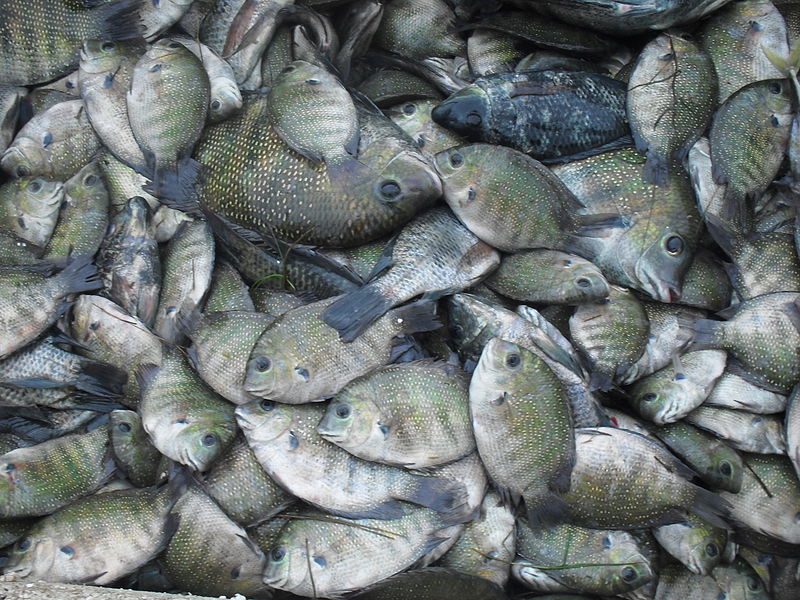
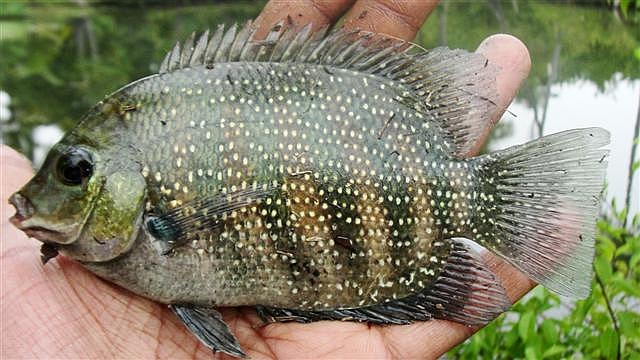
图片来自 SeriouslyFish,版权归各摄影者所有。
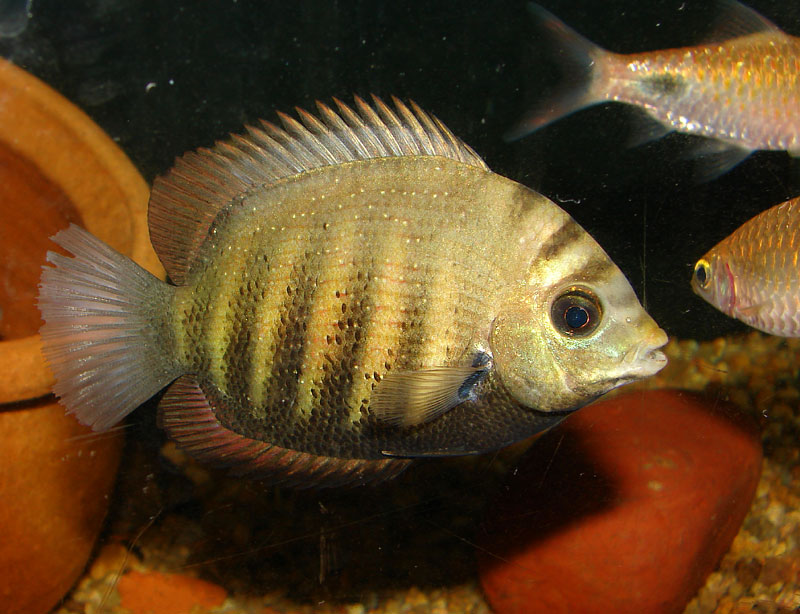
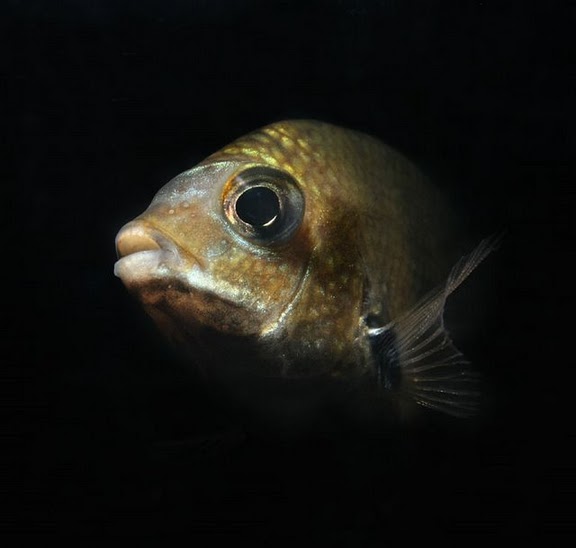
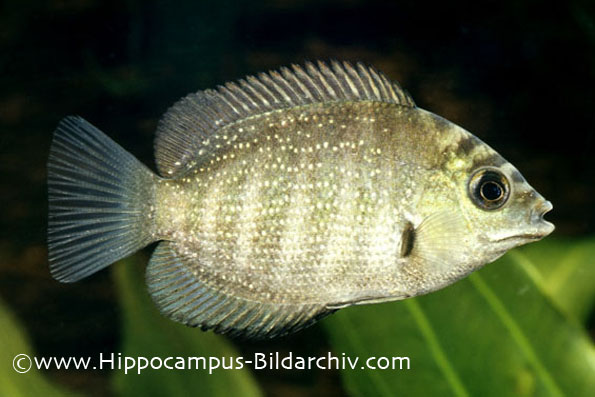
English
Overview
Etroplus suratensis, the green chromide, is a large social cichlid capable of living in fresh or brackish water. A substantial group requires exceptionally spacious accommodation. Its generally peaceful behavior changes when a pair begins defending eggs or young.
Distribution & habitat
Peninsular India and Sri Lanka are generally accepted as its native range. Estuaries, coastal lagoons, and lower rivers are typical, with additional freshwater occurrences. Some inland and eastern Indian populations probably reflect stocking. Established populations in the Malay Peninsula and Singapore are introduced, so occurrence alone does not demonstrate native status.
Aquarium setup
Either fresh or brackish conditions can work, provided acidic water is avoided. Sand, rocks, and branching wood supply useful structure. Prevent organic waste from accumulating and replace roughly one-quarter to one-half of the water each week. Space planning must account for both adult size and the need for a group.
Diet & feeding
Natural grazing includes attached organisms and filamentous algae, while stomach samples contain animal material, plants, and detritus. Combine quality prepared foods with small live or frozen items. Include plant-rich preparations and supplements such as chopped peas. Enthusiastic acceptance of bloodworms or Artemia should not lead to a wholly animal-based menu.
Behaviour & compatibility
Very small fishes may be eaten despite its otherwise fairly gentle disposition outside breeding. Keep at least eight individuals; mature fish establish rank, and small groups may concentrate aggression on weaker members. Compatible shoaling companions can act as dithers. Avoid aggressive territorial fishes and species requiring soft acidic water.
Sexual dimorphism
Males tend to exceed females of the same age in size, but nonbreeding fish are difficult to distinguish. Breeding males become more intensely marked, sometimes showing dark stripes behind the eyes. Their genital papilla is narrower and more pointed; females develop a broader, swollen reddish egg-laying tube.
Breeding
Temporary pairs lay attached eggs on a firm surface such as rock or glass and share parental duties. Allow fish to choose partners from a group. Both parents clean and fan the clutch and excavate nearby nursery depressions.
Hatching takes around forty-eight to seventy-two hours, followed by another three to four days before swimming. Fry accept Artemia nauplii immediately and may also graze parental mucus early in the swimming stage. If eggs are repeatedly lost, the spawning rock can be transferred to a separate container filled with parental-tank water. Maintain circulation across the clutch and remove visibly fungused eggs.
来源
- https://www.seriouslyfish.com/species/etroplus-suratensis(抓取于 2026-10-10)
etroplus-suratensis · 文件: data/species/etroplus-suratensis.md · 状态: 草稿