Etroplus canarensis · Canara Pearlspot Cichlid
概要
| 字段 | 值 |
|---|---|
| 类别 | 鱼 |
| 学名 | Etroplus canarensis |
| 分类 | 慈鲷目 Cichliformes › 慈鲷科 Cichlidae › Etroplus |
| 水体 | 淡水 |
| 原产地 | 印度 |
| 成体体长 | 11 cm |
| 饲养难度 | 中等 |
| 最小水体 | 243 L |
| 最小缸长 | 120 cm |
| 群居方式 | 群游 |
| 性情 | 温和 |
| 外部数据 | seriouslyfish etroplus-canarensis;fishbase 25222 |
| 领地性 | 是 |
| 繁殖方式 | 附着产卵 |
水质参数
| 参数 | 耐受范围 | 最适范围 | 单位 |
|---|---|---|---|
| 水温 | 22–32 | — | °C |
| pH | 6–7.5 | — | — |
| 总硬度 | 1–10 | — | dGH |
概述
Etroplus canarensis 是印度西南部的淡水慈鲷,体侧竖纹随成熟和繁殖状态变化。它需要富氧淡水,不能照搬耐盐近亲的半咸水饲养方式。成群饲养和长期稳定维护比单纯追求显色更重要。
分布与栖息地
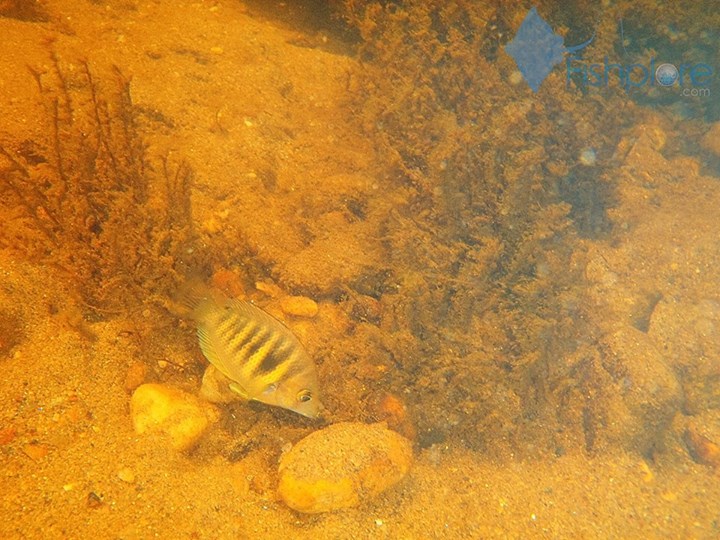
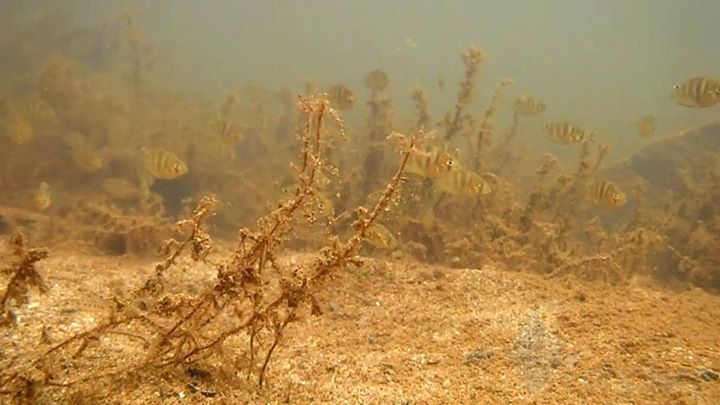
似乎局限于卡纳塔克邦南部的库马拉达拉—内特拉瓦蒂河水系。栖息地随季风发生明显变化,雨季水深、水流和浑浊度增加,旱季可见较清、流动较缓的石质水段。
农业污染、采砂等活动对这些水域形成压力。
饲养环境
缸底至少 120 × 45 cm,使用水磨石、砂砾和根枝组成河流环境。多数水草可能被啃食,固定在石木上的强健种类更可能保留下来。
保持水体清洁,每周换水 30%–50%。不必强流冲刷,但溶氧必须充足;日常温度宜取适宜范围中部,并考虑适度季节变化。
食性与喂食
野外观察显示它可能是广食者,常在坚硬表面刮食附着生物及丝状藻。缸中可用优质配合饲料,搭配红虫、水蚯蚓、丰年虾或蚊幼虫等小型活饵和冷冻饵,一部分饲料宜含较多植物成分,也可提供切碎豌豆。
习性与混养
非繁殖期总体温和,避免攻击性强、领地意识强或要求更硬水的鱼,其他慈鲷也不宜混入。最微小的鱼仍有捕食风险。
建议至少 8 尾,成熟后会出现等级关系。数量太少可能让弱势鱼承受过多追逐,或使整个群体始终紧张。
雌雄区分
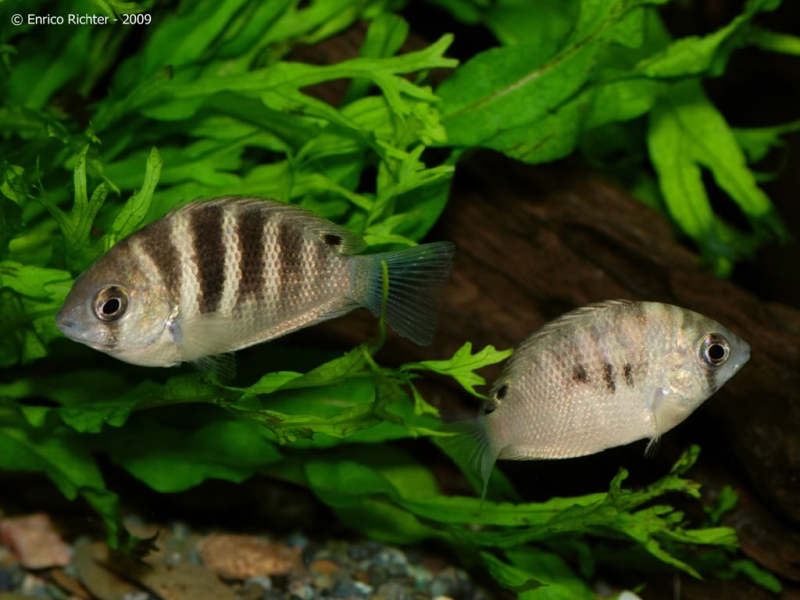
成年雄鱼通常略大、体形稍厚,差别不算显著。
繁殖
双亲底床产卵,繁殖期形成较松散的临时配对。性成熟约需 24 个月,养幼鱼要有耐心。自然繁殖被认为多在季风退水后的较凉月份,模拟季节降温有时能诱发产卵。
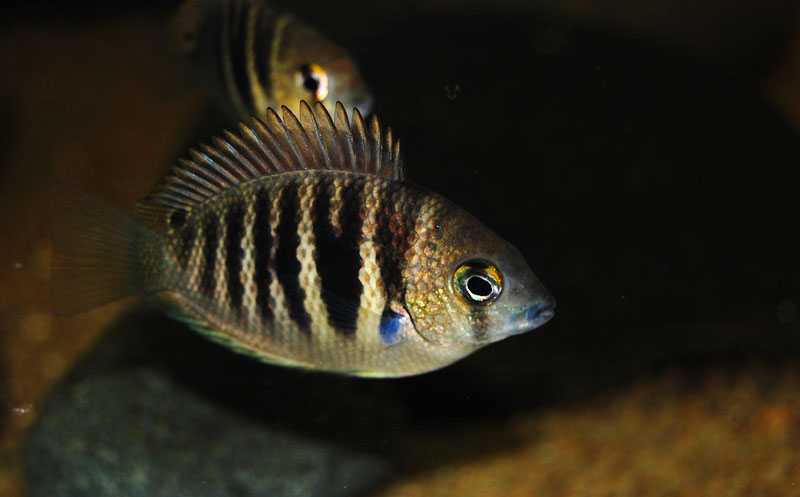
可先在正常适宜范围的较暖端稳定饲养,再以较凉水进行每日数次、每次约 20%–25% 的换水,保持变化受控。求偶鱼的竖纹转为深色块,头部前方出现条纹;配对鱼选择并保卫产卵点。
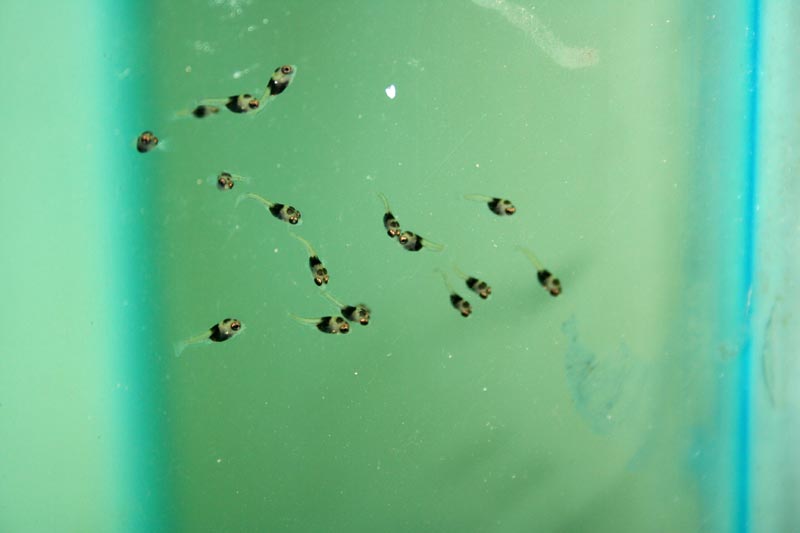
卵通过短丝附着在受遮蔽的石面,两亲共同防卫,雄鱼也可能与其他雌鱼产卵。在 26.7 °C 的记录中约四天孵化,再过两三天起游。亲鱼或伙伴可能吃卵,如单独孵化,可连石移入原缸水中并保持轻柔水流经过卵面,及时移除发霉卵。起游后可喂丰年虾无节幼体。
补充说明
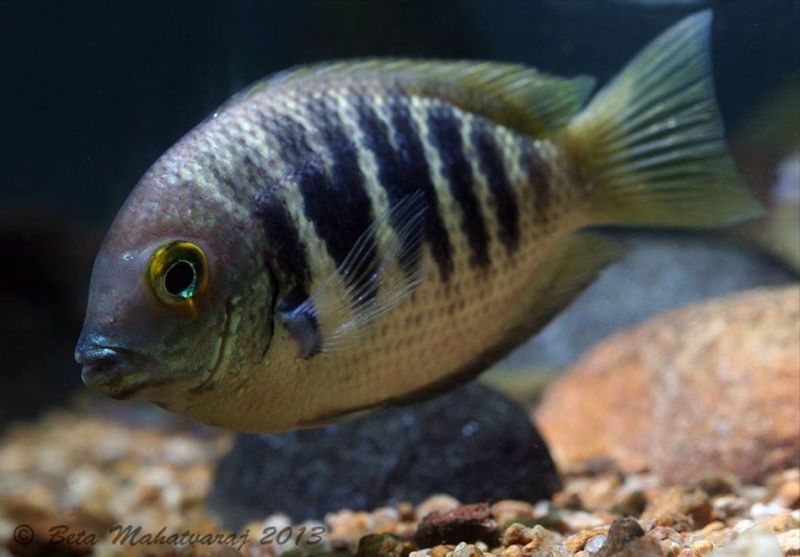
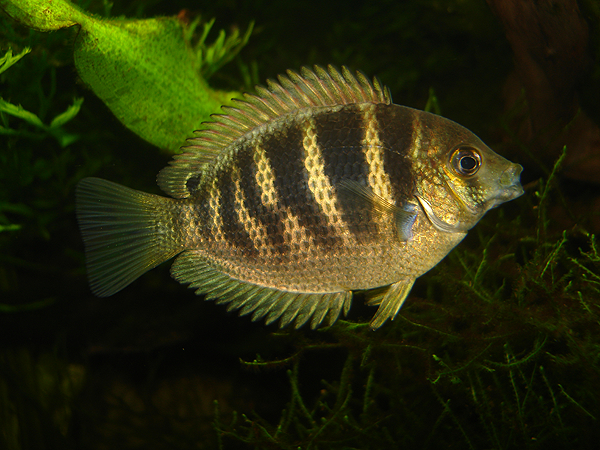
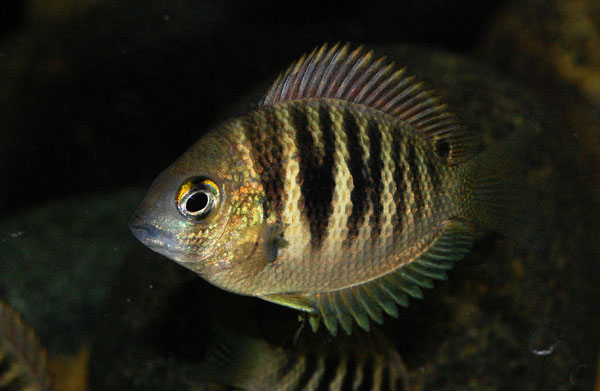
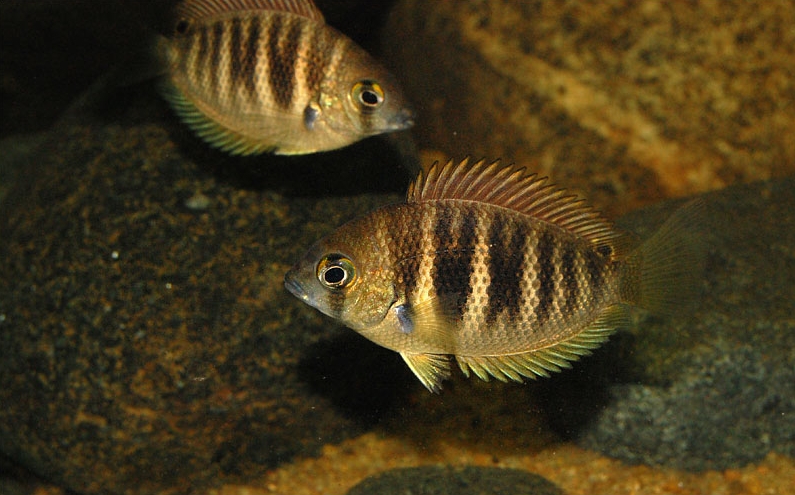
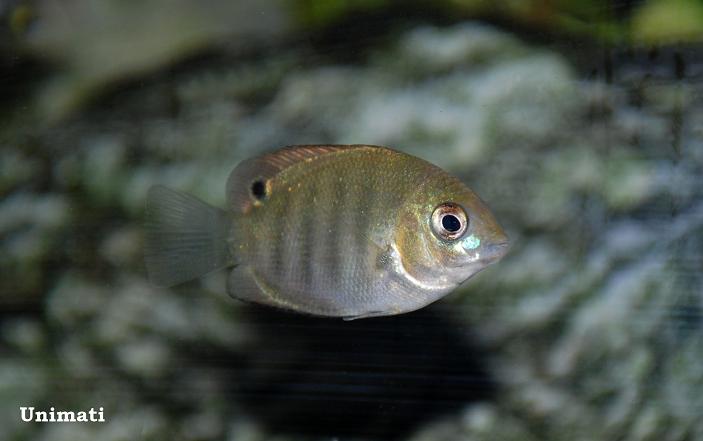
前部竖带随成熟分叉、灰褐底色及部分鳞片黄色中心,有助于与相似近亲区别。商品名不能替代物种鉴定。
图片
图片来自 SeriouslyFish,版权归各摄影者所有。
English
Overview
A freshwater cichlid from southwestern India, Etroplus canarensis changes its vertical pattern with maturity and breeding condition. Oxygen-rich fresh water is essential; the salt tolerance of related species should not be applied to it.
Distribution & habitat
It appears restricted to the Kumaradhara–Netravati system of southern Karnataka. Monsoons increase depth, current, and turbidity, while dry-season sites can have clear, gently moving water over rocks.
Agricultural pollution, sand extraction, and other human activities affect these rivers.
Aquarium setup
Provide at least a 120 by 45 cm footprint. Rounded stones, sand, gravel, and roots form a suitable river arrangement. Many plants may be eaten, although sturdy attached varieties have a better chance.
Keep water exceptionally clean with weekly changes of 30–50%. Strong current is unnecessary, but high oxygen availability matters. Routine temperature should lie toward the middle of the normal range, with some seasonal variation.
Diet & feeding
Field observations suggest generalized feeding with grazing on attached growth and filamentous algae. Offer quality prepared foods alongside small live or frozen bloodworms, tubifex, brine shrimp, and mosquito larvae. Include plant-rich dry products or chopped peas.
Behaviour & compatibility
Outside breeding, it is generally peaceful. Avoid aggressive, territorial, or harder-water companions, including other cichlids. Very tiny fish may still be consumed.
Maintain at least eight. Mature groups establish rank relationships; inadequate numbers can concentrate pressure on weaker fish or leave the whole group nervous.
Sexual dimorphism
Adult males tend to be slightly larger and heavier, without a striking external difference.
Breeding
Temporary pairs deposit eggs on substrate and provide biparental care. Maturity takes about two years. Natural spawning is thought to follow monsoon recession during cooler months, and a simulated seasonal change sometimes encourages reproduction.
After stable conditions near the warmer end of the usual range, several controlled daily changes of roughly 20–25% with cooler water can be tried. Courtship replaces body bars with a dark patch and adds frontal head bars; the pair then defends a selected site.
Eggs attach by short filaments to sheltered rock surfaces. Both adults guard, although males may also spawn with other females. At 26.7 °C, incubation took about four days, followed by swimming two or three days later. Eggs may be eaten, so separate incubation can involve moving their rock into parental tank water, directing gentle flow across it, and removing fungused eggs. Swimming fry accept brine-shrimp nauplii.
Notes
Forking anterior bars in mature fish, a gray-buff body, and yellow centers on some scales help distinguish similar relatives. Trade names alone are insufficient.
来源
- https://www.seriouslyfish.com/species/etroplus-canarensis(抓取于 2026-10-10)
etroplus-canarensis · 文件: data/species/etroplus-canarensis.md · 状态: 草稿