Esmaeilius persicus · Farsi Toothcarp
概要
| 字段 | 值 |
|---|---|
| 类别 | 鱼 |
| 学名 | Esmaeilius persicus |
| 别名 | Cyprinodon persicus、Cyprinodon blanfordii、Aphanius farsicus |
| 分类 | 鳉形目 Cyprinodontiformes › Aphaniidae › Esmaeilius |
| 水体 | 半咸水 |
| 原产地 | 伊朗 |
| 成体体长 | 6 cm |
| 饲养难度 | 中等 |
| 最小水体 | 108 L |
| 最小缸长 | 120 cm |
| 群居方式 | 群游 |
| 外部数据 | seriouslyfish aphanius-farsicus;fishbase 55335 |
| 繁殖方式 | 产卵 |
| 领地性 | 是 |
水质参数
| 参数 | 耐受范围 | 最适范围 | 单位 |
|---|---|---|---|
| 水温 | 8–32 | — | °C |
| pH | 6.5–8 | — | — |
| 总硬度 | 10–30 | — | dGH |
概述
Esmaeilius persicus 是伊朗 Maharlu 湖盆地的鳉鱼,实际生活在湖边泉流和湿地,而不是盐度极高的湖水中。它在旧记录中常见 farsicus 名称,保存来源标签有助于把不同年代的繁育记录对应起来。
分布与栖息地
原生于伊朗南部法尔斯省 Shiraz 附近的 Maharlu 封闭湖盆地,水族繁育中常见 Barm-e-shur 泉来源。
鱼生活于湖周清澈缓流的泉水,以及相连的水池、潟湖和沼泽,底部为泥,岸边常有芦苇和香蒲,水质从淡水到半咸水不等。湖面退缩时部分水道可以相连,高水位时高盐湖水反而可能淹没短水道并使其中鱼群消失。取水、污染及外来食蚊鱼竞争也曾影响其生境。
饲养环境
群养建议至少约 120 × 30 cm 底面积,使用细毛拖把、丝状藻和适宜植物形成多个遮蔽区域,兼作附卵表面,让雌鱼及弱势雄鱼避开繁殖追逐。
水中可按约 1–3 g/L 添加海水盐;莫丝、金鱼藻等细叶植物在这样的环境下可能长不好。可裸底或用惰性砂砾,过滤不必强流。气候合适时可以室外饲养并获得数小时自然光,每年应安排数月低温冬季,长期恒暖可能损害繁殖力和寿命。
食性与喂食
近亲摄食微型甲壳动物、蠕虫、昆虫幼虫及其他浮游动物,也会摄入藻与植物。干粮配合丰年虾、水蚤、红虫等活饵或冻饵,春夏频繁产卵时更需保证食物质量。缸内没有丝状藻,可使用含螺旋藻配方补充。
习性与混养
以同种、同来源群体专养,每雄配两至三雌。繁殖期行为强烈且水质需求特殊,不宜放入普通社区缸;产卵介质也应提供足够视线隔断,而不只是少量点缀。
雌雄区分
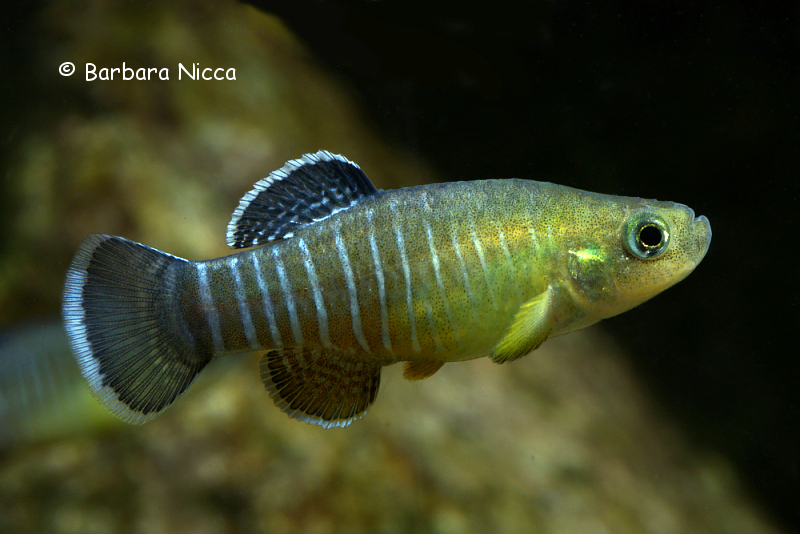
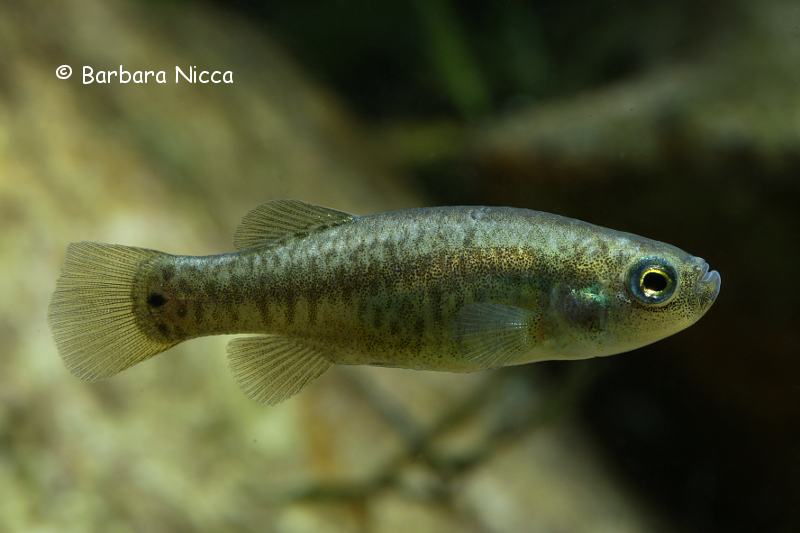
雄鱼身体更黄,后部有银色竖带,尾鳍有时具两至三条浅带,背鳍较暗且与臀鳍一样有浅色边。雌鱼更大、较素,体侧为短暗条而不是圆点,尾柄有暗斑,各鳍近透明。
繁殖
通常寿命不足三年,成熟早、繁殖投入高。四至十一月近连续分批产卵,四月和八月较旺。雄鱼形成临时领域,卵单枚或小批量排出,以细丝附在藻或其他介质上。
亲鱼可能吃卵和仔鱼,繁殖期每日检查;转移附卵材料而不直接夹卵,或每隔几天更换整束拖把。孵化容器使用与亲鱼缸一致的水温、水质,通常七至十四天孵化,自由游动的苗即可吃丰年虾无节幼体或微虫。
补充说明
farsicus 曾用来避开化石种造成的名称冲突;归入 Esmaeilius 后恢复 persicus。与 Esmaeilius sophiae 相比,雌鱼体侧的短条而非斑点是较直观的区别,雄鱼则十分相似。
图片
图片来自 SeriouslyFish,版权归各摄影者所有。
English
Overview
Esmaeilius persicus belongs to Iran's Maharlu basin but inhabits marginal springs and wetlands rather than the extremely saline lake. Older records often use farsicus. Keeping provenance labels helps connect breeding histories across those names.
Distribution & habitat
It is native to the closed Maharlu basin near Shiraz in Fars Province, southern Iran. Barm-e-shur spring is a familiar source in captive lines.
Fish occupy clear slow springs and connected pools, lagoons, and marshes over mud, with reeds or cattails along the edges. Conditions range from fresh to brackish. Falling lake levels can connect watercourses, whereas rising saline lake water can flood short channels and eliminate their fish. Water extraction, pollution, and introduced mosquitofish have also affected habitats.
Aquarium setup
Provide at least about 120 × 30 cm for a group. Fine spawning mops, filamentous algae, and suitable plants should create several sheltered areas and egg attachment surfaces, allowing females and subordinate males to evade breeding pursuit.
Use marine salt at about 1–3 g/L. Moss or hornwort may grow poorly under these conditions. A bare base or inert sand and gravel is suitable, with gentle filtration. Outdoor care and several hours of natural light can work where the climate is appropriate. Preserve a cool winter lasting several months; constant warmth may impair reproduction and longevity.
Diet & feeding
Relatives feed on tiny crustaceans, worms, insect larvae, and other zooplankton, along with algae and plant matter. Supplement dry foods with live or frozen brine shrimp, Daphnia, and bloodworms, especially through frequent spring and summer spawning. Include a spirulina-enriched formula when filamentous algae are unavailable.
Behaviour & compatibility
Maintain a dedicated group of one species and locality, with two or three females per male. Strong breeding activity and particular water requirements do not suit an ordinary community tank. Spawning material should provide substantial sight barriers rather than token decoration.
Sexual dimorphism
Males are more yellowish, with silver rear-body bars, sometimes two or three pale tail bands, and a dark dorsal fin with a pale edge like the anal fin. Larger, plain females have short dark flank bars rather than round spots, a tail-base mark, and nearly transparent fins.
Breeding
Life is usually shorter than three years, with early maturity and high reproductive investment. Repeated spawning occurs from April to November, peaking around April and August. Males establish temporary territories. Single eggs or small batches attach to algae and other material by fine threads.
Adults may eat eggs and fry, so inspect spawning surfaces daily. Transfer the egg-bearing material without grasping eggs, or exchange whole mops every few days. Match incubation temperature and chemistry to adult conditions. Eggs generally hatch in seven to fourteen days, and free-swimming fry can take newly hatched brine shrimp or microworms.
Notes
The name farsicus once avoided a naming conflict with a fossil species; transfer to Esmaeilius allowed persicus to apply again. Female flank bars rather than spots help distinguish it from Esmaeilius sophiae, whereas males look very similar.
来源
- https://www.seriouslyfish.com/species/aphanius-farsicus(抓取于 2026-10-10)
esmaeilius-persicus · 文件: data/species/esmaeilius-persicus.md · 状态: 草稿