草绳恐龙 · Ropefish
概要
| 字段 | 值 |
|---|---|
| 类别 | 鱼 |
| 学名 | Erpetoichthys calabaricus |
| 别名 | 葦棲多鰭魚、苇栖多鳍鱼 |
| 分类 | 多鳍鱼目 Polypteriformes › 多鳍鱼科 Polypteridae › Erpetoichthys |
| 水体 | 淡水 |
| 成体体长 | 90 cm |
| 饲养难度 | 中等 |
| 最小水体 | 540 L |
| 最小缸长 | 150 cm |
| 特征 | 会跳缸: 是;夜行性: 是;吃小鱼: 是 |
| 外部数据 | seriouslyfish erpetoichthys-calabaricus;fishbase 4830 |
| 原产地 | 刚果民主共和国、安哥拉、尼日利亚、喀麦隆、赤道几内亚、贝宁 |
| 食性 | 肉食 |
| 性情 | 温和 |
水质参数
| 参数 | 耐受范围 | 最适范围 | 单位 |
|---|---|---|---|
| 水温 | 23–30 | — | °C |
| pH | 6–7.5 | — | — |
| 总硬度 | 5–20 | — | dGH |
概述
草绳恐龙(Erpetoichthys calabaricus)身体细长,主要在夜间寻找食物。它需要大型、有可靠防逃措施的鱼缸,同时必须能接触水面空气;会呼吸空气不等于适合离水饲养,也不能因此把缸盖完全开放。
分布与栖息地
非洲分布记录包括刚果民主共和国、安哥拉、尼日利亚、喀麦隆、赤道几内亚和贝宁,通常生活在浅而水草丰富的水域。
饲养环境
成年鱼底面积至少约 150 × 60 cm。可密植水草,搭配细软底床和沉木形成躲藏处。缸盖必须贴合、防止钻出,同时确保鱼能到水面呼吸空气。
它的辅助呼吸结构使其需要空气,若完全隔绝水面可能溺死。安排布景时,藏身处与上浮通道都要兼顾。
食性与喂食
属于肉食鱼,通常不愿接受干饲料,但有些个体能学会吃颗粒。可选择适口的虾肉、蚯蚓、贝肉和红虫等活饵或冷冻饵。
视力较差,主要靠嗅觉寻找食物。混养时应确认食物真正到它面前并被吃到,不能让活跃缸友抢走全部饵料。
习性与混养
除吞食风险外一般较温和,任何能装进嘴的缸友都不安全。选择体形足够大、性情不过分强势的鱼,避免游动和抢食过猛的伙伴。
领地意识不强,空间合适时可小群同养,仍应留意个体间体形差异。
雌雄区分
雄鱼背鳍鳍条通常为十二至十四,雌鱼九至十二,两者有重叠,不能只依此单独判定。繁殖状态雄鱼的臀鳍会增厚、膨大。
繁殖
缸内繁殖尚无确认记录,不能仅根据繁殖期臀鳍变化就判断已有可重复的人工繁殖方法。
补充说明
本种是该属唯一成员,与多鳍鱼属关系接近。幼鱼具有外鳃,成熟时会消失;这类古老鱼群保留的特殊结构不意味着它属于两栖动物。呼吸空气与夜间捕食的习性,才是日常安排防逃、投喂和水面空间时最需要关注的部分。
图片
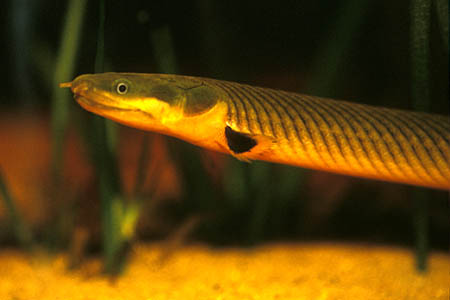
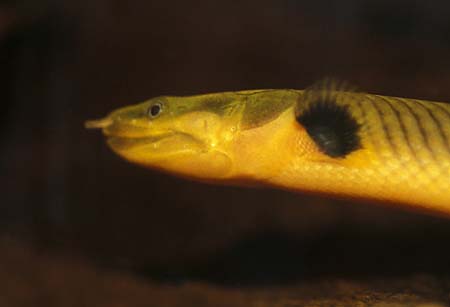
图片来自 SeriouslyFish,版权归各摄影者所有。
English
Overview
The elongated Erpetoichthys calabaricus mainly searches for food at night. It needs a large aquarium with secure escape prevention and access to air above the water. Air breathing does not make it suitable for keeping out of water, nor does it remove the need for a close-fitting cover.
Distribution & habitat
African records include the Democratic Republic of Congo, Angola, Nigeria, Cameroon, Equatorial Guinea, and Benin. It generally occupies shallow waters with dense vegetation.
Aquarium setup
An adult requires a footprint around 150 × 60 cm. Dense plants, soft substrate, and driftwood retreats suit it. Secure every escape route while preserving access to the water surface.
Its accessory respiratory organ makes atmospheric air necessary; complete denial of surface access can cause drowning. Arrange shelter without blocking the route upward.
Diet & feeding
This carnivore usually refuses dry diets, although some individuals learn to take pellets. Appropriate live or frozen foods include prawn, earthworm, mussel, and bloodworm.
Poor vision is compensated by a strong sense of smell. In a shared aquarium, check that food reaches it and is eaten instead of being removed entirely by faster companions.
Behaviour & compatibility
Apart from predation it is relatively peaceful, but any fish small enough to enter its mouth is at risk. Choose sufficiently large companions that are not excessively forceful or competitive at meals.
Its limited territorial tendency permits small groups when space is adequate. Size differences still deserve attention.
Sexual dimorphism
Males generally have twelve to fourteen dorsal-fin rays and females nine to twelve. The overlap makes counts insufficient as a sole test. In breeding condition the male anal fin becomes enlarged and thickened.
Breeding
Confirmed aquarium reproduction is unrecorded. Seasonal changes in the male anal fin should not be mistaken for the existence of an established captive breeding procedure.
Notes
This is the sole member of its genus and is closely related to bichirs. Juveniles have external gills that disappear with maturity. These unusual features do not make it an amphibian. Its practical care priorities remain surface access, nighttime feeding, and reliable containment.
来源
- https://www.seriouslyfish.com/species/erpetoichthys-calabaricus(抓取于 2026-10-10)
erpetoichthys-calabaricus · 文件: data/species/erpetoichthys-calabaricus.md · 状态: 草稿