宝石扁鮰 · Banded Epiplatys
概要
| 字段 | 值 |
|---|---|
| 类别 | 鱼 |
| 学名 | Epiplatys fasciolatus |
| 别名 | 带纹扁鮰、寶石扁鮰、帶紋扁鮰、Haplochilus fasciolatus、Epiplatys dorsalis、Epiplatys sexfasciatus leonensis、Epiplatys matlocki、Epiplatys zimiensis、Epiplatys fasciolatus huwaldi、Epiplatys fasciolatus tototaensis |
| 分类 | 鳉形目 Cyprinodontiformes › 假鳃鳉科 Nothobranchiidae › Epiplatys |
| 水体 | 淡水 |
| 原产地 | 几内亚、几内亚比绍、利比里亚、塞拉利昂 |
| 成体体长 | 8 cm |
| 饲养难度 | 入门 |
| 最小水体 | 72 L |
| 最小缸长 | 80 cm |
| 群居方式 | 群游 |
| 外部数据 | seriouslyfish epiplatys-fasciolatus;fishbase 9828 |
水质参数
| 参数 | 耐受范围 | 最适范围 | 单位 |
|---|---|---|---|
| 水温 | 20–27 | — | °C |
| pH | 5–7 | — | — |
| 总硬度 | 1–12 | — | dGH |
概述
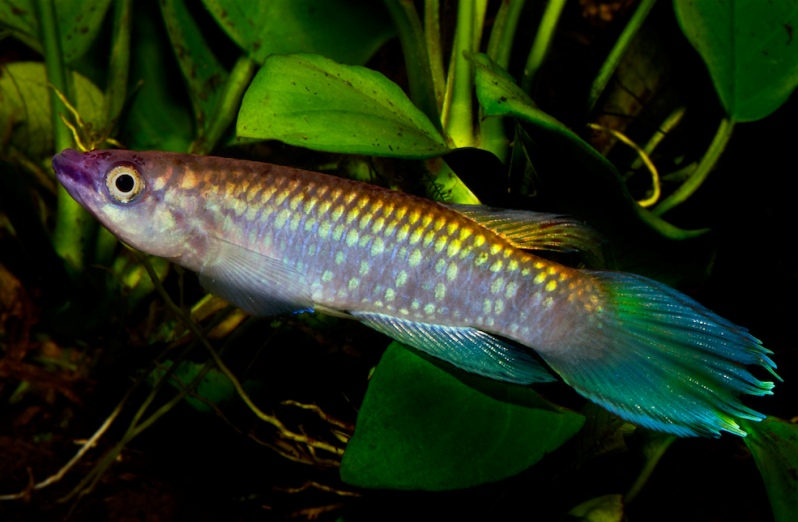
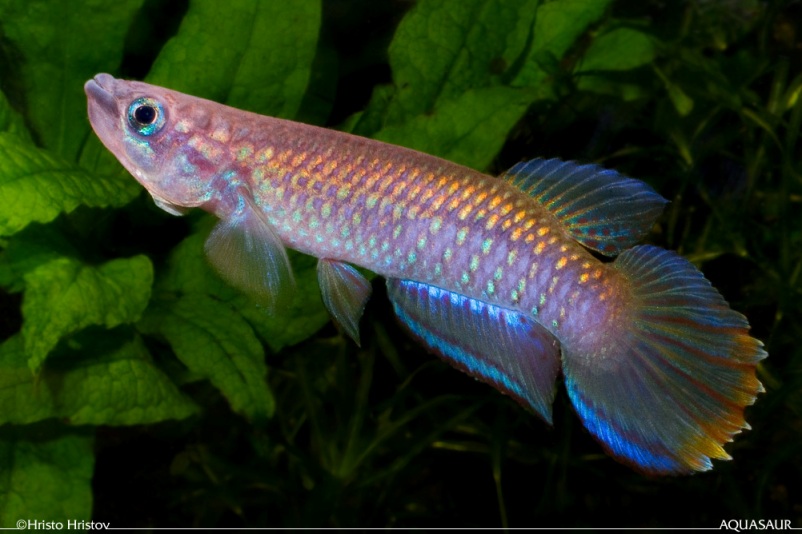
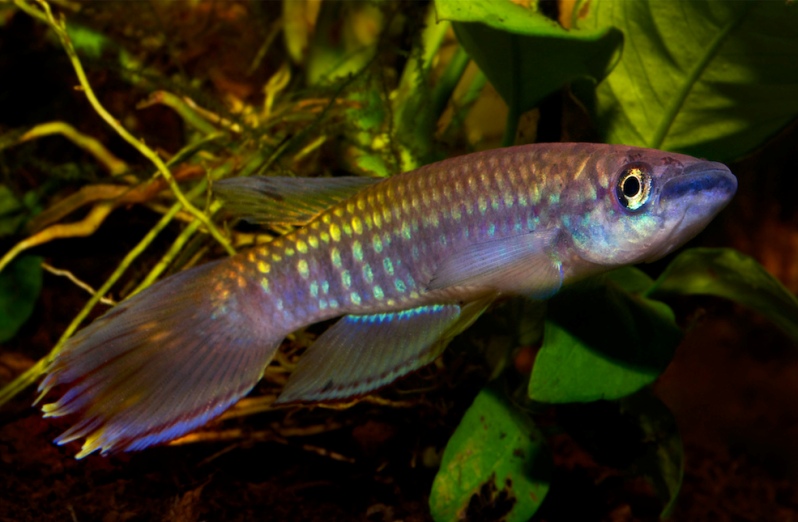
宝石扁鮰(Epiplatys fasciolatus)是一种来自西非沿海地区的鳉鱼,雄鱼身上和鳍上可见金属蓝或绿色,臀鳍及尾鳍下部有红色近缘带。不同产地的鱼常保留地方标签,以避免血系混杂。
分布与栖息地
分布自几内亚比绍向南,经几内亚和塞拉利昂沿海,延伸到利比里亚西部蒙罗维亚附近。早期模式产地曾含“上尼罗河”的记录,后来订正为塞拉利昂弗里敦。
主要生活于淡水沼泽和小支流,但不同地点差异较大,有些处于草本稀树草原,有些位于雨林。
饲养环境
建议至少约 80 × 30 cm 的底面积。密植水草缸或沙底、沉木根和枝条的自然式布置都可使用。干落叶提供额外遮蔽,分解形成的微生物可为鱼苗提供补充食物。
较暗的灯光较合适,可选耐阴植物并配置浮水植物,形成明暗层次。
食性与喂食
野外可能捕食水生和陆生无脊椎动物及其他浮游动物。缸中可接受适口干饲料,但宜每日搭配水蚤、裸腹溞、丰年虾无节幼体等小型活饵或冷冻饵。小蟋蟀和果蝇也可投喂,先以鱼粮或植物性食物喂饱昆虫,再作为饵料使用。
雌雄区分
雄鱼较大,色彩更鲜艳,鳍延伸也更明显。
补充说明
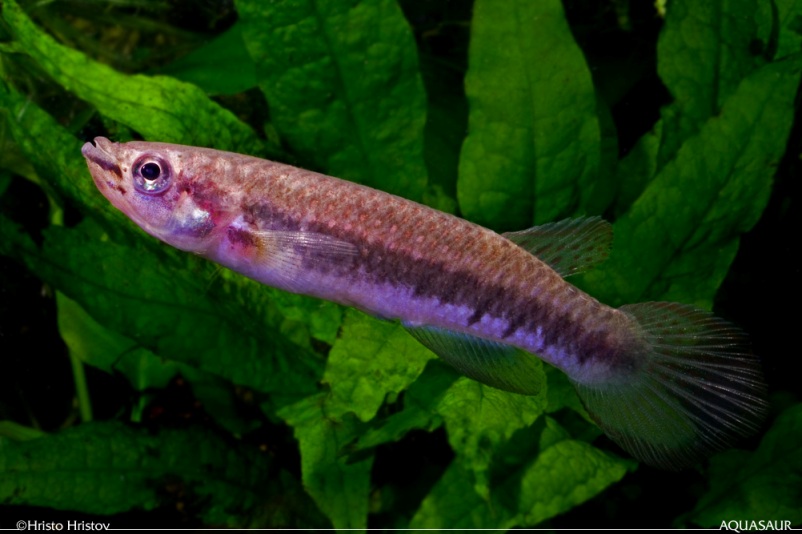
体侧有时可见细窄暗色横带;雄鱼的蓝绿色金属光泽,以及臀鳍和尾鳍下部红色带外的一圈窄边,可作辨认线索。已知采集地点应随鱼保留,不能仅凭相近外形就将不同地方型混在一起繁殖。
图片
图片来自 SeriouslyFish,版权归各摄影者所有。
English
Overview
Epiplatys fasciolatus, the banded epiplatys, is a coastal West African killifish. Males show metallic blue or green on the body and fins, with a red band near the edge of the anal fin and lower tail. Locality labels are useful for preserving distinct breeding lines.
Distribution & habitat
The range extends from Guinea-Bissau southward through coastal Guinea and Sierra Leone to the Monrovia area of western Liberia. An early type-locality reference included the upper Nile, but this was later corrected to Freetown, Sierra Leone.
Freshwater swamps and small tributary streams are the main habitats. Their surroundings vary considerably, with some populations in grassy savanna and others in rainforest.
Aquarium setup
Provide a footprint of at least about 80 × 30 cm. Dense planting or a natural arrangement of sand, driftwood roots, and branches is suitable. Dried leaves add cover and develop microorganisms that may supplement fry nutrition.
Subdued lighting works well. Shade-tolerant plants and floating vegetation can create sheltered areas with softer light.
Diet & feeding
It probably hunts aquatic and terrestrial invertebrates and other zooplankton in nature. Captive fish accept appropriately sized dry foods, but daily small live or frozen foods such as Daphnia, Moina, and Artemia nauplii should add variety. Small crickets and fruit flies are also useful; feed the insects flakes or vegetable material before offering them to the fish.
Sexual dimorphism
Males are larger and more colorful, with more extended fins than females.
Notes
Thin dark crossbars are sometimes visible on the flanks. Metallic male colors and the narrow border outside the red anal- and lower-tail bands provide additional identification clues. Retain collection information when it is known rather than combining local forms solely because they look similar.
来源
- https://www.seriouslyfish.com/species/epiplatys-fasciolatus(抓取于 2026-10-10)
epiplatys-fasciolatus · 文件: data/species/epiplatys-fasciolatus.md · 状态: 草稿