电鳗 · Electric Eel
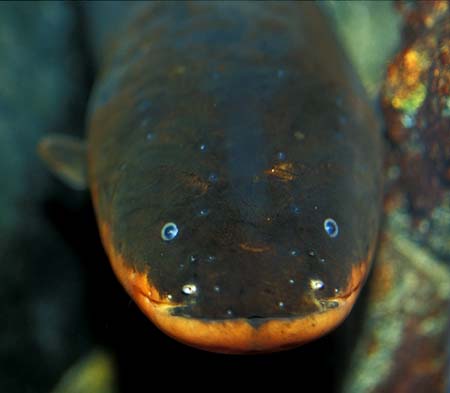
概要
| 字段 | 值 |
|---|---|
| 类别 | 鱼 |
| 学名 | Electrophorus electricus |
| 别名 | 電鰻 |
| 分类 | 裸背鱼目 Gymnotiformes › 裸背鱼科 Gymnotidae › Electrophorus |
| 水体 | 淡水 |
| 成体体长 | 250 cm |
| 饲养难度 | 中等 |
| 群居方式 | 群游 |
| 特征 | 会跳缸: 是;夜行性: 是 |
| 外部数据 | seriouslyfish electrophorus-electricus;fishbase 4535 |
| 原产地 | 委内瑞拉、圭亚那、苏里南、法属圭亚那、秘鲁、巴西 |
| 食性 | 肉食 |
水质参数
| 参数 | 耐受范围 | 最适范围 | 单位 |
|---|---|---|---|
| 水温 | 23–28 | — | °C |
| pH | 5.5–7 | — | — |
| 总硬度 | 1–12 | — | dGH |
概述
电鳗(Electrophorus electricus)是能够强力放电的大型夜行捕食鱼,属于电鳗目而不是真鳗类。它不仅需要极大的空间,也存在足以使人失去行动能力的电击风险,仅适合真正具备专业条件的设施,不能因适应后较温顺就直接接触。
分布与栖息地
记录分布包括委内瑞拉、圭亚那、苏里南、法属圭亚那、秘鲁和巴西。生活在缓流、停滞且常缺氧的水域,如植物丰富的小溪、沼泽和支流。
饲养环境
单尾起步空间也需极大,随成长还要升级;强体型成鱼不能按一开始的容器终身饲养。水流保持很弱,光线极暗,以树根、枝条或圆滑大石提供遮蔽,砂泥底有益但并非必需。
缸盖必须不能被顶开且没有逃逸缝隙,水面与盖之间留约 15 厘米空气层。它必须上浮吞气,绝不能阻断到达水面;鳃呼吸不能独立维持其需要。大型高效过滤同样不可少,需承担巨大的排泄量。
食性与喂食
肉食性,天然吃鱼、无脊椎动物和两栖动物,人工较容易转到非活饵。可提供适口大蚯蚓、小鱼及鱼肉类,幼鱼也接受虾和贝肉。喂养操作应纳入专业设施管理,不能以徒手喂食测试是否温顺。
习性与混养
最好单独一尾饲养,不与其他种混养;它不仅会捕食,也能杀死比自己大的鱼。同种三尾以上虽有群养可能,所需设施规模通常超出个人条件,不能把“可以成群”理解为一般饲养建议。
繁殖
有说法认为雄鱼用唾液筑巢,再把卵产在巢中,但人工繁殖尚未记录,这种描述不应直接归为已确认的泡巢繁殖方法。
补充说明
弱电场用于黑暗中的定位、感知猎物和交流;强放电用于捕食及防御,反复电击可危及生命。夜行和视力差不代表感知迟钝。它需依靠口腔中血管丰富的组织获取空气中的氧气,因此水面通道比单纯增加水中曝气更不可替代。
图片
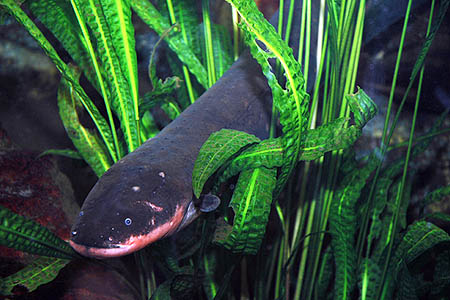
图片来自 SeriouslyFish,版权归各摄影者所有。
English
Overview
A large nocturnal predator, Electrophorus electricus is a knifefish rather than a true eel. Its powerful electrical discharge can incapacitate a person. Care requires specialist facilities, and apparent tameness does not make direct contact safe.
Distribution & habitat
Records include Venezuela, Guyana, Suriname, French Guiana, Peru, and Brazil. Typical habitats are slow or stagnant, often oxygen-poor waters such as vegetated creeks, swamps, and tributaries.
Aquarium setup
Even a single fish needs enormous housing, with upgrades as it grows. Keep movement minimal and lighting very dim, using roots, branches, or smooth rocks for refuge. Sand or mud is useful but not essential.
The lid must resist displacement and leave no escape gaps. Maintain roughly 15 cm of air space above the water and unobstructed access to the surface: this obligate air breather cannot survive on its gills alone. A very large, efficient filter must also handle the waste load.
Diet & feeding
It is carnivorous, taking fish, invertebrates, and amphibians naturally, and usually converts readily to dead food. Appropriate worms and fish are options, with shrimp or mussels also accepted by juveniles. Feeding belongs within specialist management, not direct hand-feeding trials.
Behaviour & compatibility
Keep one fish alone. Other species are unsuitable because it can kill fish even larger than itself. Groups of three or more may be possible, but their housing requirements are generally beyond private hobby facilities.
Breeding
Accounts suggest that a male makes a saliva-based nest for the eggs. Captive breeding is unrecorded, and the description should not be treated as an established bubble-nest procedure.
Notes
Weak electrical signals support navigation, prey detection, and communication; strong discharges serve hunting and defense and can be life-threatening. Poor vision does not imply poor awareness. Oxygen uptake through vascular tissue in the mouth makes access to atmospheric air indispensable.
来源
- https://www.seriouslyfish.com/species/electrophorus-electricus(抓取于 2026-10-10)
electrophorus-electricus · 文件: data/species/electrophorus-electricus.md · 状态: 草稿