Dormitator lebretonis · Clay Goby
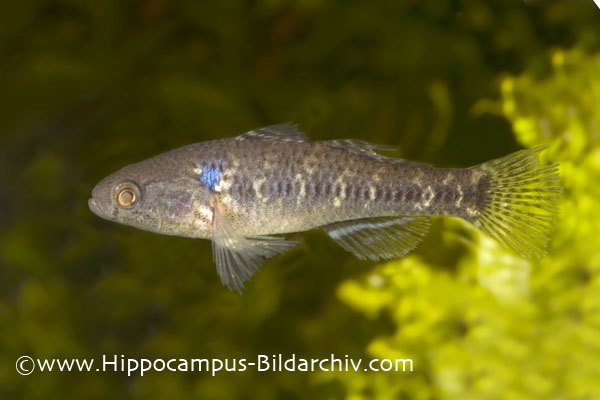
概要
| 字段 | 值 |
|---|---|
| 类别 | 鱼 |
| 学名 | Dormitator lebretonis |
| 分类 | 虾虎鱼目 Gobiiformes › 塘鳢科 Eleotridae › Dormitator |
| 水体 | 淡水 |
| 成体体长 | 12 cm |
| 饲养难度 | 中等 |
| 特征 | 吃小鱼: 是 |
| 外部数据 | seriouslyfish dormitator-lebretonis;fishbase 10008 |
| 原产地 | 塞内加尔、冈比亚、几内亚、科特迪瓦、加纳、贝宁、尼日利亚、纳米比亚、安哥拉 |
| 性情 | 温和 |
| 领地性 | 是 |
水质参数
| 参数 | 耐受范围 | 最适范围 | 单位 |
|---|---|---|---|
| 水温 | 22–26 | — | °C |
| pH | 7–8.5 | — | — |
| 总硬度 | 10–20 | — | dGH |
概述
Dormitator lebretonis 是非洲沿海的塘鳢类,成鱼会显出红蓝相间的花纹。它对体形合适的中型伙伴通常温和,但会吞小鱼,也可能咬慢游或长鳍鱼,适合围绕硬水或汽水条件规划混养。
分布与栖息地
记录涉及塞内加尔、冈比亚、几内亚、科特迪瓦、加纳、贝宁、尼日利亚、纳米比亚和安哥拉。生活在河口、潟湖与红树林等沿海水域,以汽水环境为主,也有淡水记录。
饲养环境
一对可参考 75 × 30 × 30 cm 的缸体。铺柔软细砂,提供洞穴与缝隙作躲藏及领地空间。弱光有助增加白天露面活动的机会。
人工可用比重约 1.005 的低盐汽水,也有在较硬、偏碱淡水中成功饲养的记录。淡水可行并不意味着任何软酸水都适合,应结合来源与现有饲养条件安排。
食性与喂食
通常接受适口干粮、冷冻饵和活饵。饮食中也应有植物性成分,可尝试烫菠菜或干海苔;缸内有绿藻时,常会自行啄食。
习性与混养
伙伴必须大到不会被吞食,并避免行动缓慢或长鳍类型。水质要求相符、主要使用其他水层的中型鱼更适合,例如合适射水鱼、彩虹鱼及汽水鱼类。
空间足够时可多尾同养,但同种尤其雄鱼之间可能有轻度领地冲突,布景应提供多个独立躲藏位置。
雌雄区分
雄鱼臀鳍和第二背鳍的鳍条会延长,成熟后常出现额部隆起。
繁殖
已有爱好者繁殖记录,但过程报道有限。据称在洞内产卵,没有洞穴时也会使用植物叶片;究竟需要淡水还是汽水才能繁殖,记载并不一致。
补充说明
旧资料曾将它归入现已不再使用的属名(Batanga),旧标签可用于检索,但不能代替学名核对。
图片
图片来自 SeriouslyFish,版权归各摄影者所有。
English
Overview
The African coastal sleeper Dormitator lebretonis develops red and blue patterning as it matures. It is generally peaceful with appropriately sized medium companions, but small fish are prey and slow or long-finned neighbors may be nipped. Build a community around compatible hard-water or brackish requirements.
Distribution & habitat
Records include Senegal, Gambia, Guinea, Côte d’Ivoire, Ghana, Benin, Nigeria, Namibia, and Angola. Estuaries, coastal lagoons, and mangroves are typical habitats. Most records are brackish, although freshwater populations also occur.
Aquarium setup
A pair can use an aquarium around 75 × 30 × 30 cm. Soft sand and numerous caves or crevices provide retreats and separate spaces. Dim illumination encourages greater daytime visibility.
Lightly brackish water at roughly 1.005 specific gravity is suggested, but successful maintenance in hard, alkaline freshwater has also been reported. Freshwater tolerance should not be confused with suitability for soft acidic conditions.
Diet & feeding
Most appropriately sized dry, frozen, and live foods are accepted. Include vegetable material such as blanched spinach or dried seaweed. Green algae are often grazed when present.
Behaviour & compatibility
Exclude fishes small enough to swallow, as well as slow or long-finned companions vulnerable to possible fin biting. Medium fishes using other levels and sharing the water requirements are preferable, including suitable archerfish, rainbowfishes, and brackish-water species.
Groups are possible with sufficient space, but mild territorial interactions can occur, particularly between males. Provide multiple distinct refuges.
Sexual dimorphism
Males develop longer anal and second-dorsal rays and often acquire a raised forehead at maturity.
Breeding
Hobby breeding has occurred, but detailed accounts are scarce. Eggs are reportedly laid inside caves, or on leaves when caves are absent. Accounts disagree over whether fresh or brackish water is necessary.
Notes
The former generic placement Batanga may occur in older literature and trade records. Use those labels as search aids rather than as a substitute for checking the scientific identity.
来源
- https://www.seriouslyfish.com/species/dormitator-lebretonis(抓取于 2026-10-10)
dormitator-lebretonis · 文件: data/species/dormitator-lebretonis.md · 状态: 草稿